TUC president and POA leader STEVE GILLAN speaks to Ben Chacko on the eve of Congress 2026


 Latest editorial
Energy crisis is accelerating the European Union’s decline
The TUC fell for the illusion of a ‘Social Europe’ in 1988 and backed single-market membership. DOUG NICHOLLS argues that dramatic changes in the EU prove the need for an independent economic policy
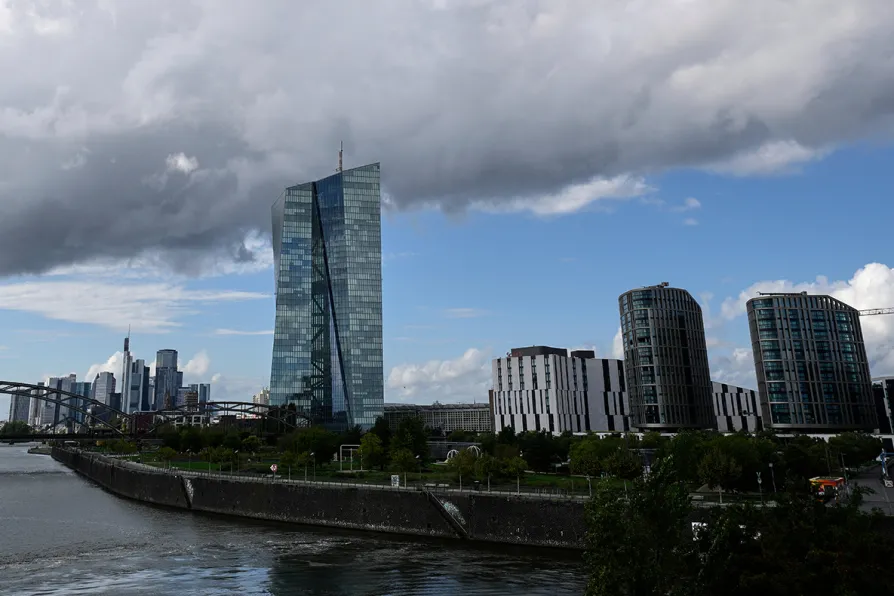 Clouds cover the sky over the headquarters of the European Central Bank in Frankfurt, Germany. (AP Photo/Michael Probst, File) Thursday, Sept. 11, 2025

As Cuba faces the most dangerous moment in its recent history, Britain must do more than condemn the US blockade at the United Nations, writes KEVIN COURTNEY, chair of the Cuba Solidarity Campaign
The Together Alliance is hosting two summits, North and South, to build power and plan action against the scourge of racism peddled by the right. DANIEL KEBEDE urges mass participation
Morning Star assistant business manager BERNADETTE KEAVENEY and international editor ROGER McKENZIE remember attending the 2001 TUC, suspended midweek after news of the World Trade Centre attacks
Whether it’s dented bike frames or broken ferries, MATT KERR wishes politicians had the same steely staying power of elite engineering instead of chasing disposable self-importance
The events of 9/11 reverberated across the United States and then the world. JOHN WIGHT remembers the eerie atmosphere that exposed racial divisions at the heart of Hollywood





BETWEEN 2016 and 2025, the UK economy outgrew France, Italy, and Germany, the three powerhouse economies of the European Union (EU). They, like the EU overall, are now stuck in stagnation and decline.
US commentators taunt that the state of Mississippi has a higher GDP than every country in the EU except Germany, but even that could change if the current trends and drastic deindustrialisation continue there.
European industrial power, particularly in Germany, was literally fuelled by cheap natural gas piped directly from Russia. The dismantling of this energy supply has triggered an economic decline that is fundamentally transforming the EU.
The political severing of ties with Russia have become permanent. Russian gas supplies were cut off with the sabotage of the Nord Stream 1 and Nord Stream 2 pipelines in September 2022 for which the USA claimed “credit.” The destruction of this enormous infrastructure eliminated any possibility of a return to cheap gas.
To fill the gaping supply deficit, the EU turned to the US to import liquefied natural gas (LNG). But this comes with substantial premiums due to the environmental and economic cost of liquefying, shipping, and regasifying the fuel.
As a result, European industries have been forced to boost the dollar and pay energy prices that are significantly higher than those in the US or Asia.
This is accelerating a wave of deindustrialisation throughout the eurozone as major corporations relocate production elsewhere.
Such harsh economic pressure has caused chaos and decline across the EU, worsened internal rivalries between EU member states, and accelerated the bloc’s fragmentation.
No unified EU response has been organised; member states have clashed bitterly over energy policy.
Germany faced strong criticism from others for launching a unilateral domestic energy subsidy scheme, which smaller economies argued broke the EU single-market rules.
Eastern European nations have resisted aggressive Brussels-imposed timelines for the green transition, while landlocked member states still argue for exemptions to maintain supplies of cheaper Russian pipeline oil.
These and other disagreements have paralysed the formulation of a cohesive energy strategy and exposed a fractured union unable to distribute economic pain equitably. We saw this after Covid too and how relief funds were unfairly allocated.
One thing that has created greater unity though is the hawkish appeal to increase EU-wide and Nato-led military spending for cold and real war against Russia. The aggressive militarisation of the EU is plain to see and a trend best evaded.
Whilst Britain faces its own domestic energy pressures, its post-Brexit position and unique geography offer distinct advantages to avoid the systemic decline now strangling the EU.
Unlike EU member states which are bound by decisions handed down by unelected commissioners, Britain retains energy sovereignty. Through initiatives like the planned Energy Independence Bill, the UK can unilaterally reform its electricity pricing mechanisms.
Brussels barrier
This allows the government to break the link between domestic electricity prices and volatile global gas markets, and bypass the bureaucratic consensus required in Brussels. In turn, this could provide a key to rebuilding our foundational industries such as steel.
Britain possesses some of the best offshore wind resources in the world. By increasing this home-grown generation under the supportive planning framework proposed by the Energy Independence Bill, the government could protect our manufacturing base from international fuel shocks.
Britain also currently grapples with low natural gas storage capacity. Its geographic access to the North Sea offers a potential long-term solution. Recent energy systems’ modelling shows that empty North Sea gas fields could be used to store green hydrogen generated from surplus wind power.
This geological advantage provides an opportunity for self-contained energy storage that continental Europe lacks, offering true energy resilience.
Britain has the flexibility outside of the EU single market to build a self-sufficient energy economy, insulating itself from the stagnation affecting the continent.
Combined with the government’s and public bodies’ abilities outside the EU to procure exclusively from domestic manufacturers and suppliers this could give the boost to manufacturing revival and self-reliance in production that should be at the heart of an alternative economic policy.
For too long Britain has made too little, imported too much and underpaid far too many workers.
The claim that Brexit caused the UK’s productivity slowdown simply doesn’t hold up. The data shows the real culprits are the 2008 financial crisis and soaring energy prices and a huge investment strike in skills and research.
Such historic neglect, coupled with the most profound deindustrialisation and theft of public assets, has caused our current predicament, not Brexit.
Despite these factors, recent slow UK productivity growth has still been stronger than that in the major EU economies.
You won’t find any negative trend rate of UK productivity growth either around the time of the referendum or in the immediate aftermath of the UK leaving the EU customs union and single market at the start of 2021.
Brexit broke the spell of presumed impotence in the face of transnational organisations that serve primarily the interests of big business.
It provided Britain with the opportunity to use policy tools that have been off limits for the past four decades.
It is heartening to see motions to Congress this year encouraging the use of these tools for rebuilding.

Similar stories


Friedrich Merz’s call for a new Plaza Accord ignores how Washington’s 1985 currency ambush destroyed Japan without fixing US deficits — China, a sovereign socialist state with 1.4 billion consumers, cannot be bullied the same way, writes CARLOS MARTINEZ