Committee for the Defence of the Iranian People’s Rights general secretary GAWAIN LITTLE discusses the impact of the US-Israeli war on the Iranian people and economy


 Latest editorial

100 years of women’s voices at the Scottish TUC
ANN HENDERSON looks at the centenary of the foundation of the STUC women’s committee, and the challenges facing women in the trade unions today
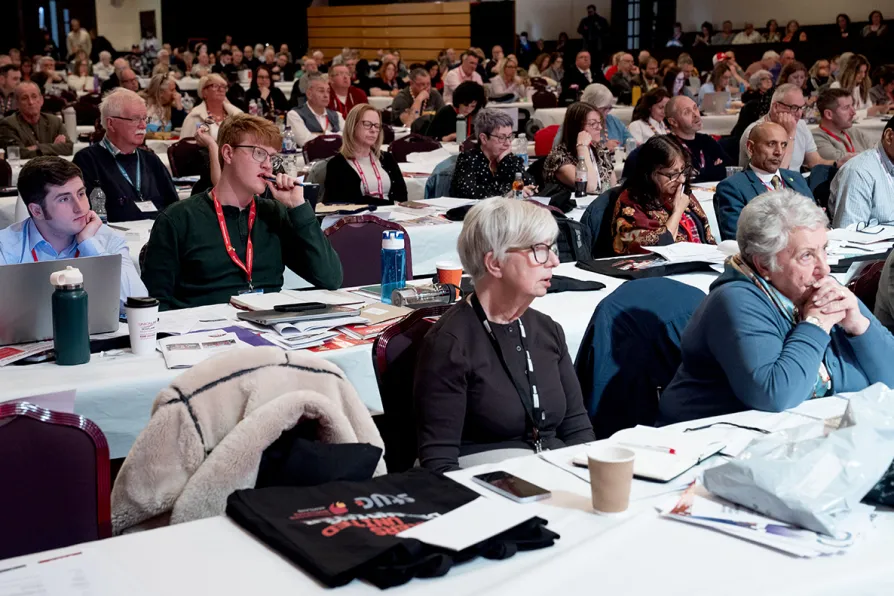 Delegates to STUC Congress, 2026

Capitalism has extracted itself from crisis before, argues PRABHAT PATNAIK – but through methods no longer available. So it is turning to authoritarianism, militarism and neocolonialism
The five young men killed in the A66 crash were responsible for a devastating tragedy — but the crash should force us to ask difficult questions about wider society, argues RENATA MEDEIROS MIRRA
Britain funds the policing of black culture 16 times better than the culture itself. The Diamond Jubilee is the moment to end that, argues CLAUDIA WEBBE
Despite Andy Burnham’s declaration defending the continued partition of the island, all major international and internal trends are converging to make Irish reunification inevitable
Humans are part of the ‘animal kingdom’ – and of nature in general – but also distinct from it and labour (work) is part of what makes us unique, declared Engels. His insights 150 years ago into how our species came to be and how we differ from the rest of nature, are as important today as they were then, says the MARX MEMORIAL LIBRARY





THE 2026 STUC Women’s Conference will take place in Dundee on October 21-22. It is 100 years since the STUC established a women’s committee, initially called the Organisation of Women Committee, and subsequently the Women’s Advisory Committee.
That early Organisation of Women Committee had a remit to develop better organising methods for bringing women workers into the trade union movement, and was envisaged as having a key role in bringing women’s issues forward to the whole STUC. Although the name of the committee may have changed, the remit remains the same, and is definitely still needed.
The annual Women’s Conferences organised through the women’s committee provide a place to bring women from all the different sectors of employment across Scotland, and an opportunity to learn from each other on many topics pertaining to women’s lives in the workplace, and within society more generally.
The 2026 conference agenda includes motions on employer obligations to provide a safe working environment; the pension gap for women; supporting women organising for trade union representation in their workplaces, as the provisions of the Employment Rights Act 2025 come into force; further developing domestic abuse policies with employers; workplace mental health support for women workers in public facing jobs; a focus on the worrying rise in digital misogyny and misinformation on social media and the impact on women in the workplace; and calls for safe travel home from work.
We can expect powerful and informative speeches, and a strength that comes from getting together to hear directly from women in so many different industries and sectors. The priorities for the incoming women’s committee will be laid out.
Rule changes agreed at the 2026 STUC Congress earlier this year will see the STUC Congress and the equality conferences moving to a biannual cycle after 2027.
Within the last 30 years, an STUC black workers committee and conference was established, an STUC disabled workers committee and conference, and an LGBT+ workers committee and conference.
Each of these conferences has been able to take policy motions to full Congress, and to send delegations, along with reserved seats on the STUC general council.
This has contrasted somewhat with the position of the STUC women’s committee and conference, which has not had these rights, nor has it had direct representation on the STUC general council, the governing body.
While the rule changes recently agreed will (after 2027) see women’s committee motions tabled and a women’s committee delegation at Congress, there is still no proposal for the STUC women’s organisation to be directly represented on the governing body, unlike the other equality-sector groups.
Women are in the room of course, as quotas were agreed in the 1990s for the STUC governing body, and these days in fact more women than men make up trade union membership across Scotland. The chair of the STUC women’s committee is invited each year to give a 10-minute speech to STUC Congress.
But that issue of direct representation and accountability to the women’s conference has not been addressed in 100 years.
This has not stopped women getting on with whatever needs to be done in their workplaces, but it has been a structural imbalance which has arguably weakened women’s voices.
Many of the topics on the agenda of the women’s conference require absolute clarity on women’s experiences as a sex. Motions talk of poorer health outcomes, risks to mental health, highlighting the disparity between men and women in terms of healthcare, provision of appropriate facilities at work to support women recruited to the fire service; continued pay gaps between men and women leading to different pension outcomes, job segregation between men and women across the public sector.
It is therefore surprising to learn that the STUC response to the Supreme Court ruling in April 2025 in the For Women Scotland/Scottish government case was to express opposition to it. An emergency motion appeared on the 2025 STUC Congress agenda from the LGBT+ committee and was passed with minimal discussion.
Individual women and men are now taking cases to employment tribunals over some very basic questions. These have included access to women-only changing facilities, or whether reserved seats for women in trade union structures should be filled by women members, women as defined by their biological sex.
Surely it is time to have that long-overdue discussion about protecting women’s hard fought for sex-based rights and how that plays out in the policies adopted by the trade union movement.
In recent years in Scotland it should have become clear to the trade union movement that it is not possible to support a policy of self-ID alongside supporting single-sex spaces, services and activities including sports.
As soon as a “single-sex space” includes a man, it becomes a mixed space. To strengthen collective bargaining and representation for women in the workplace, trade unions and employers need to know accurately the sex of their workforce. Many of the health and safety regulations governing workplaces acknowledge different requirements and protections on the grounds of sex. The Supreme Court Ruling reiterated that the Equality Act and its predecessors of the Sex Discrimination Act and the Equal Pay Act were based on biological sex.
We should expect our trade unions to adhere to the law on this, and to train workplace reps accordingly. To do anything else disregards a long history of women’s struggles in the workplace and in the labour movement — but is also unworkable, and must be discussed.
One hundred years ago the newly established STUC Organising for Women Committee got on with its work, trying out different ways of trade union recruitment and organising, and highlighting issues for change, and arranging an annual women’s conference.
Angela Tuckett in her book The Scottish Trades Union Congress — The First 100 Years 1897-1977 describes this: “As well as considering options submitted by delegations, early on they adopted the practice of having a major discussion on one vexed question each conference for a general expression of personal views, without taking any vote on it. This could bring in a useful free exchange of ideas.”
This is far removed from the experience of many women trade unionists in recent years, where “no debate” and the closing down of discussion has hampered our movement. Changing this is long overdue, and as the STUC marks the 100th anniversary of the women’s committee, let’s not lose sight of the work put in by our predecessors to champion women’s rights at work.
Ann Henderson was STUC assistant secretary 2007-2017.

Similar stories
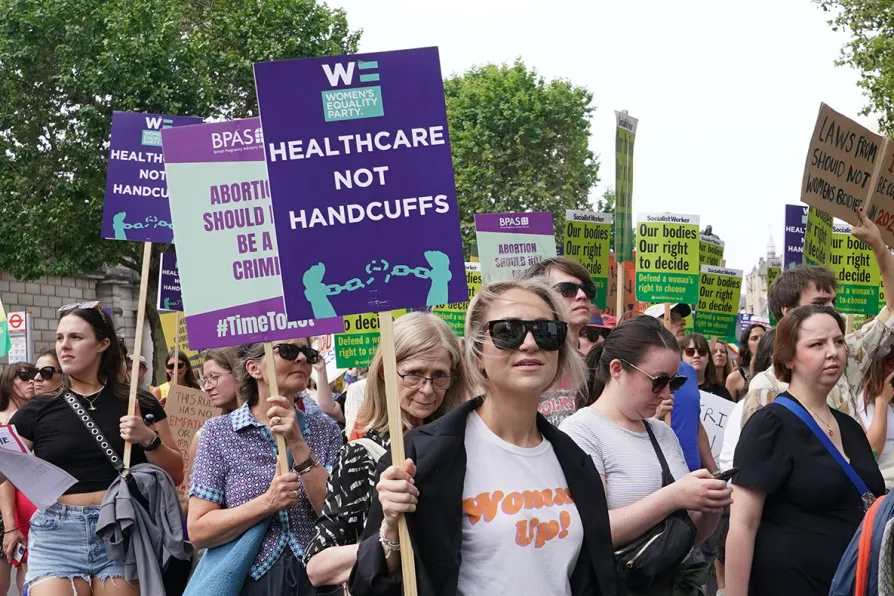
Professor MARY DAVIS argues that feminism has been hollowed out by liberal co-option – and only a revival of socialist, class-based politics can restore International Working Women’s Day’s original, radical purpose
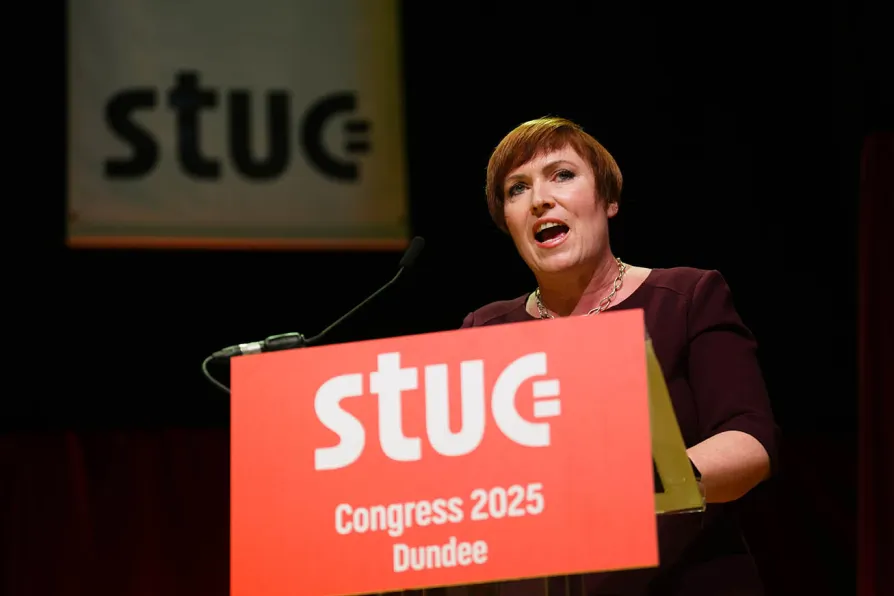
Working-class women lead the fight for fair work and equitable pay and against sexual harassment, the rise of the far right and years of failed austerity policies, writes ROZ FOYER
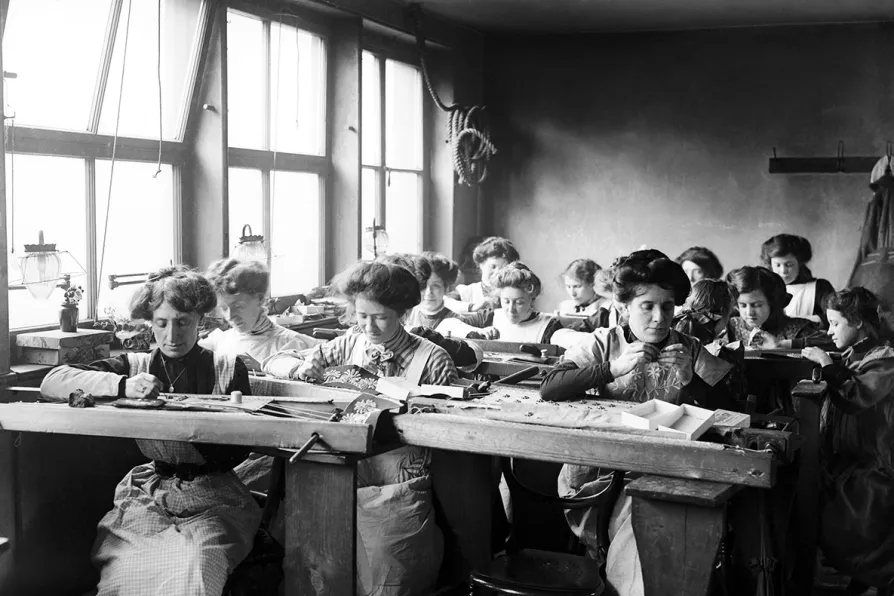
ANN HENDERSON looks at the trailblazers of the Women’s Trade Union League and their successful fight for female factory inspectors — a battle that echoes in today’s workplace campaigns
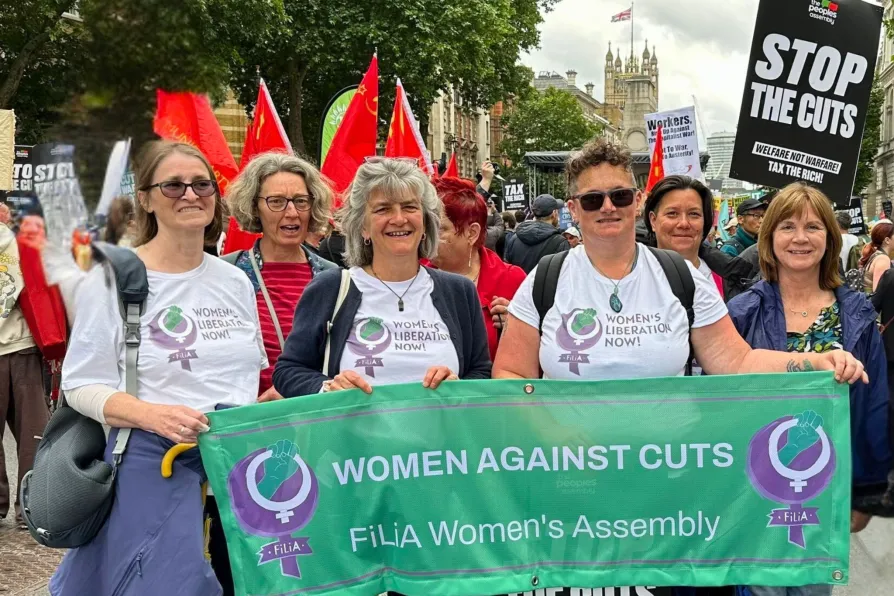
Women are a vital part of the labour movement and have much to contribute, but there’s far more to be done to make sure that our sisters’ voices are truly heard, says PHILIPA HARVEY