TUC president and POA leader STEVE GILLAN speaks to Ben Chacko on the eve of Congress 2026


 Latest editorial
The BBC: The Brittin Empire
The new BBC director-general now faces a test of public scrutiny, with his record at McKinsey and lack of newsroom experience under the spotlight, says STEPHEN ARNELL
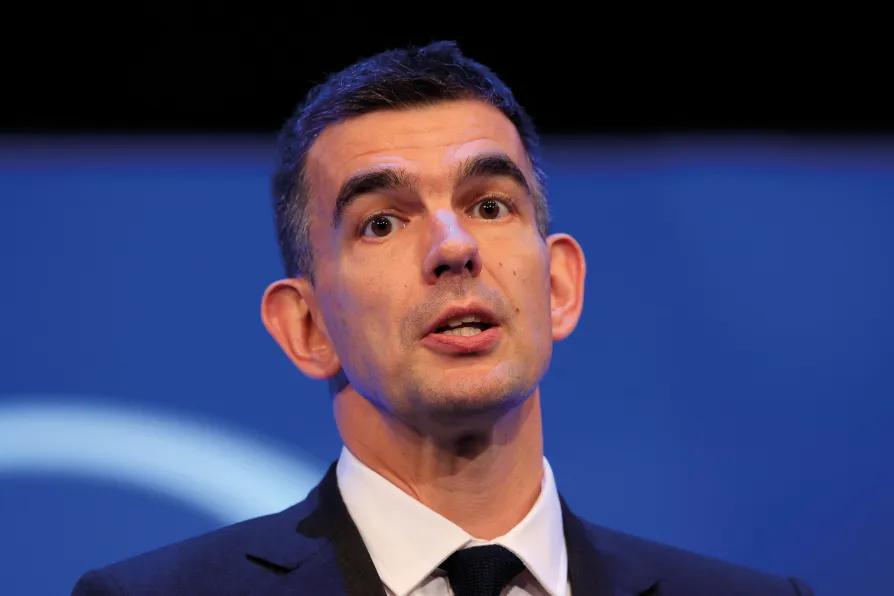 OLD BOYS’ CLUB: New BBC top dog Matt Brittin

DOUG NICHOLLS welcomes a turning point at this year’s Congress, where many motions call for a co-ordinated plan to revive British industry, a perspective outlined in his new book
HOPE VIRGO of campaign Dump the Scales warns MPs voting today they should be alert to the threat legalised assisted death poses to people with eating disorders
The Together Alliance is hosting two summits, North and South, to build power and plan action against the scourge of racism peddled by the right. DANIEL KEBEDE urges mass participation
The drift toward militarisation in Europe is not inevitable, left-wing and peace movements can preserve sovereignty and prevent war, says DÁIRE HUGHES MP
Whatever differences exist among international sympathisers of the Bolivarian revolution about its current trajectory, they should unite against the imperialist power that is the source of an enforced retreat, argues ROGER D HARRIS
Trade unions need to step up and force a turn in the policies of the labour movement to effectively confront the far-right threat, argues NICK WRIGHT





“WHO’D have thought a fifty-something man could suffer from such severe imposter syndrome?” – Matt Brittin accepting his Royal Television Society fellowship in November 2025.
Matt Brittin begins his first day as BBC director-general on May 18.
Some in the British media have commented how similar Brittin appears to his predecessor, the hapless “Tigger” Tim Davie. Both are public school-educated, rich (in Brittin’s case extremely rich), white, middle-aged men boasting no genuine editorial experience, with obsessive sporting hobbies; “ultra-running” in the case of Davie, rowing for Brittin.
One difference is that to my knowledge, Brittin is not (or was) a Tory supporter, unlike Davie, who served as deputy chairman of the Hammersmith and Fulham Conservative Party, and stood twice without success as a Conservative councillor candidate in Hammersmith in 1993 and the following year.
But Brittin was for seven years a junior partner at a more secretive, and probably (currently that is) more sinister organisation than the Tories — global management consultants McKinsey & Company.
Known to some (including myself) as the company who made slashing staff and enriching the remaining senior executives the sum total of their so-called “advice,” over recent decades, McKinsey’s involvement in South African corruption scandals, oversized influence in French politics, conflicts of interest including advising both the Food and Drug Administration and tobacco, advising fossil fuel firms while holding environmental sustainability discussions and working for oppressive regimes have tainted an already dubious brand.
Not forgetting the time in 2021 when McKinsey agreed to pay nearly $600 million (later $650m as reported) to resolve investigations by 47 states, DC, and associated territories into its role in recommending pharmaceutical firms “turbocharge” OxyContin sales.
Will we ever find out who Brittin consulted for during his seven long years at McKinsey? Some recent biographies in trade periodicals (C21) managed to miss out this not inconsiderable part of the new DG’s career, which I reminded them of. Strange.
Of course, if he can’t “legally” reveal who his clients were at McKinsey, it wouldn’t stop MPs giving him a hard time if they question him when he turns up at the relevant Commons committee. Perhaps going something like this:
An MP prefaces his questioning with a summary of McKinsey’s ethical and legal controversies and then:
MP: “Mr Brittin, during your years at the company, did you ever consult for authoritarian foreign governments?”
MB: “I’m afraid my contract with McKinsey forbids me to reveal any details.”
MP: “OK, at this stage don’t name the governments or companies, but just confirm or deny the area I am asking you about. How about arms manufacturers?”
MB: “Once again, I’m afraid my contract with McKinsey forbids me to reveal any details.”
MP: “Once last time then; drugs manufacturers — we know for a fact McKinsey’s involvement with that particular industry.”
MB: “Again, all I can honestly say is my contract with McKinsey forbids me to reveal any details.”
MP: “So you can’t officially deny consulting for dodgy foreign governments, arms manufacturers or drugs companies? Thank you Mr Brittin.”
Despite Brittin’s unknown (if any) McKinsey-related skeletons, his appointment as BBC DG has elicited the expected floods of praise from the usual media commentators and industry toadies, the same crew that cheered the enthronement of Tim Davie, including pundits in the pages of Broadcast magazine, the British broadcasting industry’s “paper of record.”
Case in point: the magazine’s feature from March 20. Matt Brittin: “A strategist who understands platforms and power.”
“Advocates for Brittin suggest he is the right man for the job because of his corporate experience and regular dealings with the government — something that will stand him in good stead as charter renewal negotiations ramp up.”
Kuljinder (Kully) Khaila, chair of Royal Television Society Midlands and a member of Royal Television Society Board of Trustees, lavished praise on Brittin via LinkedIn:
“Hearing from him last year, as he picked up his Royal Television Society fellowship, I recall how he held the room, with warmth, wit and wisdom. An impressive orator, with a remarkable level of experience in a sector that will help shape the future of broadcasting. If the speculative press articles become reality, the BBC could have an outstanding leader at the helm.”
Brittin’s public school education, wealth and gender definitely qualify him as member of the BBC Old Boys’ Club, though, despite his lack of any discernible editorial experience at the corporation, or anywhere else.
Former BBC2 controller Kim Shillinglaw, who many felt should have been chief content officer at the BBC rather than the now departed Charlotte Moore (also posting on LinkedIn) said a couple of years ago: “I still remember the BBC HR-Apparatchik who shockingly told me (when starting as Controller of BBC2) that I was one of only TWO people in the corporation’s 50 most senior leaders who had been state educated. Two. And the other one went to a grammar school. Hopefully, things have gotten better at the Beeb, but don’t underestimate how much work there is still to do in even the most basic kinds of wider representation of the country.”
Brittin’s first challenges in his new role are likely to come thick and fast, and although a much abler public speaker than his predecessor, his unconvincing performance at the Commons in the 2010s relating to Google’s British tax payments (and his huge own salary) are a possible portent of life under the unforgiving glare of the British media spotlight.
