
The UK Prime Minister may have the regal touch in northern England, but he’s been wrong-footed on the constitutional challenges posed by the Celtic Alliance of first ministers from Scotland, Wales and Northern Ireland, argues KENNY MacASKILL

Start the compost process now to be ready for spring
MAT COWARD has heaps of good advice on recycling garden and household waste over the winter
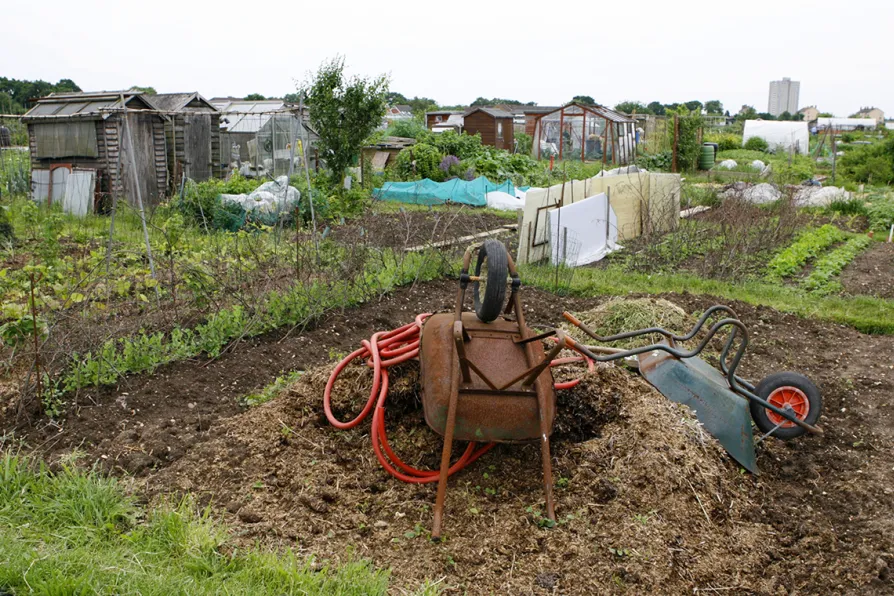
 Compost on Weston Allotments in Southampton [Pic: Chris Ison/PA Archive/PA Images May 29, 2008]

NEIRLAY ANDRADE, a member of the Communist Party of Venezuela’s political committee, outlines her party’s position on the crisis facing the country
A look at Taylor Wimpey’s accounts shows why Labour’s market-led housing strategy won’t deliver more, cheaper homes, as promised, says SOLOMON HUGHES
DAVID HORSLEY remembers the remarkable life and death of US black revolutionary George Jackson, whose politically passionate prison letters were published as Soledad Brother
Cuban trade union federation CTC leader OSNAY MIGUEL COLINA speaks to Ben Chacko about life and work under a crippling US siege
A part of the British empire’s network of slavery, today the Caribbean island of Nevis faces a new form of exploitation in the form of crypto-colonialism, CLAUDIA WEBBE writes
Challenges from the unscrupulous misuse of AI to steal actors’ voice and physical likenesses is being met with a firm union response, writes LYNDA ROOKE





I didn’t dare carry out much pruning during the heatwaves — I wasn’t sure how plants might cope with being attacked during a drought — so now that the rain has returned to my area, I’ve been catching up in a big way.
“Pruning” sounds like something precise involving a pair of secateurs, when what I’m doing is taking a cordless hedge-trimmer to everything in the garden that’s overgrown and hacking it back as far as I can reach. Frankly, there’s not much science involved.
This leaves me with a huge pile of clippings to deal with. I don’t want to throw all that material onto my compost heap because the heap is still very dry. I’m afraid of inadvertently adding to a fire risk if the heat returns for a farewell performance later in the month. Besides, the lack of rain has slowed down decomposition in the heap to such an extent that there isn’t room to add more.
Surface composting may be one solution. It’s really a form of mulching, and it can be as basic at it sounds. On an empty bed, perhaps where main-crop potatoes have been harvested, you simply spread garden waste directly onto the ground in a layer not more than two or three inches (5-7.5 cm) deep.
It will gradually rot over winter and be taken into the soil by earthworms. Anything that’s left when you’re ready to use the bed in spring can just be raked off — and, yes, added to the compost heap. When I’ve used this approach before I’ve found it works well, though there are caveats.
For one thing, it’s not very pretty and is certainly more suited to an allotment than an ornamental front garden, to put it mildly. If you’re adding kitchen waste to the mix, be careful not to include anything that rats would find tasty. Annual weeds are fine provided they haven’t formed seeds, and the tops of perennial weeds are also OK, but exclude their roots along with any diseased matter such as blighted tomato leaves.
You could cover the plant material with a thin layer of soil, which makes it look more respectable and might speed decomposition. Or, time and energy permitting, you could go one rung higher up the in situ composting ladder and try sheet mulching, or what the Americans call lasagne composting.
In its simplest form, this starts with a base layer of wet cardboard or newspaper, to prevent weed growth from below. On top of that you put a nitrogen-rich “green layer,” about two inches (5cm) deep, of garden and kitchen waste and grass clippings. Next comes a “brown layer,” of dry, carbon-rich material such as leaves, straw, or shredded paper.
Keep alternating until your creation is around 18 inches or two feet (45-60 cm) high. Top it with a couple of inches of good soil, mulch or finished compost. It’ll shrink over winter and be ready for planting into next spring.

Similar stories

MAT COWARD says the heatwave is a testing time for gardeners — but he has some tips

More expensive by weight than gold, saffron is surprisingly simple to grow. MAT COWARD explains
MAT COWARD takes a look at some of the options for keen gardeners as we enter 2026
Commiserations if you failed this year, MAT COWARD offers six points which, if followed religiously, will ensure you succeed next year