Labour must deliver its manifesto promises in full and begin the bigger task of restoring workers’ collective power, says MATT WRACK


 Latest editorial
Unions are beginning to recognise the real costs of Britain’s war economy
Austerity and the cost-of-living crisis affecting millions of working people cannot be separated from public-sector cuts to fuel the military, argue BOB ORAM and MAGGIE SIMPSON
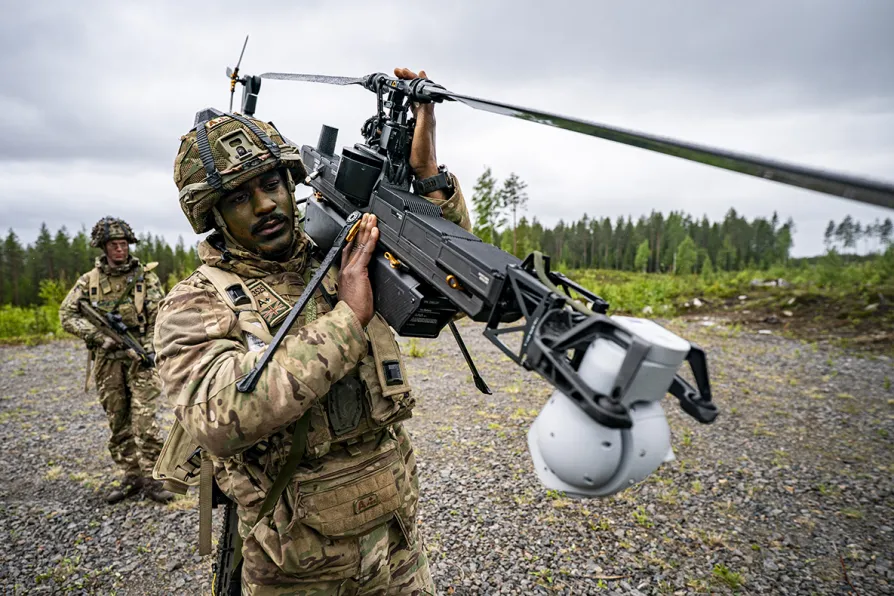 British Army soldiers from 3 Rifles carry a single-rotor helicopter style Ghost drone, at an undisclosed training ground less than 50 kilometres from the Russian border in Finland. Picture: Ben Birchall/PA Wire/PA Images. Monday May 25, 2026.

This summer’s fire outbreaks highlighted once again the deadly cost of job, equipment and funding cuts to the fire service. Ten years after the Grenfell tragedy, serious lessons still need to be learned, says STEVE WRIGHT
Live music and musical education are both under attack and threaten to impoverish our culture. The Musicians’ Union seeks allies in the fightback, writes NAOMI POHL
The TUC fell for the illusion of a ‘Social Europe’ in 1988 and backed single-market membership. DOUG NICHOLLS argues that dramatic changes in the EU prove the need for an independent economic policy
As Cuba faces an unprecedented US energy siege and growing threats of military intervention, TUC Congress must stand unequivocally with Cuban workers and their right to determine their own future, writes STEVE GILLAN, POA general secretary and TUC president
By organising for boycotts, divestment and sanctions, trade unionists can turn solidarity into action, writes JESS BARNARD





DONALD TRUMP’s forever wars — military, economic and information — are having a major impact on the cost of living, welfare and living standards on populations in the US and in its European allies, including Britain.
These wars are central to the US strategy to maintain its global domination and the rises in military spending needed to sustain them.
In Britain, this is reflected in some trade union discussions in the run-up to the TUC Congress this year.
A motion from the UCU that builds on the “Wages Not Weapons” motion carried last year notes that “working people in the UK face insecurity arising from conflict, inequality, attacks on democratic rights and climate change” and that “lasting security is advanced through social justice, diplomacy, peace building, human rights and respect for international law.”
It calls on the TUC general council to build on “the Wages not Weapons campaign by advancing a trade union vision of security based on decent work, quality public services, equality, climate action, democracy and peace.”
In August, 10 trade union general secretaries sent a letter to Prime Minister Andy Burnham entitled “Opposing the US and Israel’s war on Iran is a cost-of-living priority.” It called on the PM to “to vocally and actively oppose the war and to revoke the UK’s approval of US air strikes from British bases.”
They cited the Joseph Rowntree Foundation report that shows the war on Iran has already undone the marginal improvements in living standards made since 2024 and they concluded that “opposing the war in Iran is necessary if the cost-of-living agenda is to succeed.”
The same could be said of British complicity in the genocide in Gaza and support for the US-led war against Russia that is being waged in Ukraine. There’s been a sizeable financial British outlay in support of the latter to the tune of £25 billion.
The reality of military spending informing these trade union discussions is alarming. Britain is still reeling from the austerity budgets imposed since the financial crash of 2008-9, holding down real wages and slashing welfare and public-sector budgets.
This has intensified from 2022 with Britain’s military budget increasing by almost £10bn in the four years to 2026 and set to rise by over £11bn in the next three years — how much more is yet to be announced by the new government.
The government is now facing real difficulties as cash-strapped public services, slashed welfare budgets and rising poverty make these changes deeply unpopular.
But the situation can only get much worse with military spending at 2.36 per cent of GDP now and Trump demanding that it reaches 3.5 per cent of GDP by 2035.
Add to this the costs resulting from the wars that Britain supports. The national Institute for Economic and Social Research estimates that real GDP in Britain will be down approximately £11.5bn in 2026 and £17bn lower in 2027. After that GDP is anticipated to be £17bn less annually than it was before the war on Iran.
On the cost of living, the Centre for Economic and Social Research projects the cost to British households of £2,000 over 2026 and 2027.
Inflationary pressures
The increased cost of fuel arising from oil shortages causes price rises across the economy. In Britain, household gas and electricity prices rose 13 per cent in July and Ofgem has announced they will rise a further 4 per cent from October. As all sectors of the economy use energy to produce their outputs, inflation is currently passing into other sectors. This will progressively drive up prices across many essential products.
Inflation is expected to reach between 3.2 and 3.6 per cent in the last quarter of 2026. Unemployment it expected to reach 5 per cent by the end of the year with youth unemployment reaching a staggering 16.5 per cent.
Budget cuts to accommodate increases in military spending have also meant cuts in the budget to tackle climate change. The effect of these cuts were exposed during the unprecedented heatwaves this summer. Britain faced an acute shortage of firefighting aircraft to tackle the wildfires. Britain has no dedicated fleet for this purpose. Aircraft with firefighting capacity were either unsuitably equipped or deployed overseas at British air bases such as RAF Akrotiri in Cyprus.
At TUC Congress an amendment to a motion from the firefighter’s union FBU calls for a National Wildfire Summit and an increase in the number of firefighters and provision of the required equipment to tackle these increasing wildfire risks (12,000 firefighter jobs have been cut since 2010).
A motion from the TSSA union makes connections between the war on Iran, rises in energy and food prices and rises in fossil-fuel company profits. It calls for a return to pre-April 2022 energy price cap rates; financial support for households facing rising costs funded by taxes on profits; increased investment in renewables and reducing dependency on fossil fuels and an end to the Iran war.
Clearly, increased militarisation undermines Britain’s ability to tackle climate change as well as damaging the living standards of its population. These very serious matters are to be discussed at the TUC Congress.
Britain, and the world, is faced with the twin existential threats of climate catastrophe and widespread war.
We need the TUC to be at the centre of campaigns to tackle the acute problems caused by increased militarisation and wars in the shape of a cost-of-living crisis and falling living standards.
Moreover, we all need to act in the interests of future generations of humanity and their ability to live on this planet.
Maggie Simpson and Bob Oram on behalf of No Cold War Britain.

Similar stories

As Cuba faces an unprecedented US energy siege and growing threats of military intervention, TUC Congress must stand unequivocally with Cuban workers and their right to determine their own future, writes STEVE GILLAN, POA general secretary and TUC president
![Ontario Premier Doug Ford speaks in front of a live map of smoke movement during a press conference updating media on ongoing forest fires in Ontario, in Toronto [Pic: Cole Burston/The Canadian Press via AP]](https://msd11.gn.apc.org/sites/default/files/styles/desktop/public/2026-07/8canadafire.jpg.webp?itok=9a8C3kap)
As Ontario burns, campaigners are demanding action – not more pipelines, says DAVE McKEE

SOPHIE BOLT argues that spending more on military will harm rather than benefit Britain by diverting vital resources away from essential public services

We need a government that invests in saving lives not destroying them, argues SOPHIE BOLT