Labour must deliver its manifesto promises in full and begin the bigger task of restoring workers’ collective power, says MATT WRACK


 Latest editorial
We need a rolling-stock revolution to get Britain back on track
Privatisation and the break-up of our integrated rail system have been disasters. The Labour government’s pledges on reindustrialisation and renationalisation offer the solution, argues DAVE CALFE of Aslef
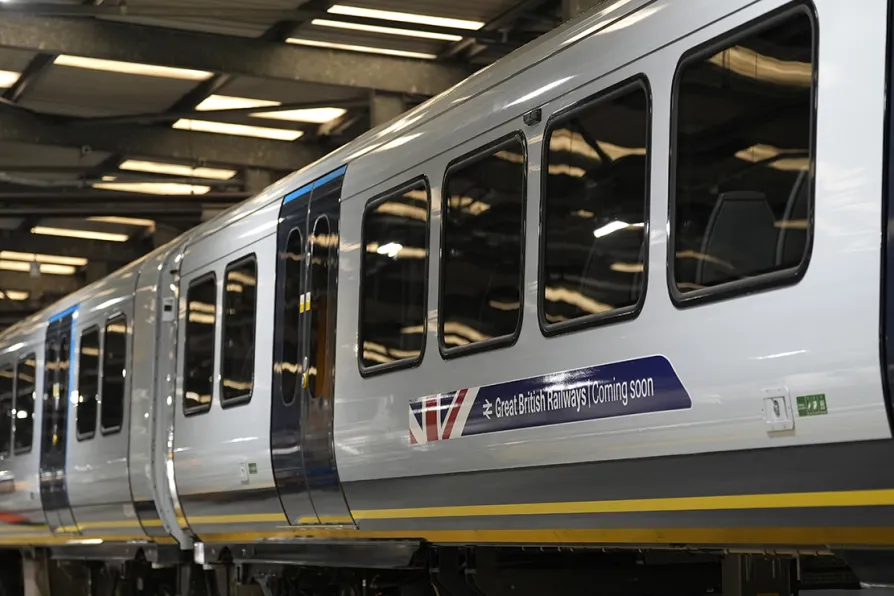 Great British Railways branding on the side of a train carriage at the South Western Railway (SWR) Bournemouth Traincare Depot, in Dorset, ahead of the rail operator being the first to be renationalised under the Labour. Picture: Andrew Matthews/PA Archiv
This summer’s fire outbreaks highlighted once again the deadly cost of job, equipment and funding cuts to the fire service. Ten years after the Grenfell tragedy, serious lessons still need to be learned, says STEVE WRIGHT
Live music and musical education are both under attack and threaten to impoverish our culture. The Musicians’ Union seeks allies in the fightback, writes NAOMI POHL
The TUC fell for the illusion of a ‘Social Europe’ in 1988 and backed single-market membership. DOUG NICHOLLS argues that dramatic changes in the EU prove the need for an independent economic policy
As Cuba faces an unprecedented US energy siege and growing threats of military intervention, TUC Congress must stand unequivocally with Cuban workers and their right to determine their own future, writes STEVE GILLAN, POA general secretary and TUC president
By organising for boycotts, divestment and sanctions, trade unionists can turn solidarity into action, writes JESS BARNARD





WE are pleased that the Labour government is starting to deliver on two of its key manifesto pledges: to bring in A New Deal for Working People, the biggest increase in workers’ rights in a generation, and to bring Britain’s railways back into public ownership with the Railways Bill, which is going through the House of Lords.
Britain’s railway infrastructure — the track, the signalling and the level crossings, the bridges, culverts and viaducts, as well as most of the stations on the network — are publicly owned by Network Rail.
This has been responsible for our rail infrastructure for the past 24 years, since Railtrack, the private company that ran it from John Major’s ill-advised privatisation of British Rail in 1994 until 2002, cut far too many corners to turn a profit and was found responsible for the fatal train crashes at Southall and Ladbroke Grove.
Britain’s 14 passenger-train companies, privatised by the Tories, are being brought back under the Department for Transport (DfT) and, eventually, Great British Railways (GBR), which we welcome. Labour will then have put back together the wheels and the steel — the passenger train operating companies (TOCs) and Network Rail — a policy for which Aslef has pushed since 1994.
But there are two glaring exceptions to the new public ownership rule — the freight operating companies (FOCs), perpetually going after each other’s existing freight traffic, rather than trying to grow the business of freight on rail; and the rolling stock companies (Roscos).
The rail freight sector needs help from the government — support to level up the playing field with road haulage — and we are pushing hard for that. Not just for our members who work in the rail-freight sector, but because it makes sense for the environment and the economy.
The privatisation of the Roscos in 1994 was a disgrace. A few companies picked up public property — the locomotives and the carriages — for a fraction of their true value and a few people became multimillionaires overnight. It was, and is, a national scandal.
Rather than buying their own rolling stock, TOCs and FOCs rent their trains on extremely lucrative short- or long-term leasing agreements. Lucrative, that is, for the three private Roscos: Porterbrook, Angel Trains and Eversholt. In the year 2024-25, passenger fare income was £11.5 billion (84.56 per cent of operating expenditure) as total train operator expenditure was £13.4bn, while leasing costs for the TOCs were a staggering £4.1bn (30.6 per cent).
In the past five years, the Roscos have taken £2.9bn in profits and dividends out of the industry — money haemorrhaging from the network, often shifted offshore to tax havens, which could have been used here in Britain to improve our infrastructure or reduce fares for passengers.
The result is staggeringly inefficient — with trains sitting in storage, not being used, varying types of rolling stock across the network, meaning additional training time for staff to learn the workings of different stock — and it means there is no strategic vision or long-term plan, which is what the railway needs if it is to be successful.
In contrast, Mayor of Liverpool City Region Steve Rotheram chose to purchase new rolling stock for Merseyrail in the north-west of England outright. He knows that buying, rather than leasing, the rolling stock will save Merseyrail, and taxpayers, millions of pounds in the medium- and long-term.
It has also enabled much greater control over the design, integration and maintenance strategy for the rolling stock. Transport for London also initially purchased the trains for its new Elizabeth Line with a loan from the European Investment Bank
Andy Burnham has identified the deindustrialisation of Britain — particularly under the rapacious neoliberal governments of Margaret Thatcher, John Major, David Cameron, Theresa May, and Boris Johnson — as a significant reason for this country’s current plight.
Bringing Britain’s rolling stock back under public control — so that we own, rather than lease, the trains — will not only save us billions but will also help our economy by building the rolling stock we need here in Britain. Using British steel and British workers to build the new British railway. Andy has talked this summer about the problem of deindustrialisation, and the long shadow it casts over our country. Building our own rolling stock, here in Britain, will encourage innovation, create jobs, and reindustrialise the key sectors of our economy.
That’s why we say it’s time we owned our own trains — to get our money back on track, not leaving to move offshore, and to get Britain moving on the right lines again.
Dave Calfe is general secretary of Aslef, the train drivers’ trade union.

Similar stories
Public ownership of Great British Railways has enormous potential to improve our railway network, but that can’t happen unless jobs, employee rights and union recognition is at the heart of the transition, argues MARYAM ESLAMDOUST