
RITA DI SANTO contemplates two films about journalism that opened this year’s festival


Letters from Latin America
Memory, inheritance and resistance: a compelling Brazilian memoir, Argentinian short stories about the Japanese diaspora, and the Chilean skies of childhood, with LEO BOIX

GEOFF BOTTOMS applauds a world-class production King Lear that pits late feudalism against a rising bourgeoisie
MARY CONWAY keeps up with the sheer pace of a drama about the terrible gap between sanitised reporting and real-life turmoil of race and gender
New releases from Brian Fallon, Antony Szmierek and Hollow Hand
APURBA CHATTERJEE explains how British artists in India used the “picturesque” to reshape colonial landscapes and celebrate imperial power
PAUL DONOVAN welcomes a revival of Reginald Rose’s classic play that reminds us of the fundamental need for trials with juries





ON January 20 1971, a public holiday in Brazil, former congressman Rubens Paiva was arrested at his Rio de Janeiro home by agents of the military dictatorship. He was tortured and murdered; his body was never recovered. His wife, Eunice, was detained for 12 days, while their 15-year-old daughter Eliana was imprisoned for 24 hours.
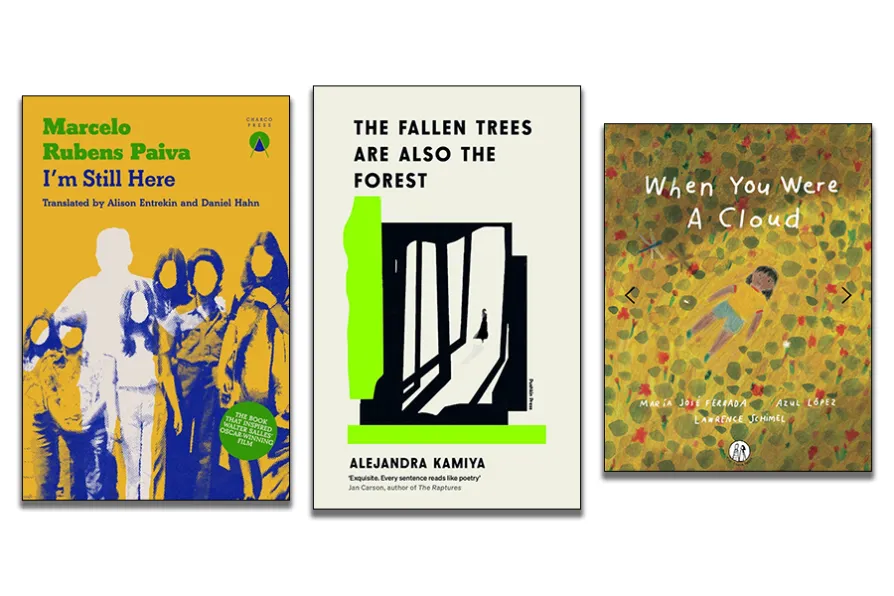
Marcelo Rubens Paiva was 11 when his father disappeared. His extraordinary I’m Still Here (Charco Press, £11.99), translated by Alison Entrekin and Daniel Hahn, recounts this intimate catastrophe and expands into the story of a country forced to reckon with dictatorship, state violence and organised forgetting.
At its centre is the formidable Eunice. After her husband’s disappearance, she studied law, campaigned for the families of the disappeared and fought for Indigenous rights. Her struggle reminds us that authoritarianism does not end when the torturers leave their cells or generals relinquish power: it survives through silence, impunity and institutions determined to forget.
The book, which inspired Walter Salles’s Oscar-winning film, is also a portrait of a family living through the US-backed dictatorships that scarred Latin America.
Later, Eunice develops Alzheimer’s, giving the book its cruellest irony: a woman who fought against historical amnesia begins losing her own memory. Yet Paiva refuses easy sentimentality. His father’s death, he writes, “has no end.” Neither, perhaps, does the political work of remembering.
Memory takes a quieter but equally compelling form in Argentinian writer Alejandra Kamiya’s The Fallen Trees Are Also The Forest (Pushkin Press, £12.99), translated, again beautifully, by Hahn. These pared-down stories explore Japanese-Argentinian lives, migration and the peculiar objects through which history survives.
In the story Rice, a lunch between father and daughter makes food a repository of inheritance. Elsewhere, there are a soldier, names, births, and distances. In Parting, a mother naming her baby Kenta suddenly feels herself inside something “much bigger”: a history beginning on the other side of the world and continuing in Argentina.
Kamiya understands that migration is not simply movement between countries but an accumulation of gestures, languages and memories. Her stories are tiny machines with enormous interiors.
There is another kind of inheritance in Chilean writer Maria Jose Ferrada’s When You Were A Cloud (Emma Press, £8,99), illustrated by Mexican artist Azul Lopez and translated by Lawrence Schimel. Ostensibly a children’s book, this bilingual work turns language into play: before becoming “you,” the child was a cloud transforming into dragons, sheep and elephants.
Lopez’s dreamlike images create their own parallel narrative, while Schimel allows Ferrada’s music and strangeness to breathe. As in poem 12: “Now let’s look at the sky—/ let’s talk about the day when, before you were you,/ you were cloud/ and your favourite thing to do was to speed across the sky/ becoming/ a dragon,/ a sheep,/ an elephant—/ all the animals/ against the wide open blue.”
These three very different books ask what one generation gives another: testimony, names, languages, stories, even imaginary skies. Against dictatorship, displacement and forgetting, memory becomes more than nostalgia. It becomes a form of solidarity, and sometimes, quietly, a form of resistance.

Similar stories
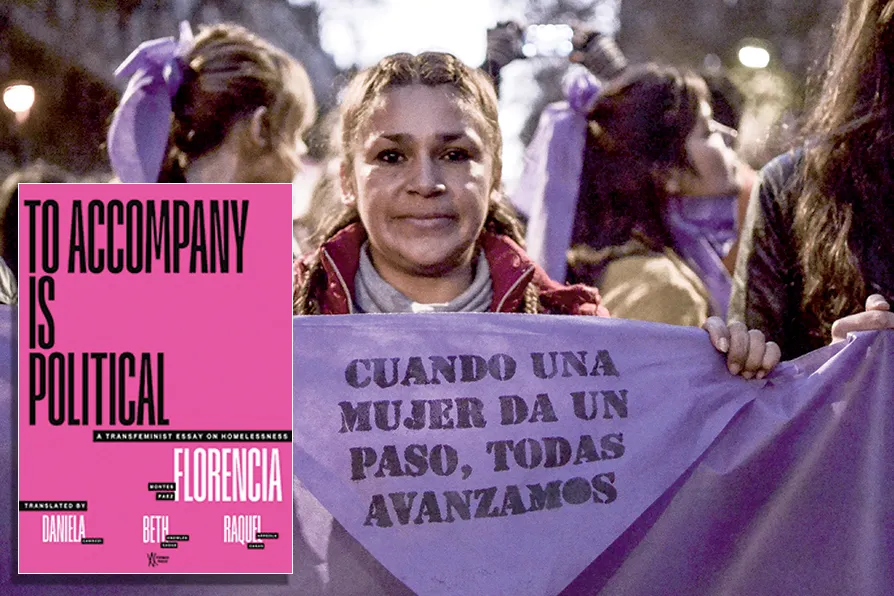
Rescue care from the realm of sentimentality: what happens when we replace the vertical relationship between benefactor and victim with interdependence, collective organisation and struggle?
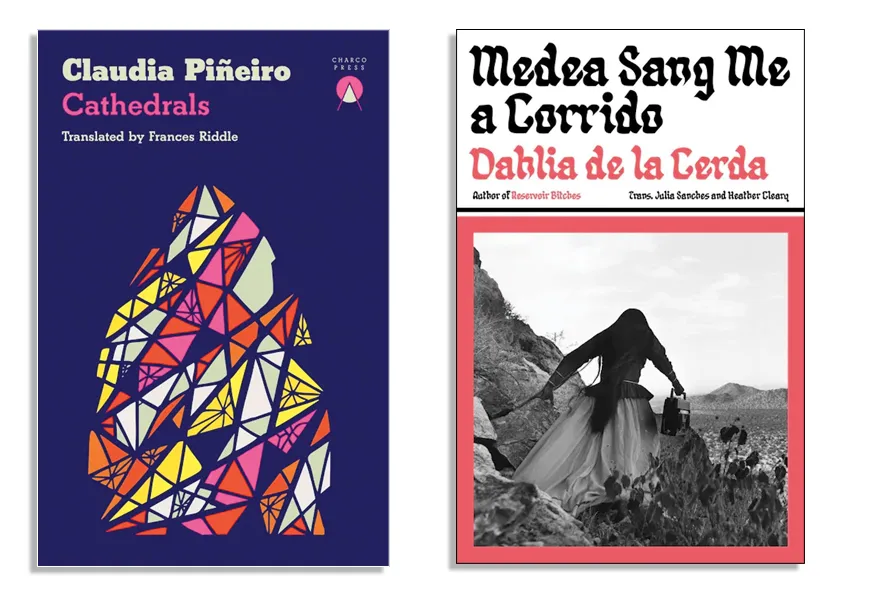
LEO BOIX reviews two powerful Latin American novels in which myth and crime fiction expose the deadly consequences of patriarchy, clandestine abortion and state violence
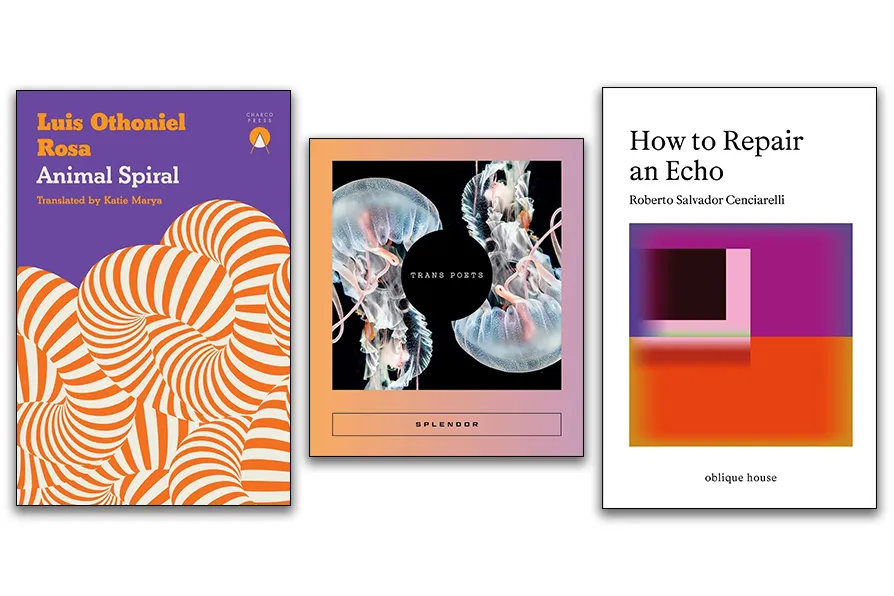
From post-human revolution in Puerto Rico to trans poetics and queer mythmaking, these three books that imagine new ways of being together
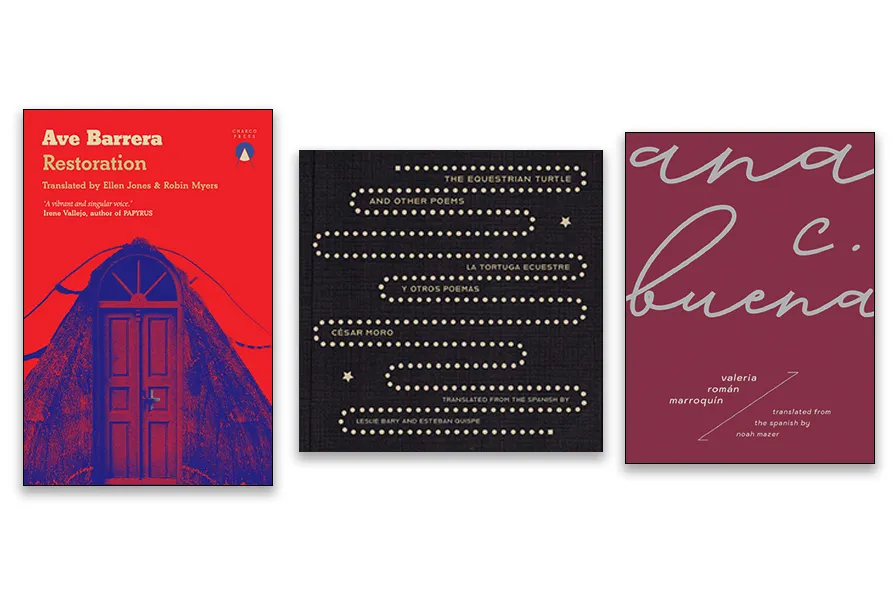
A ghost story by Mexican Ave Barrera, a Surrealist poetry collection by Peruvian Cesar Moro, and a manifesto-poem on women’s labour and capitalist havoc by Peruvian Valeria Roman Marroquin