APURBA CHATTERJEE explains how British artists in India used the “picturesque” to reshape colonial landscapes and celebrate imperial power


 Latest editorial

Still angry, still relevant
PAUL DONOVAN welcomes a revival of Reginald Rose’s classic play that reminds us of the fundamental need for trials with juries
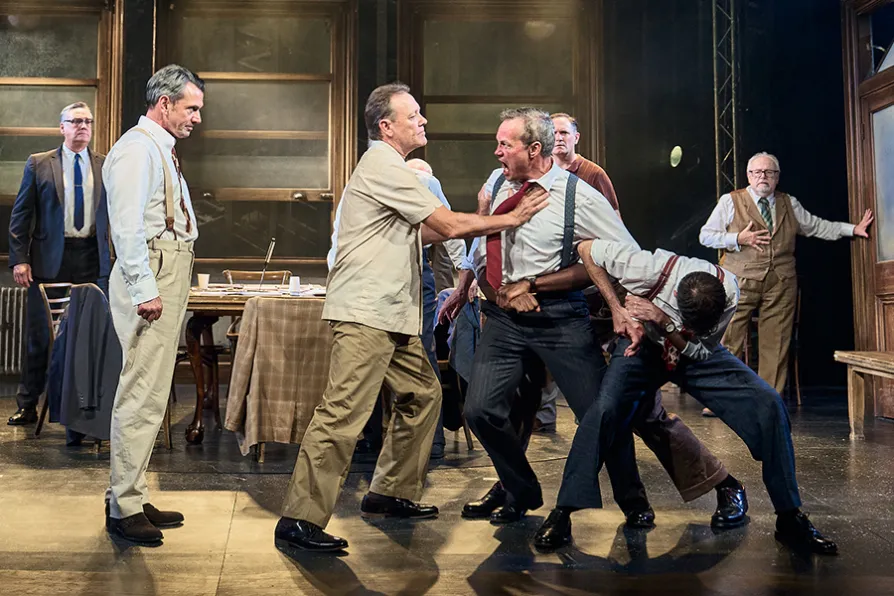 ANGER AND BIGOTRY: The cast of Twelve Angry Men [Pic: Manuel Harlan]
SIMON PARSONS applauds an exceptional performance of Wesker’s little-known play, by the same actor for whom it was written 45 years ago
ANDY HEDGECOCK and MARIA DUARTE review Late Fame, The Death of Robin Hood, Leviticus, and Gail Daughtry and the Celebrity Sex Pass
ANGUS REID recommends a uniquely accomplished documentary collage that contemplates our relation to the natural world
GORDON PARSONS enjoys Kant’s ‘mind-boggling’ theory of human reality: that we create the reality we experience





Twelve Angry Men
Theatre Royal, Windsor
⭑⭑⭑⭑⭑
This excellent production of Twelve Angry men seems as relevant today as it was when first staged, in the 1950s. These are bitter men, driven to anger and bigotry by their own life experiences. Women served on juries in the 1950s but could ask to be excused, which many did. It was only in later years that serving became obligatory for women.
The contemporary touch comes with a character like Juror 10, played by Tristan Gemmill, who bears more than a passing resemblance to the disempowered, angry supporters of Reform today. Though, notably, even this character does find some redemption in the end.
The whole idea of Twelve Angry Men sprang from writer Reginald Rose’s experience of serving on a jury. A simple idea transformed into a great drama, made famous initially in the film adaptation, starring Henry Fonda.
Recognised as one of Fonda’s greatest performances, his role as Juror 8 is played excellently by Gray O’Brien in this production. He is the lightening conductor-come-defence-lawyer in the jury room. Dressed in a virtuoso white suit, there is very little detail of the background of the character.
Nemesis, Juror 3 (Bill Ward) makes fun of him, likening him at one point to renowned US defence lawyer Clarence Darrow.
The whole drama takes place in the jury room, the characters circling the table, breaking off for regular visits to the water cooler. The case is the alleged murder of a father by his teenage son. It is testimony to how good the interaction and dialogue between the characters is that it keeps you engaged for the whole two hours 20 minutes.
The play remains as relevant today as it was 70 years ago. Those who have served on a jury will recognise many of the characters. The ones who have made up their mind from the start (11 at the beginning); then, those willing to listen and change their minds in the face of reason; and finally, those who just want it over as quickly as possible, who are not really bothered by the outcome.
A nuance that could be added today would be the difference that exists between employed and self-employed jury members, with the latter often having a greater tendency to want to get away.
The play is a celebration of the jury system, highlighting exactly why it is so important to maintain. It also highlights both the best and worst of human nature with, of course, reason and virtue coming out as the winners.
In all, there are excellent performances across this production. Bill Ward is particularly outstanding as the raging Juror 3. The piece is well directed by Christopher Hayden, who brings a seamless flow to the production. He also kindles the contemporary feel to a play that is timeless in so many ways. This is an excellent production, raising many important issues. Well worth seeing.
Runs at Theatre Royal Windsor till September 12; on tour until December 3. For venues and tickets see: kenwright.com
[Pic: Manuel Harlan]

Similar stories

SIMON PARSONS applauds an exceptional performance of Wesker’s little-known play, by the same actor for whom it was written 45 years ago
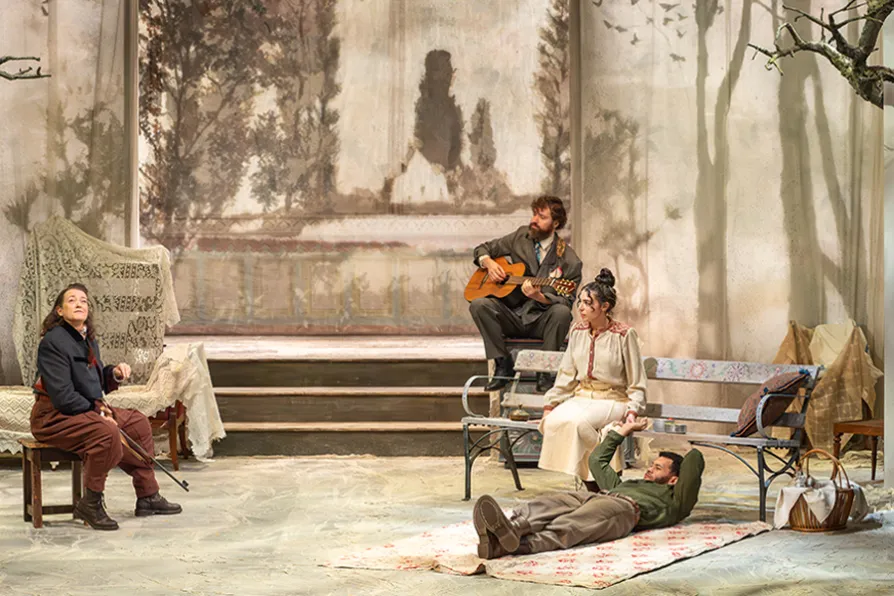
GORDON PARSONS appreciates fine performances and a feel for ambiguity, but misses the music of the dialogue
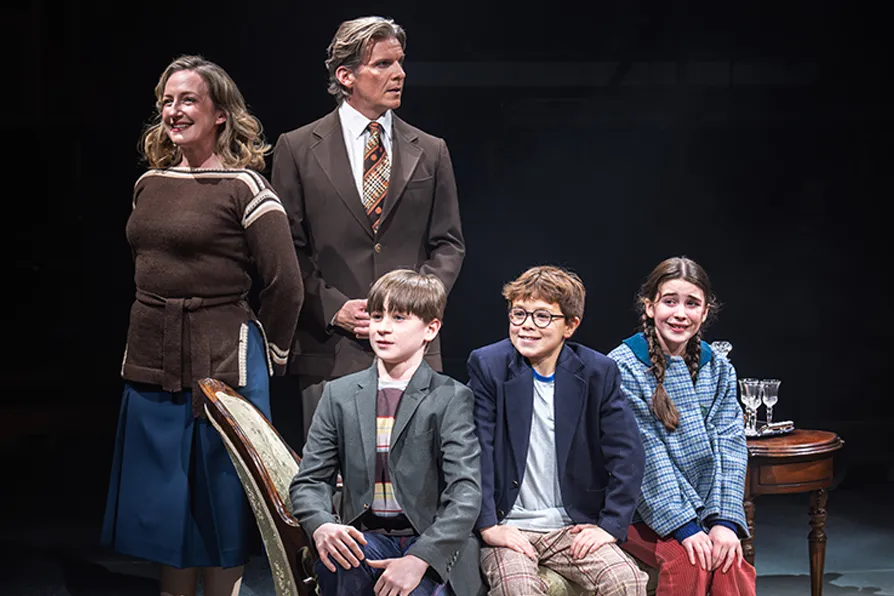
PAUL FOLEY revels in the coolest, most joyful piece of theatre you’ll get this summer
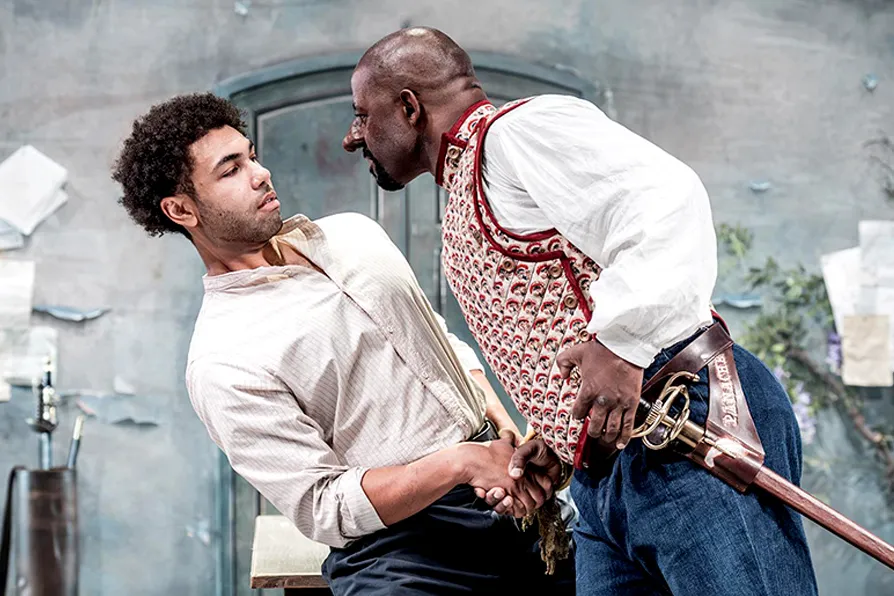
GORDON PARSONS is blown away by a superb production of Rostand’s comedy of verbal panache and swordmanship