MARY CONWAY keeps up with the sheer pace of a drama about the terrible gap between sanitised reporting and real-life turmoil of race and gender


 Latest editorial

Tragic grandeur
GEOFF BOTTOMS applauds a world-class production King Lear that pits late feudalism against a rising bourgeoisie
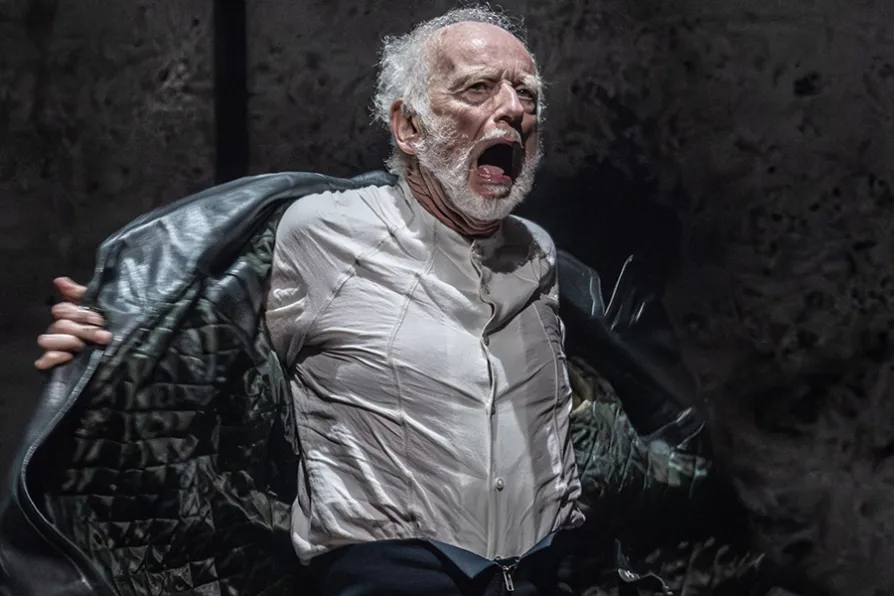 VULNERABILITY AND VIOLENCE: Ian McDiarmid as King Lear [Pic: Johan Persson]

New releases from Brian Fallon, Antony Szmierek and Hollow Hand
APURBA CHATTERJEE explains how British artists in India used the “picturesque” to reshape colonial landscapes and celebrate imperial power
PAUL DONOVAN welcomes a revival of Reginald Rose’s classic play that reminds us of the fundamental need for trials with juries
SIMON PARSONS applauds an exceptional performance of Wesker’s little-known play, by the same actor for whom it was written 45 years ago





King Lear
The Crucible Theatre, Sheffield
★★★★★
WHILE many argue that Shakespeare is irrelevant today due to his challenging, antiquated language, deep-seated racism, sexism, misogyny, classism and use of patriarchal and colonialist tropes, others argue that his universal themes of ambition, betrayal, love, grief, and jealousy are timeless and mirror modern life.
Yet if we view his work in its historical context as a direct reflection of the transition from late feudalism to early merchant capitalism, then it captures the anxieties, class conflicts and social upheavals of an era defined by the primitive accumulation of capital, with lessons for navigating today’s transitional struggles.
Nowhere is this more clearly seen than in his greatest tragedy King Lear, and the latest production by Sheffield Theatres, in association with the Michael Grandage Company, does it more than justice, with the award-winning Ian McDiarmid giving a world-class performance, worthy of the title role.
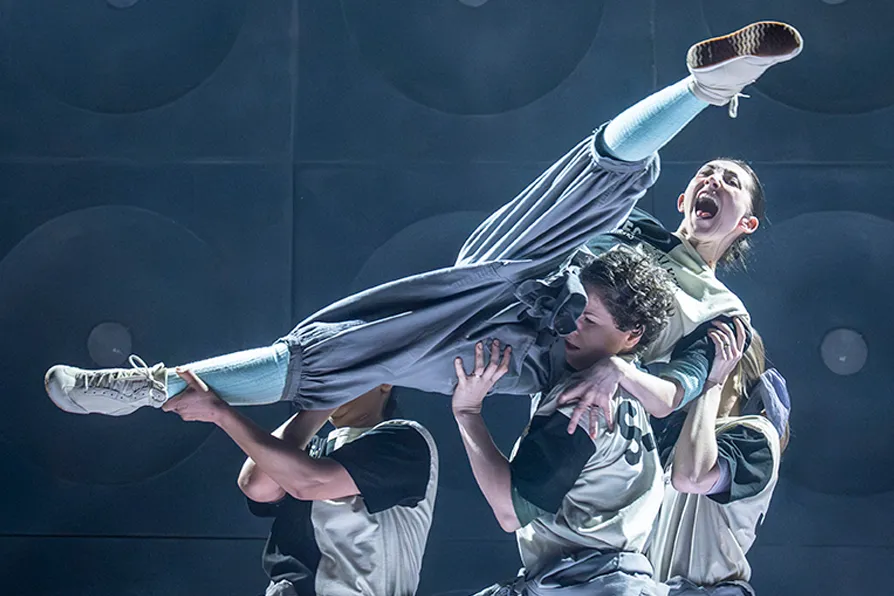
In a test of filial love, the ageing King Lear divides his kingdom between his two flattering older daughters, Goneril and Regan, while banishing his honest youngest daughter, Cordelia. The older sisters, chillingly played by Katie Wimpenny and Justina Kehinde, soon betray the king, driving him into madness during a violent storm, together with his Fool (Max Revell) whose comical breaking and popping street dancing shadows Lear’s emotions and movements to perfection.
Stripped of his crown and wealth, Lear undergoes a materialist awakening. Exposed to the elements, he famously recognises that he has taken “too little care” of the poor and unprivileged, wishing that “distribution should undo excess, and each man have enough.”
In a subplot that mirrors Lear’s parental blindness, the Earl of Gloucester believes the lies of his illegitimate son Edmund, and banishes his loyal son Edgar, only to be betrayed by Edmund to Lear’s enemies, who brutally blind him. Both sons are brilliantly portrayed, with Fode Simbo as Edmund rising to the part of the disruptive malcontent in a way that elicits mixed feelings towards the character, while Harry Redding as Edgar handles his five personas with consummate skill.
Edgar later kills Edmund in a duel, and Gloucester dies from shock, while Cordelia returns with an army to save her father but is killed, and a heartbroken Lear dies of grief, alongside his other two daughters.
Lear and Gloucester represent the old feudal aristocracy, where power relies on divine right, birth order and traditional social bonds, while Goneril, Regan and Edmund embody a ruthless, rising bourgeois that values contract, profit and individual ambition over loyalty. This lies at the heart of the tragedy.
Directed by Titas Halder, and remaining true to the traditional classic text, this is Lear in the raw, removing any safety barrier between the audience and the cold, indifferent nature of Lear’s universe, with all its human vulnerability and brutal violence. Visceral and disturbing in all its tragic grandeur, this is theatre at its most compelling and well worth the captivating yet unsettling experience.
Runs until September 19. Box office: (0114) 249-6000, sheffieldtheatres.co.uk.

Similar stories
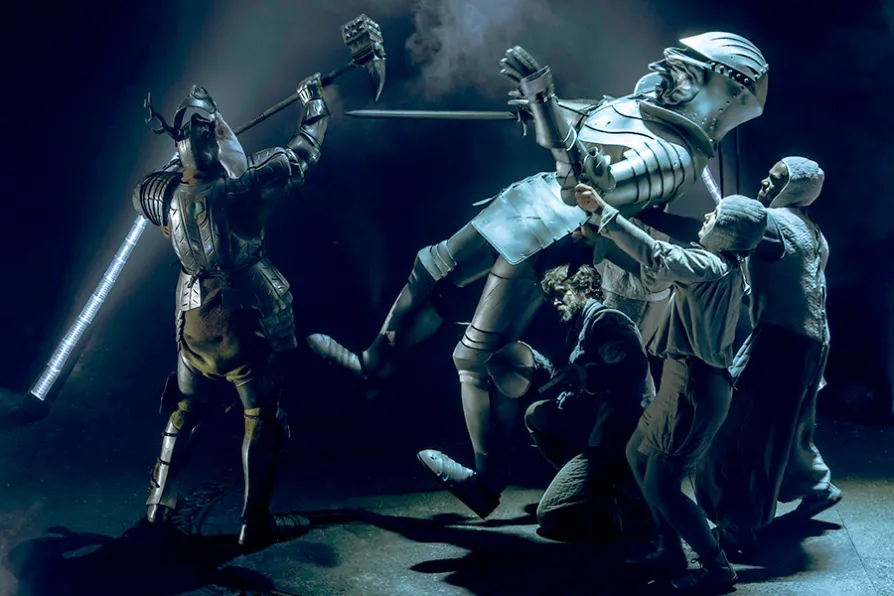
Family issues and dragon-fuelled history amount to a vacuous spectacle that ill-fits the theatre, muses SIMON PARSONS
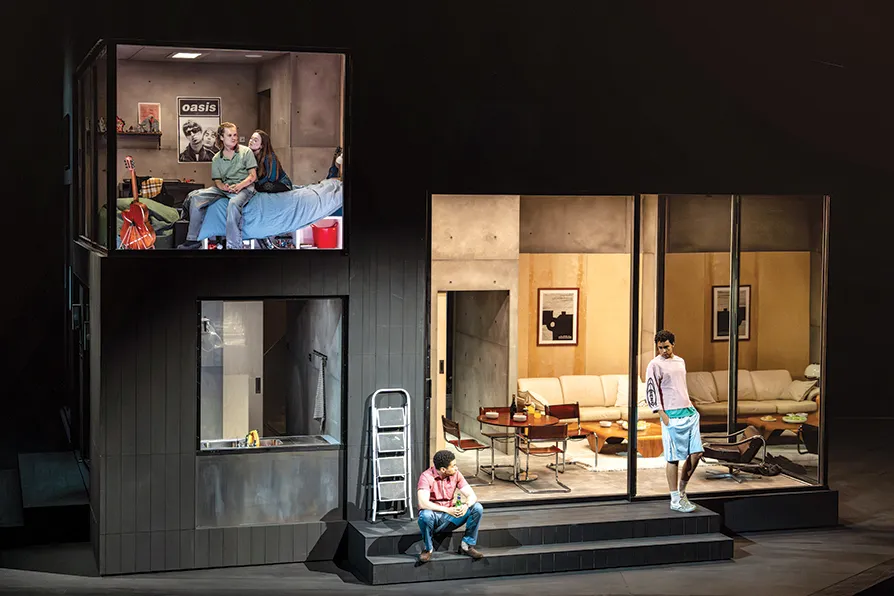
KEITH RICHMOND relishes a superbly conceived modern version of Aeschylus’ drama of murderous family succession
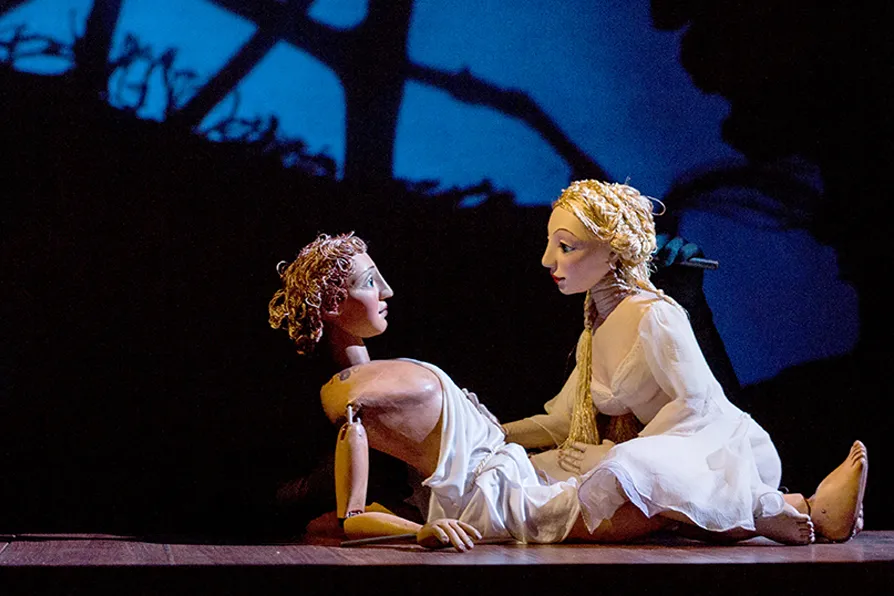
GEORGE FOGARTY is dazzled by a breathtakingly skillful puppet version of Shakespeare’s greatest love poem
GEOFF BOTTOMS recommends an inspiring, political and bittersweet account of the munitions factory workers who are the fore-runners of the modern women’s game