ANDY HEDGECOCK and MARIA DUARTE review Late Fame, The Death of Robin Hood, Leviticus, and Gail Daughtry and the Celebrity Sex Pass


 Latest editorial

Weimar: turning a blind eye to the far right
MARJ MAYO recommends an engaging, if chilling, collection of diaries and letters that trace a population's capacity for accommodation with Nazism
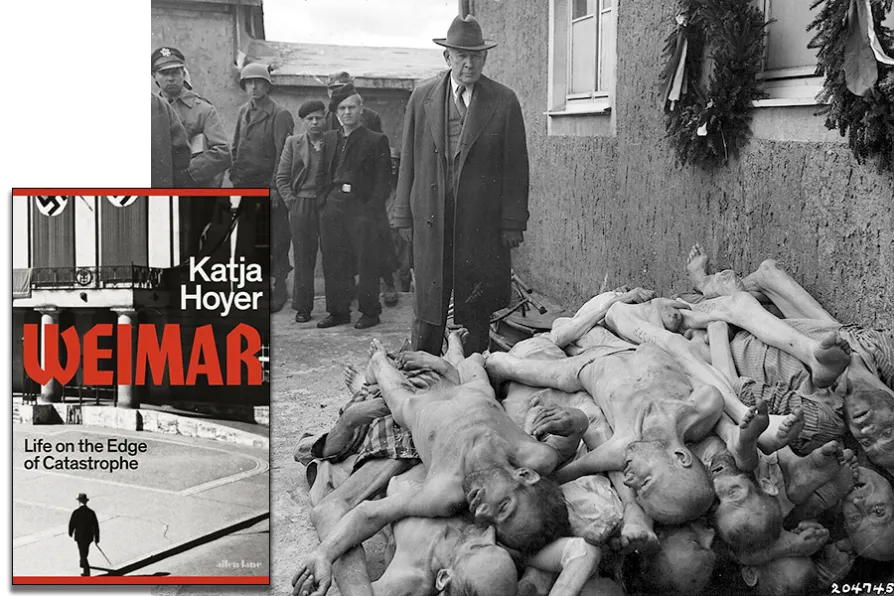 THE REALITY OF BUCHENWALD: Senator Alben W. Barkley of Kentucky views the evidence at first hand at Buchenwald concentration camp, Weimar, Germany, 24 April 1945 [Pic: Public Domain]
GORDON PARSONS enjoys Kant’s ‘mind-boggling’ theory of human reality: that we create the reality we experience
DAVID RABY welcomes a biography that emphasises how Fidel’s unique characteristics became hallmarks of the ongoing Cuban revolutionary process
IAN SINCLAIR recommends a readable, if partisan, account of the astonishing campaign of New York's new mayor
MATTHEW HAWKINS witnesses a contemporary ballet that represents human life as subjected to artificial intelligence
by Marwa Paikan





Weimar: Life on the Edge of Catastrophe
Katja Hoyer, Allen Lane
THE Weimar Republic is the subject of considerable interest right now. Why did this young democracy deteriorate so rapidly, as the Nazis rose to power in Germany? And what — if anything — can we learn from this period today, when faced with the rise of the far right?
The author sets out to address these questions by focusing on the city of Weimar itself, and a selection of its citizens from shop keepers, hoteliers and academics through to aristocratic promoters of the city’s cultural heritage. These emerge as real people, rather than generic types, individuals with their own preoccupations and dilemmas, as recounted through their letters and diaries. This gives the book its particular strengths.
Weimar itself has an extraordinary cultural history. Goethe, Schiller and Nietzsche are just some of the names associated with its heritage.
The Nazis seem to have valued these associations, that offered them opportunities to widen their support base. So this was where they chose to hold their relaunch rally in 1926 – with some success. Despite some (particularly middle class) inhabitants’ distaste for the displays of thuggery which accompanied this relaunch, Weimar did still become a Nazi stronghold, winning 29 per cent of the votes, including middle-class votes, in 1929.
So why was this?
However unpalatable, the Nazis could be seen as keeping the threat of communism at bay. And as being good for the economy. The concentration camp at Buchenwald that was constructed just up the road, brought business – and jobs — to the area, for example.
Local people who were taken to view the camp by US soldiers, at the end of the war, were evidently horrified by what they saw, as one of the diarists explained. But he had been one of those whose small business had benefited from the establishment of the camp. So had he simply chosen not to know what had really been going on behind the gate?
The individuals whose letters and diaries run through the pages illustrate a range of such contradictions and ambivalences. Carl Weirich, the most prolific diarist, ran a stationery and print shop. Much of his diary focuses on his concerns with feeding his family and keeping his business going during the hyperinflation of 1923, and then again during the depression that followed the 1929 Wall Street crash. He was not an enthusiastic Nazi. But he did provide some financial support for the SS at one point – an example of pragmatic accommodation.
Nietzsche’s sister, Elizabeth Forster-Nietzsche, had her own ambivalences, despising the Nazis for being so uncouth and violent. But that didn’t prevent her from attempting to ingratiate herself with Hitler in order to get his financial support. Or from publishing a selection of her brother’s writings, presented in ways that chimed with Nazi ideology.
Meanwhile the Schmidt family ran the Hohenzollern Hotel, near the station, a hotel where Hitler himself had enjoyed staying. Unknown to him though, Rosa Schmidt was actually Jewish. She managed to conceal this until the war was nearly over, but she was eventually outed, perishing in a concentration camp as a result.
The stories of these individuals and their families make fascinating reading for their contradictions and their struggles in Weimar, during this period. Although some were less than admirable, to put it mildly, the author lets them speak for themselves, mostly without judgement. These were very believable people, trying to survive in extraordinary times, in more – or less – morally acceptable ways.
Whilst being relatively non-judgemental, Hoyer does raise some issues about accountability, though. What could these characters have done differently? What about their moral responsibility as human beings? How effective would such individual challenges have been anyway, the reader might ask, let alone individual challenges from the small businessmen, academics, intellectuals and aesthetes who wrote the letters and kept the diaries that provided so much evidence for this book?
The Nazis did actually bring some working-class jobs to Weimar but there seems to be far less evidence about such workers’ lives and struggles, whether individually or collectively. They were, perhaps, less likely to have kept diaries or engaged in lengthy correspondences anyway.
Karl Nehrling and his wife Heddy do provide very different illustrations of life in Weimar Germany. They and their dwindling band of social democrats continued to organise clandestine opposition to the Nazi regime, opposition that eventually cost Karl his life. There is evidence of extraordinary courage then, as well as evidence of accommodation, and worse. But Weimar: Life on the Edge of Catastrophe has relatively few such stories.
Morning Star readers should find this a very engaging read, bringing Weimar and a selection of its inhabitants to life during these critical years. Despite the limitations of the data, the book does provide plenty of disturbing material for further reflection too, chilling illustrations of people’s capacities for accommodation and acquiescence, turning a blind eye to the violence of the far right.

Similar stories
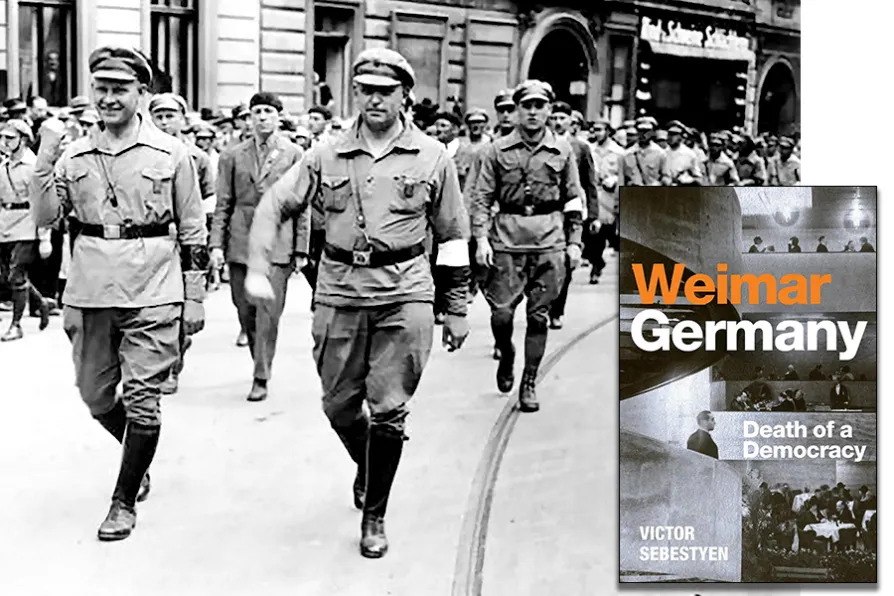
GORDON PARSONS recommends an entertaining account of the years between Germany’s defeat in WWI and Hitler’s seizure of power
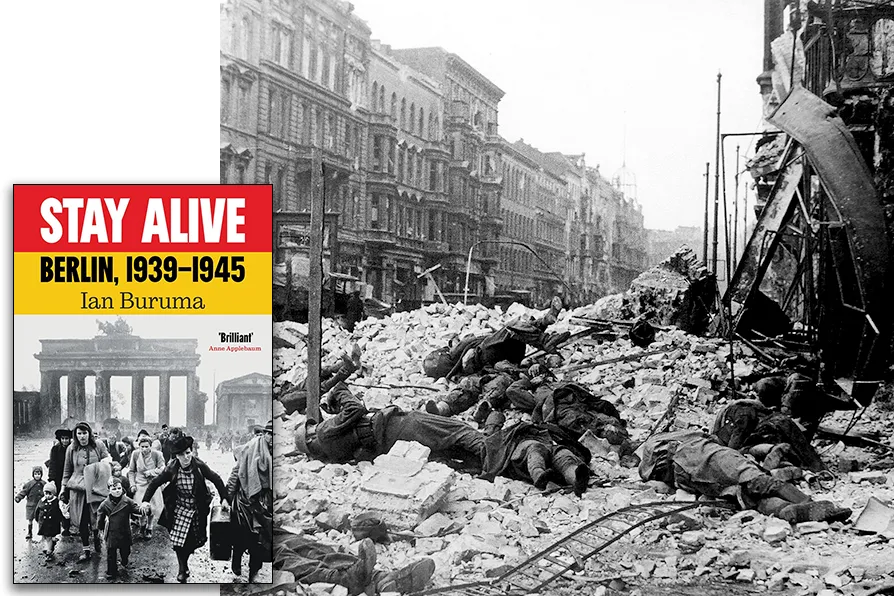
MARJ MAYO sees the contemporary relevance of this account of the consequences of a society’s accommodation with evil
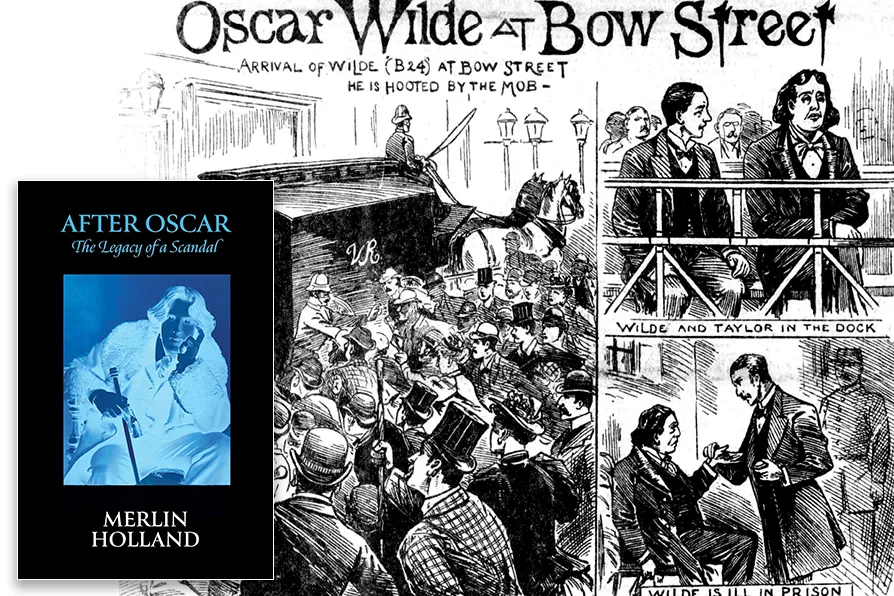
MARJORIE MAYO welcomes an account of family life after Oscar Wilde, a cathartic exercise, written by his grandson
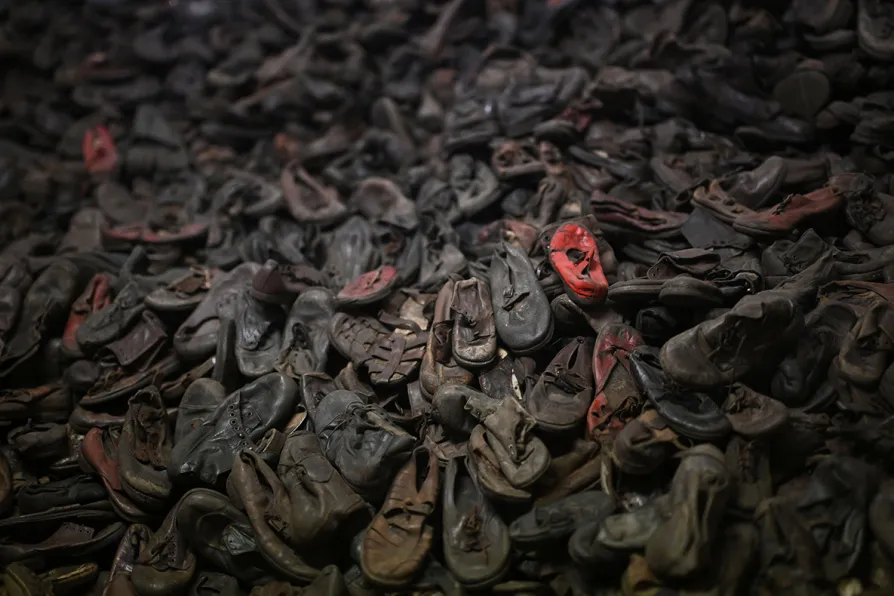
On May 16 1944, Romani families in Auschwitz-Birkenau armed themselves with stones, tools, and sheer collective will, forcing the SS to retreat – leaving a legacy of defiance that speaks directly to the fascisms of today, says VICTORIA HOLMES