RITA DI SANTO assesses the winners of the most politically charged festival to date


 Latest editorial
Revisiting the Weimar Republic
GORDON PARSONS recommends an entertaining account of the years between Germany’s defeat in WWI and Hitler’s seizure of power
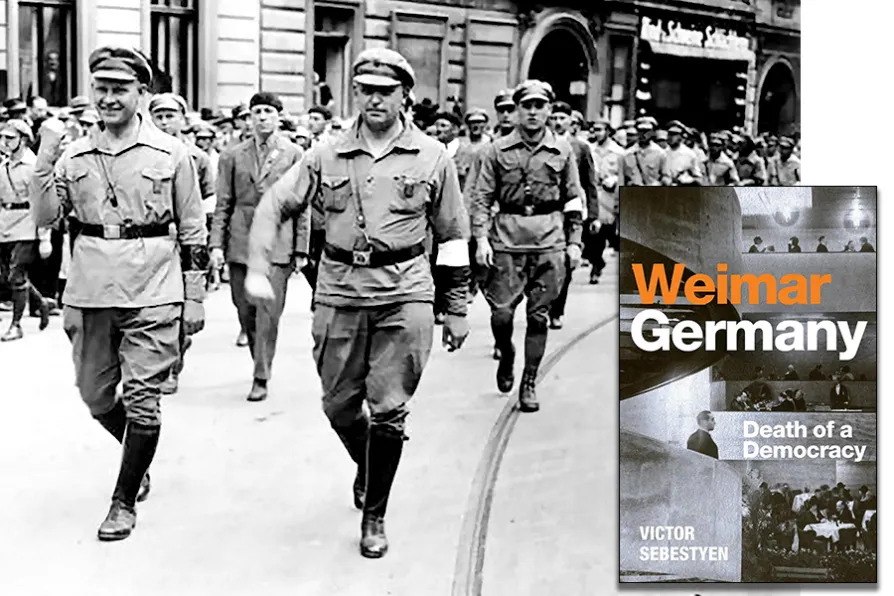 Communist Party (KPD) leader Ernst Thalmann (in foreground with raised clenched fist) and members of the Roter Frontkampferbund (RFB) marching through Berlin-Wedding, 1927 [Pic: German Federal Archives/CC]

KATARZYNA KOSMALA introduces a retrospective by one of the most significant figures in contemporary US photography
MAYER WAKEFIELD is entertained but let down by an audacious production that, sadly, doesn't ring true
MARY CONWAY is disappointed by drama that, despite accomplished performances, cannot overcome an unfocused script
New releases from Sam Carter, Spell Songs and Les Thomas





Weimar Germany: Death of a Democracy
Victor Sebestyen, Weidenfeld & Nicolson, £25
VICTOR SEBESTYEN explains why he should “waste paper and data storage space writing yet another book” on a 13-year moment, recognised and covered by so many historians and commentators, as perhaps the most formative period in modern times.
Here, unlike most, he is attempting to tell the fateful prologue to Hitler’s Third Reich, the embodiment of a toxic ideology which demonstrably was never wholly defeated, not “backwards” with hindsight but “from the point of view of what the people living at the time knew.”
All historians, through their selection of detail alone, inevitably reveal their own ideological take on the events, people and implications of the past they observe. Interestingly, Sebestyen’s method substantially avoids revealing personal subjectivity.
The result of this “I am a camera” or “microphone” approach, capturing the daily experiences of so many who lived through the political, economic, social, sexual and artistic turmoil of the Weimar Republic emerging from the Armageddon of the first world war, reads more like a theatrical tragi-comedy than a literary history.
Through 56 chapters, entitled like scenes from a drama: The Stab in the Back, An Everyday Anarchy, Come to the Cabaret etc, the well-travelled plot unravels, through the accounts of contemporaries — diarists, journalists and visitors.
With its extensive dramatis personae of politicians and artists, characters are physically described, adding the colour of stage directions to the narrative, such as “Bald, with a shaved head, of striking pallor, wan, his expression like a mask with two gleaming, piercing eyes. His features are ill-defined in his bloated face, and his narrow lips are barely visible… In one aspect, though, he is distinctive: his beautiful hands… He likes to laugh. Loudly.”
A new tentative and compromising Republican government, replacing the Kaiser-led ancien regime, faced a fractured and bankrupt society, with the right clinging to the myth that a potentially victorious army and country had been betrayed by Jewish Bolsheviks and financiers at home, while the left looked towards socialist revolution.
From the start “the right-wing parties… called Germany the ‘Jew Republic’ led by traitors and ‘The November Criminals’” referring to those who signed the armistice in 1918. Despite establishing a constitution, at the time the most progressive in Europe, the Republic, hamstrung by the Versailles treaty’s vast reparations demands, resorted to blindly fuelling infamous hyperinflation by printing ever more money.
Sebastien organises the book skilfully. After introducing the context of Weimar, short chapters focus on critical moments that shaped the new Germany. A Failed Coup, describing the Spartacist uprising in Berlin, ruthlessly put down by the Freikorps, far-right ex- soldiers forming the “military wing of the democratic government,” is recounted in vivid detail, particularly the savage murder of the coup’s leaders, Rosa Luxemburg and Karl Liebknecht.
As the Republic staggers on, Sebestyen intersperses accounts of these events and their impacts — such as the economically disastrous 1923 French decision to take over the industrial Ruhr region — with pen portraits of German society including, for example, the public’s insatiable appetite for dancing and cinema, especially films of “horror and gore.” He quotes the diplomat, publisher and diarist Harry von Kessler: “The best description of this second phase of the revolution is… Dancing on a Volcano.”
However, Weimar was throughout two worlds. Whereas Berlin for the young was a city of virtually ultimate cultural, social and sexual freedom, side by side with gross inequality, for those outside, not only the ultranationalists, who never accepted the new Germany, it was fearful anarchy. With a judiciary that was a “tool of the right,” they were determined to censor and destroy this nightmare.
“Germany was home of the most modern avant garde trends and the most violent reaction against them.”
An event, The Wall Street Crash, and a villain, Hitler, whom Brecht described as “a man who has only ever watched theatre from the fourth balcony,” enter as the drama of the Weimar Republic draws to an end.
For those well familiar with the period, Sebastien’s entertainingly serious book will provide an engaging reminder, but add little, except interesting detail, to their knowledge. But for modern history students and those whose experience of Weimar is limited to televised Hitler documentaries and the Bob Fosse’s film, Cabaret, it may serve as a lens through which to understand where we are heading today.

Similar stories
![HOW FASCISM BEGAN: Prisoners guarded by SA men line up in the yard of Oranienburg concentration camp, 6 April 1933 [Pic: Public Domain]](https://msd11.gn.apc.org/sites/default/files/styles/desktop/public/2026-09/weimar%20web1.jpg.webp?itok=vW7SFOwt)
MARJ MAYO recommends an engaging, if chilling, collection of diaries and letters that trace a population's capacity for accommodation with Nazism
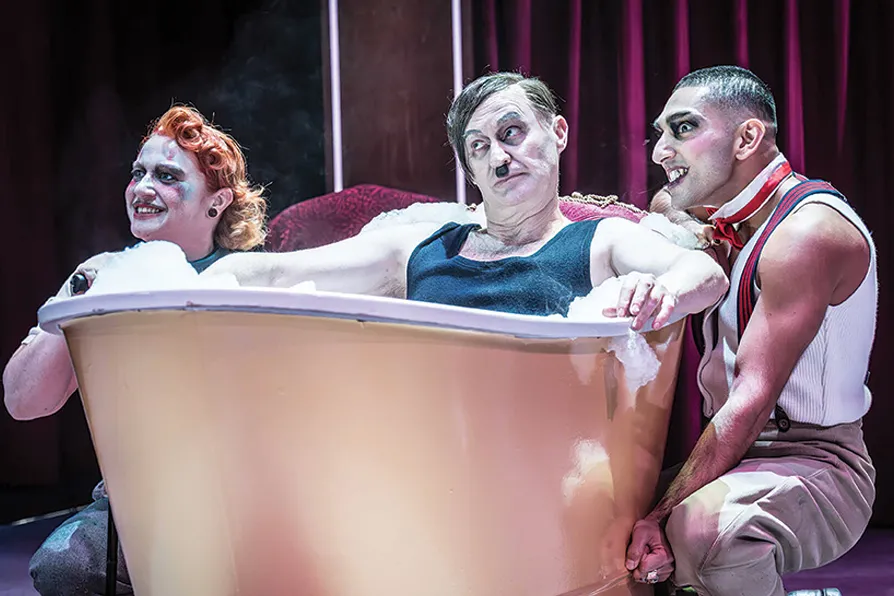
GORDON PARSONS salutes the apt return of Brecht’s vaudevillian cartoon drama that retains the vitality of the boxing or the circus ring
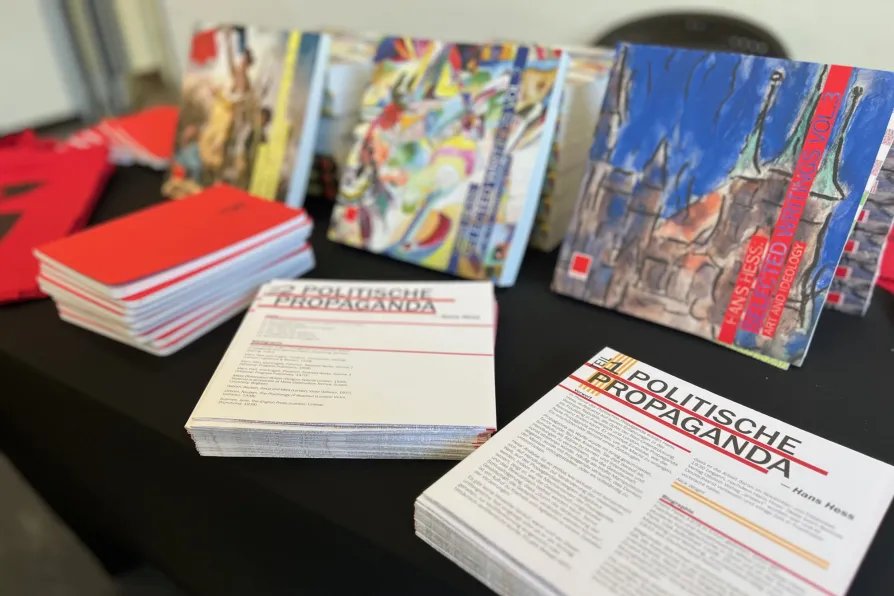
CHRISTOPHE IMMER of the Morning Star’s German sister paper Junge Welt reports on a Berlin conference on the politics of art and the legacy of Marxist critic Hans Hess

GORDON PARSONS is intrigued by a biography of the Marxist intellectual and author, made from the point of view of his son