ANDY HEDGECOCK and MARIA DUARTE review Late Fame, The Death of Robin Hood, Leviticus, and Gail Daughtry and the Celebrity Sex Pass


 Latest editorial

A new biography of Castro
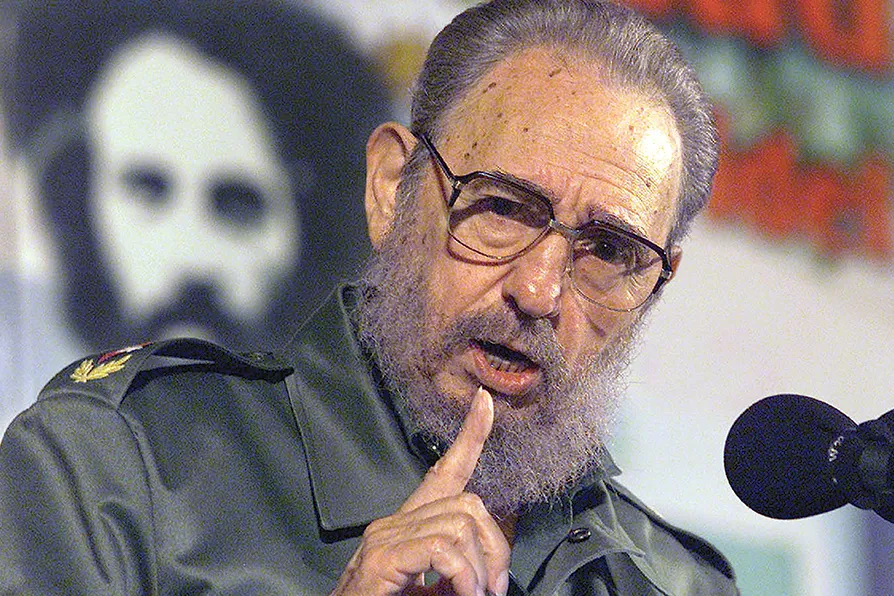
DAVID RABY welcomes a biography that emphasises how Fidel’s unique characteristics became hallmarks of the ongoing Cuban revolutionary process
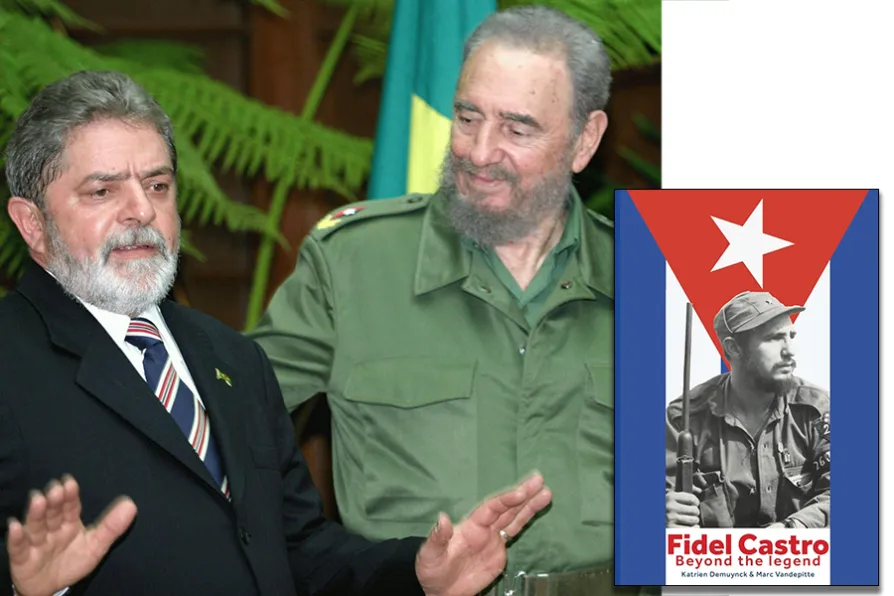 Castro and Lula, 2003 [Pic: Antônio Milena/ABr/CC]

GORDON PARSONS enjoys Kant’s ‘mind-boggling’ theory of human reality: that we create the reality we experience
IAN SINCLAIR recommends a readable, if partisan, account of the astonishing campaign of New York's new mayor
MATTHEW HAWKINS witnesses a contemporary ballet that represents human life as subjected to artificial intelligence
by Marwa Paikan





Fidel Castro: Beyond the Legend
Katrien Demuynck & Marc Vandepitte, Praxis Press, £25
THIS timely biography arrives as Cubans and many others around the world celebrate the centenary of Fidel Castro’s birth. Innumerable accounts of Fidel’s life and the Cuban revolution have been written by admirers, friends and foes, and it might seem that there was nothing new to say, but this study provides valuable insights which add significantly to our understanding of possibly the greatest revolutionary leader since the second world war.
Cuba shared with several other Latin American and Caribbean nations (especially Haiti, Mexico, Venezuela and Nicaragua) a profound anti-imperialist and revolutionary tradition dating back to the 19th century. But the rise of the US as the regional and then global hegemonic power seemed to make revolution in Cuba, and even national independence, impossible. Repeated efforts, both peaceful and insurrectionary, were crushed, and it is perhaps understandable that the Communists (the Popular Socialist Party) adopted a line of modest reformism.
What Fidel achieved, against all the odds, was to combine popular anti-imperialist, collectivist and radically democratic instincts with the theoretical insights of Marxism and Leninism which had hitherto remained — in Cuba as elsewhere in the region — an alien doctrinaire import. He understood the need for decisive leadership to combine with popular dialogue and unity, seeking theoretical clarity without dogmatism.
From a very early age he prepared himself for leadership, developing his remarkable intellectual and physical abilities — consciously honing his oratorical skill for example — while always seeking co-operation and respect for others. Demuynck and Vandepitte have done an outstanding job of analysing how Fidel’s personal life combined with his political evolution in the turbulent, even chaotic Cuban context of the 1930s and ’40s.
While Fidel sought positions of leadership and was clearly aware of his own capacities, his personal ambition avoided arrogance by constantly seeking dialogue and advice from others. This combination of personal characteristics was truly exceptional.
It is clear that on several occasions Fidel survived extreme danger by sheer luck. But political judgement and instinct also played a major role: having survived the failure of the Moncada barracks attack, in jail he took every opportunity to communicate to the outside world a desire for justice and a respect for his opponents (except for those who were clearly untrustworthy). Later, in the guerilla struggle, he insisted on fair treatment of captured government soldiers.
Strategic intransigence was combined with tactical flexibility: in summer 1957 Fidel signed a Sierra Maestra Manifesto together with moderate opposition leaders, proposing a reformist programme with broad appeal while still maintaining the primacy of armed struggle and the guerilla movement’s hold on political leadership.
This political astuteness was crucial in the actual revolutionary victory, preventing a last-minute military coup and ensuring revolutionary control of Havana without disorder or reprisals. The authors analyse how moderate elements were won over while a few decisive actions demonstrated that the leadership had popular interests at heart: reducing rents, ending politicians’ expenses, opening beaches and public spaces to all.
Constant dialogue with workers, students and peasants was combined with avoidance of ideological radicalism: Fidel insisted on humanist values and openness to varied ideas, while proclaiming principles of honesty, ethical conduct and national sovereignty.
Highly unorthodox international diplomacy was key: Fidel’s trip to Venezuela on January 23 1959 projected him as a Latin American leader, and it was followed by his first trip to the US from April 15 to 27. Meeting with thousands of ordinary US citizens, talking of “humanist” revolution and pointedly avoiding any request for US aid, he left Washington officials nonplussed although suspicious.
Over the following months necessary revolutionary measures, starting with the First Agrarian Reform, would lead to growing tension with Washington and significant political demarcations at home, resulting in successive ruptures over the next 12 months. In mid-1960 major nationalisations coincided with a process of mass popular organisation (creating the Cuban Women’s Federation and the Committees for Defence of the Revolution), and the first commercial and diplomatic relations with the Soviet Union and Eastern Europe. This would lead to the Bay of Pigs CIA-sponsored invasion in April 1961 and Fidel’s proclamation — two years and three months after the initial victory — that this was a Socialist Revolution.
At any point this could have led to a much larger US invasion or to division or collapse in the revolutionary ranks. That it did not was due to extraordinarily successful tactical and strategic decisions which were collective, but in which Fidel’s personal role was crucial. As the authors state, “A US report later admitted that they had severely underestimated Fidel.”
Through the 1960s, while Cuba remained aligned with Moscow during the Sino-Soviet split in the international Communist movement, it persisted in supporting armed struggle by Third World revolutionary movements, as shown by the 1966 Tricontinental Congress in Havana. This was undoubtedly due to Fidel and his 26th July Movement comrades, and inevitably led to the showdown with the more orthodox Anibal Escalante “microfaction.”
Such tensions never entirely disappeared, and as the authors explain with an original and perceptive analysis, it was this combination of radical revolutionary commitment with ideological flexibility that would enable Cuba, under Fidel’s leadership, to see and reject the fatal flaws of glasnost and perestroika. What Gorbachev presented as necessary reform (and which confused many Western leftists) was elitist liberalism, leading inevitably to capitalist restoration.
Demuynck and Vandepitte pinpoint Fidel’s unique characteristics which also became hallmarks of the ongoing Cuban revolutionary process: constant open-minded dialogue and discussion, and self-criticism, but absolute adherence to principles of solidarity, internationalism and decisive action even if it meant personal and collective sacrifice.
The greatest demonstration of this was sending tens of thousands of troops to fight in Angola and Namibia to defeat the forces of Apartheid South Africa. This helped to forge an unparalleled collective revolutionary consciousness among Cubans which persists to this day. As the authors conclude: “Today it is the turn of the generation of el centenario de Fidel to carry that task forward… More than ever, the Cuban people need our solidarity.”

Similar stories
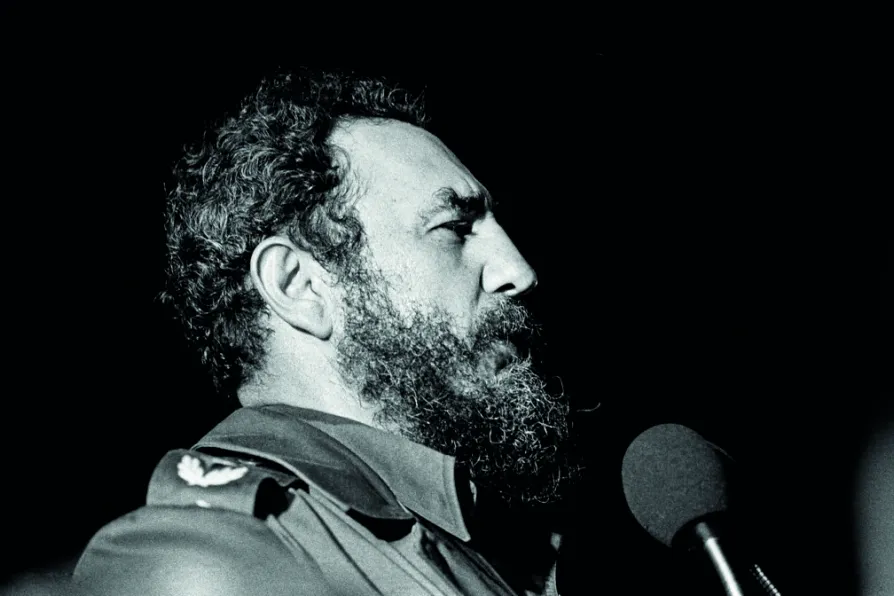
Although separated by an ocean, the two islands share deep historical bonds of anti-imperialist solidarity, writes Chris Hazzard MP
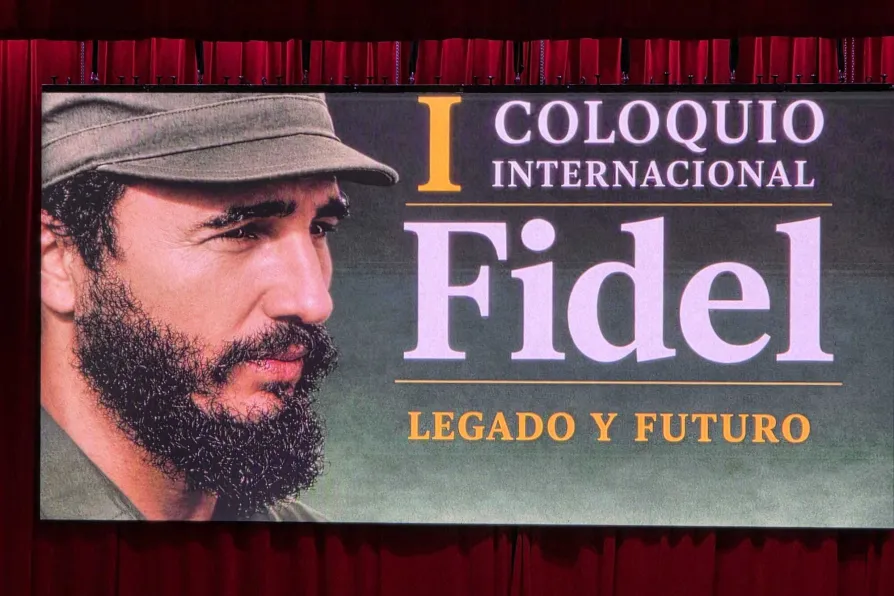
On its revolutionary founder’s 100th birthday, Cuba remains the revolution that ‘does not give up’ and socialism humanity’s only hope of avoiding the abyss
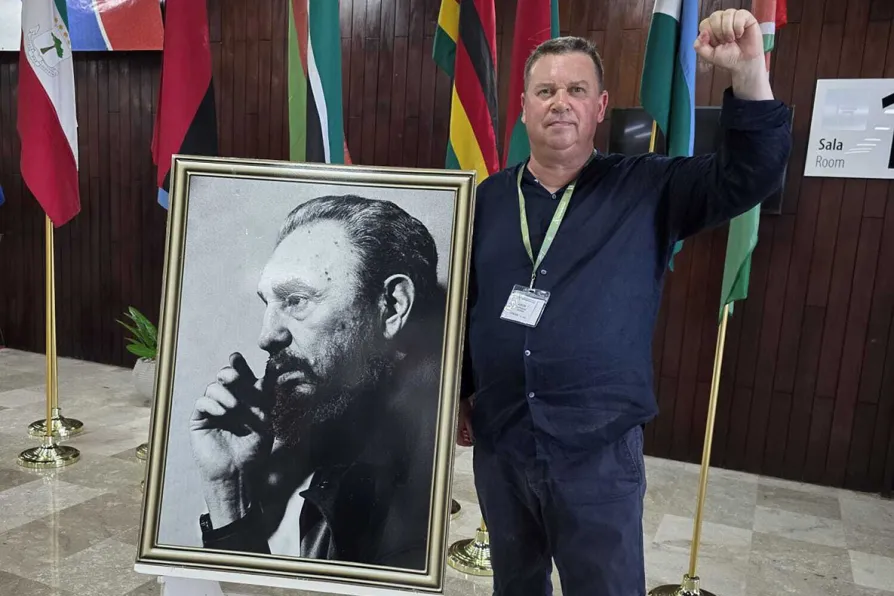
ALEX GORDON and LORRAINE DOUGLAS report from Havana, Cuba, where they represented the Communist Party of Britain at the 24th International Meeting of Communist and Workers’ Parties on August 7-8
DR STEPHEN WILKINSON assesses the life and legacy of a revolutionary giant