

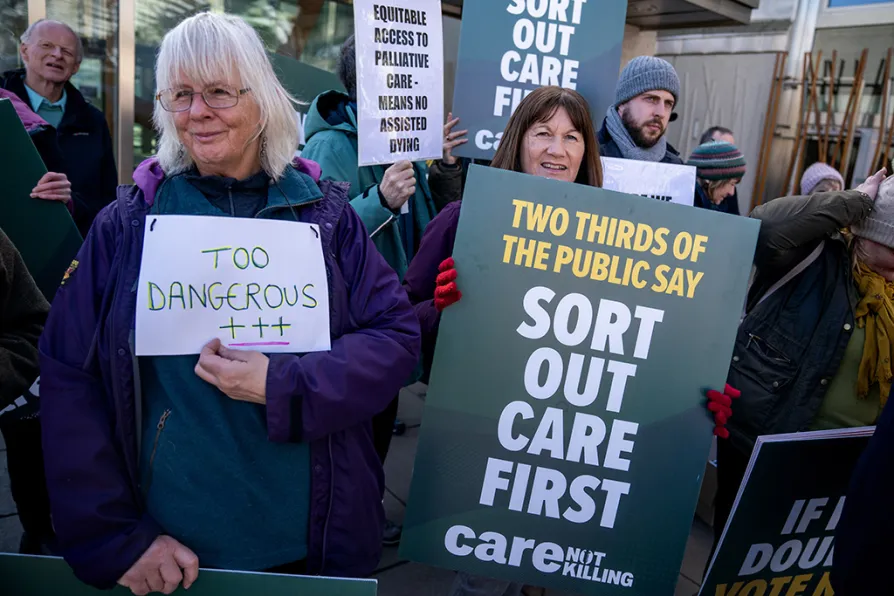
 Protesters take part in a rally organised by Care Not Killing, to oppose the Assisted Dying Bill outside the Scottish Parliament in Edinburgh






GIVE black and brown disabled people “quality of life rather than feeling they have no choice but to die,” MPs were told today after research found ethnic minorities would be more likely to opt for assisted suicide.
Trade unionists, community groups and anti-austerity activists demanded the government address racism embedded in care, health and across society before moving forward with the new assisted dying Bill.
A government assessment for the new version of the legislation warned that poverty, poorer access to healthcare, lower-quality care and domestic abuse could lead to a “disproportionate numbers of ethnic minority people” opting to end their lives.
The report said these conditions would mean people from ethnic-minority backgrounds could be motivated to choose assisted death to avoid financial hardship or to escape abuse.
It also predicted its central 10-year estimate of assisted deaths to be up 60 per cent, from from 2,183 to 3,502.
This would mean nearly 10 assisted deaths per day. And the high-estimate scenario put the number from 4,559 to 6,257 deaths a year, more than 17 every day.
MPs are set to vote on the Terminally Ill Adults (End of Life) Bill in a second reading in the Commons on September 11, the first opportunity for MPs to vote on it.
Zita Holbourne, co-founder of Black Activists Rising Against Cuts (Barac), told the Morning Star: “There needs to be a focus on addressing racism not just in health but in all aspects of life.”
She called for “improved standards and provision of care and services so that disabilities and health conditions can be well managed and supported under a social model of disability in order to give black and brown disabled people quality of life rather than feeling they have no choice but to die.”
Ms Holbourne explained that black and brown people in this situation are “facing double discrimination because of both race and disability.
“The government’s own impact assessment on race identifies adverse impacts on race grounds if this Bill was passed but does not give the full picture.”
She added that black and brown people in Britain face discrimination and barriers in “healthcare access and provision because of institutional racism, fuelled by over a decade of austerity leading to cuts.”
They also face “substandard housing, discrimination and barriers in education and employment and are more likely to live in the most deprived areas that experienced the biggest cuts.
“In addition there is a lack of trust and access to healthcare because of language barriers, hostile and racist immigration policies and laws, some of which have barred access to the NHS, race disparities in a range of healthcare provision and deaths at the hands of the state which includes not just in policing and prisons but hospitals too.”
Disabled People Against Cuts (DPAC) co-founder Linda Burnip warned that the Bill’s impacts would not be sufficiently debated in Parliament, due to the way it is being introduced.
She told the Morning Star that her organisation has “always felt strongly that introducing such a serious Bill should never be done through a private member’s Bill as that doesn’t in any way allow sufficient time for discussion.”
Ms Burnip warned that “abuse and clear misuse of similar legislation in countries and areas where it has been introduced is of major concern, particularly given the return to Nazi Germany stereotyping of disabled people as a financial burden on the state.”
On Friday, Andy Burnham said he would abstain from the upcoming vote on the assisted dying Bill, saying he would not want to “unduly influence the debate.”
The Prime Minister previously said fixing the funding of palliative care and social care should be a prerequisite before any discussion on the Bill.
Hospices in England had a collective deficit of more than £70 million at the end of the last financial year, more than double the previous year.
An MRP poll of more than 10,000 people showed the public largely hold the same opinion as Mr Burnham, revealing that assisted dying was at the bottom of the list of voters’ priorities.
Only 7 per cent of the public and 7 per cent of Labour voters said assisted dying was a priority.



ELLEN CLIFFORD of Disabled People Against Cuts takes the Morning Star through the serious deficiencies which leave vulnerable people at lethal risk
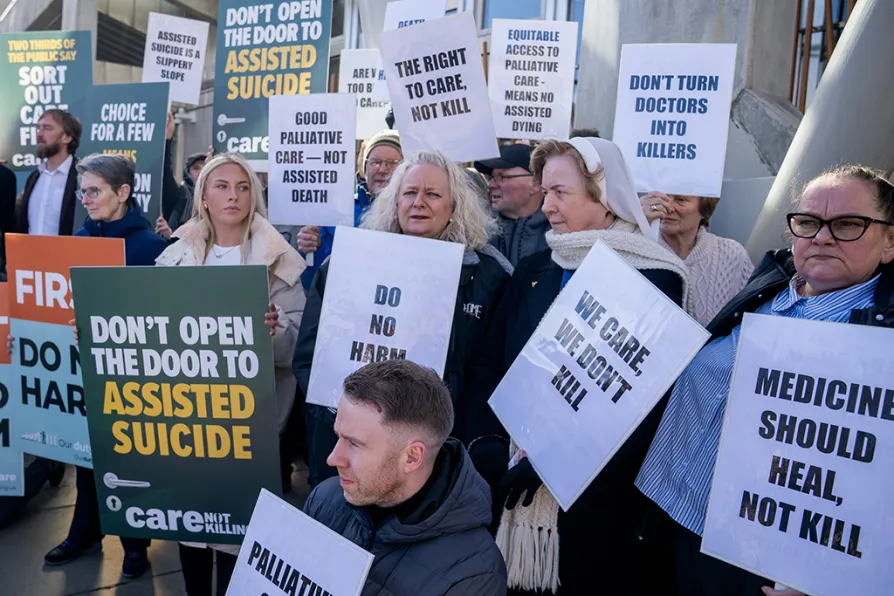
The new prime minister has shown a willingness to reconsider his previous views on assisted suicide and focus on improving care services. CHRIS WHITEHOUSE hopes other MPs will do likewise
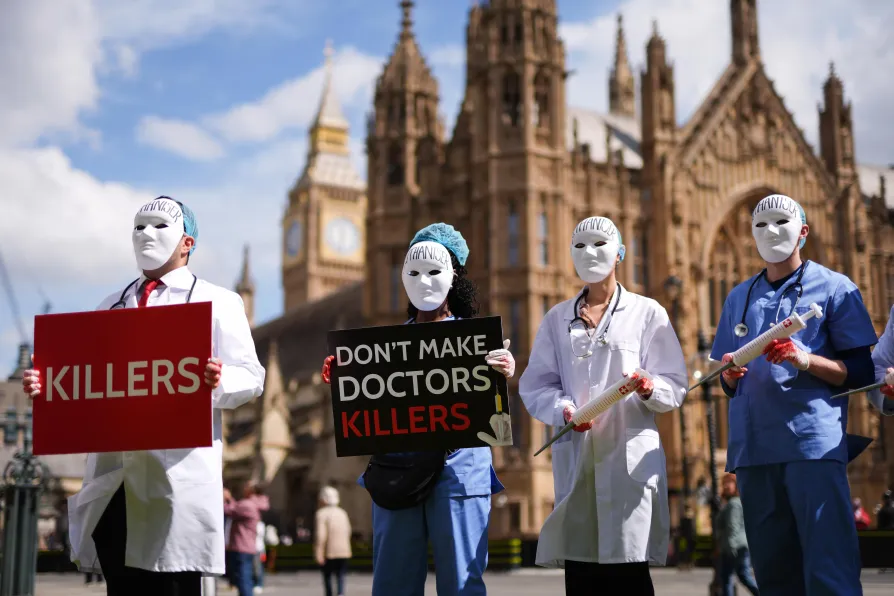
Evidence to peers from medical leaders, patient safety officials and the children’s commissioner has intensified fears that the Bill’s safeguards are inadequate, writes ADAM JAMES POLLOCK