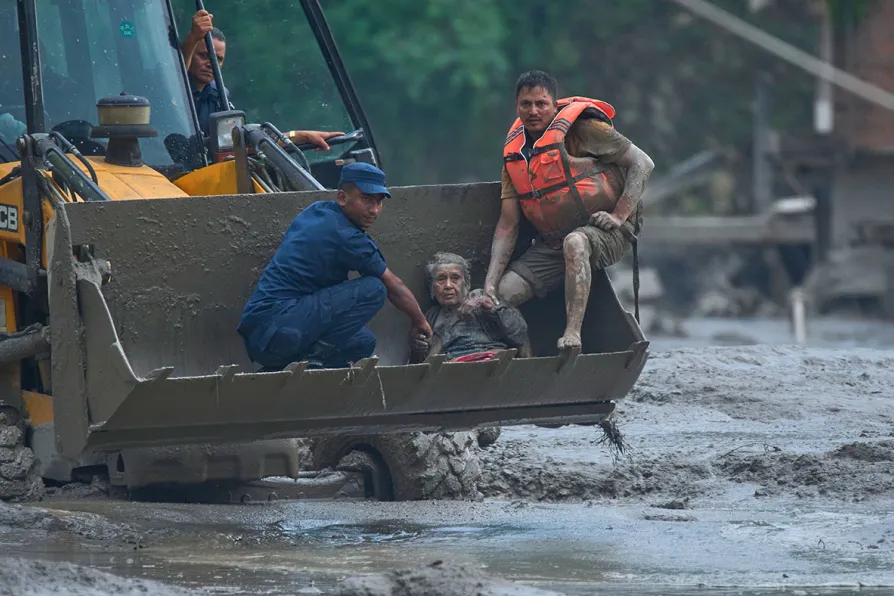
 Rescuers use an earthmover to carry a victim of flash flooding to safety along the Trishuli River in Nepal's Nuwakot district, August 26, 2026





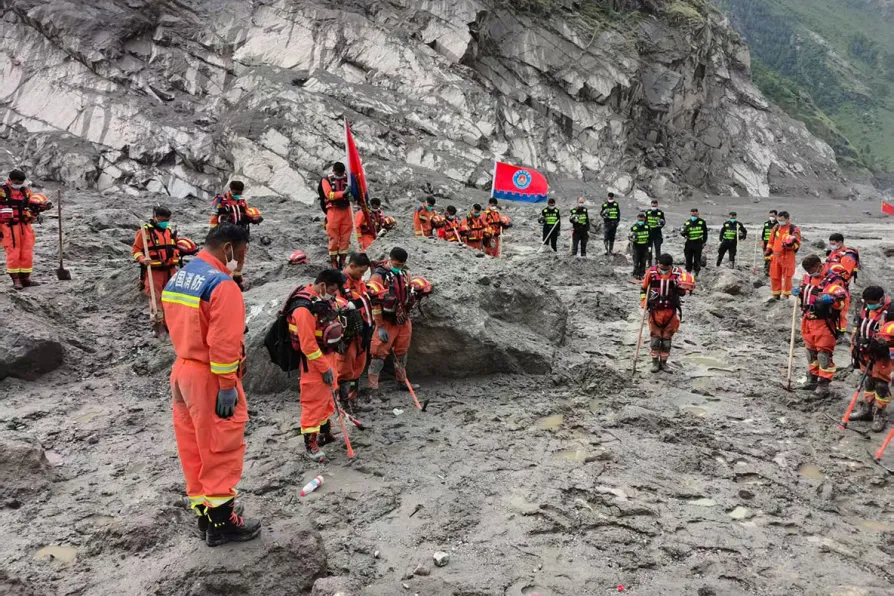
RESCUE teams continued the search today for hundreds of missing people along the Nepal-China border after a catastrophic torrent of floods and mud swept through communities yesterday.
The disaster left at least 353 people dead and more than 1,300 missing, including foreigners and pilgrims, and displaced hundreds of people across the Himalayan region.
More than 30 British nationals are among the missing, including a 13-year-old girl and 14-year-old boy, with the government offering £5 million to help its Nepalese counterpart with the search.
Prime Minister Andy Burnham told reporters an offer had also been made for emergency responders to head to the affected area.
He said: “It’s a devastating picture that is emerging from what has happened in Nepal.
“Scenes that we’ve never seen the like before, I don’t think, certainly the scale of the devastation.”
Pramod Poudel, from Uckfield, East Sussex, said he is flying to Nepal to try to make contact with his wife, mother, brother and uncle who have been caught up in the flash flooding.
Speaking to the BBC, he said: “There is no proper communication so I can’t communicate with them.
“I guess there is no power so they can’t charge their phones — so be honest, it’s a very hard and difficult time at the moment.”
In an emotional interview, Mr Poudel added: “I have seen pictures of where my home town used to be… and there is nothing there now.
“Where my family used to live — my mum, my dad, my wife, where everyone used to live — there’s nothing there.”
Preliminary investigations show that the deadly flooding was likely caused by a huge chunk of a glacier breaking off and temporarily damming a river, with the backed-up water surging downstream.
Warnings of melting ice and permafrost, which is centuries-old frozen soil, in the Himalayas due to climate change have been made by experts for years.
Recent analysis by the International Centre for Integrated Mountain Development found that the Hindu Kush Himalaya glaciers are now losing ice at double the rate since 2000.
In 2021, a similar collapse in northern India killed 200 people, with scientists estimating its impact was equivalent to 15 atomic bombs.
Green Party parliamentary leader Dr Ellie Chowns said: “The exact causes of this disaster are still being investigated, but we know that climate change is making the Himalayan region more dangerous, as rising temperatures melt and destabilise glaciers and increase the risk of extreme flooding.
“Countries across the Himalayas have contributed very little to the climate crisis, but are already suffering some of its worst effects.
“Countries with the greatest historic responsibility for climate change, including the UK, must cut emissions much faster and lead a stronger international effort to help countries facing the worst consequences of a crisis they did so little to create.”
Your Party leader Jeremy Corbyn called the destruction “absolutely devastating,” writing on X: “All possible aid must be sent to save lives and to show survivors of this catastrophe that they are not alone.”
The party’s own account posted that the events were not “a natural disaster,” adding: “Nepal didn’t burn the fuel, didn’t take the profit — it only bore the cost.
“The fossil-fuel profiteers caused this crisis. Make them pay.”
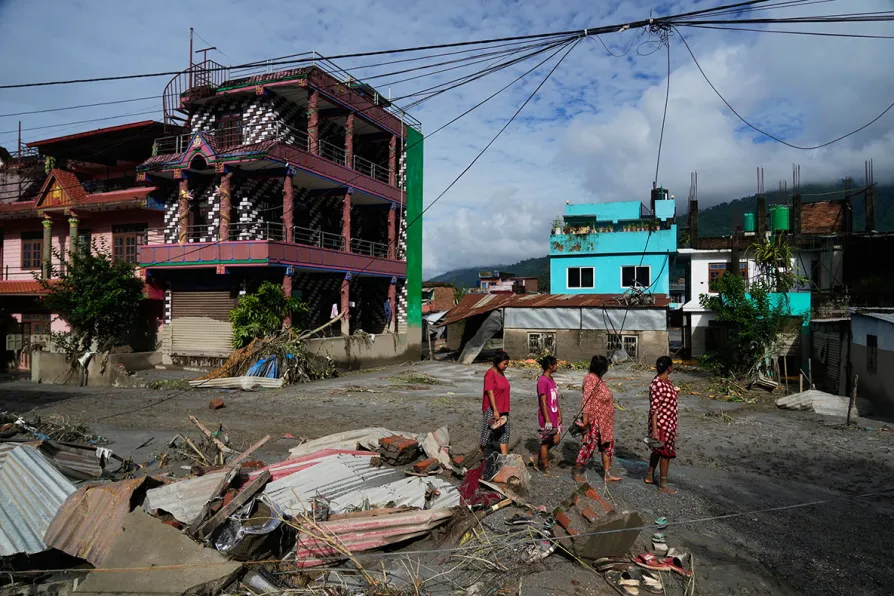
Videos of the tragedy showed the fast-moving flood swallowing up people as they tried to escape, and destroying buildings and bridges.
Resident Jaleshwar Kumar Sahni received a phone call on Wednesday morning from an area close to the border that a lot of water was flowing through there, and later the flash floods destroyed everything in just 15 minutes.
“We don’t have anything left,” he said.
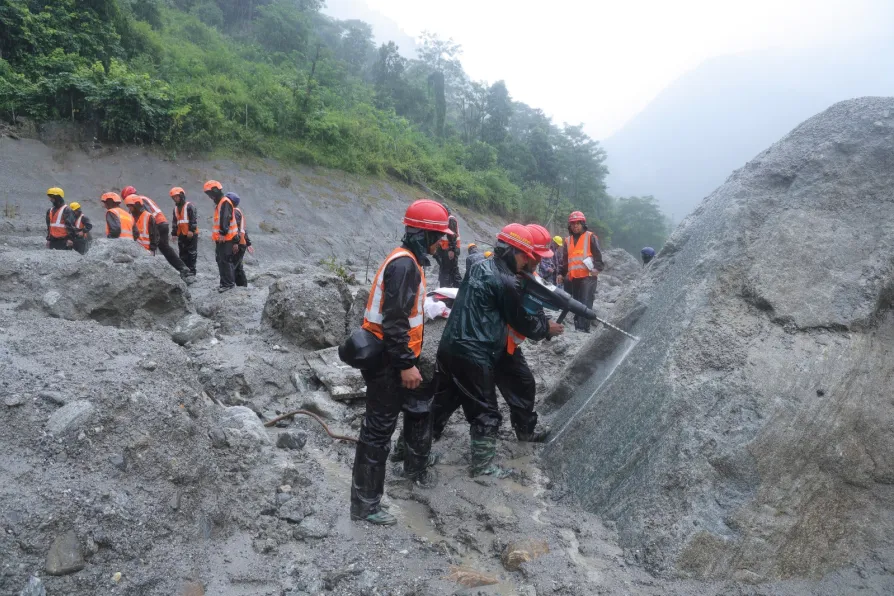
Nepalese officials said that dozens of bridges were destroyed and nearly 25 miles of roads were damaged, complicating search efforts.
The Nepalese army rescued more than 100 people from flood-affected areas through helicopter operations on Thursday morning, army spokesperson Brigadier General Raja Ram Basnet said.
But rescuers also recovered bodies hundreds of miles downstream from the disaster zone in Chitwan district.
Bishal Kumar Bhandari, chairman of the Nepal Red Cross Society, said they have shifted focus from rescue to large-scale relief operations in the flood-hit districts.
He said that around 1,200 people were displaced from at least three villages.
In Tibet, a mudslide that struck near the land border crossing of Gyirong Port on Wednesday left mud in the surrounding areas up to six feet in some road sections.
Roads leading to the port were all damaged, while secondary collapses or landslides might occur as rain continued in the area, according to reports.
China’s CCTV television network said that a barrier lake has also been discovered in the direction of the port, posing challenges to the rescue operation.
While electricity supply and communication resumed in the central urban areas in Gyirong town, those linked to the port were cut off, CCTV said.
Experts say glacier collapse caused the devastating floods.
The vast Himalayan mountain range spans several countries in south Asia and has many of the world’s highest peaks and remaining glaciers.
The steep slopes and the lush valleys below the Himalayan mountain range are especially vulnerable to flooding and landslides.
Melting glaciers have become more common because of warming because of human-caused climate change.

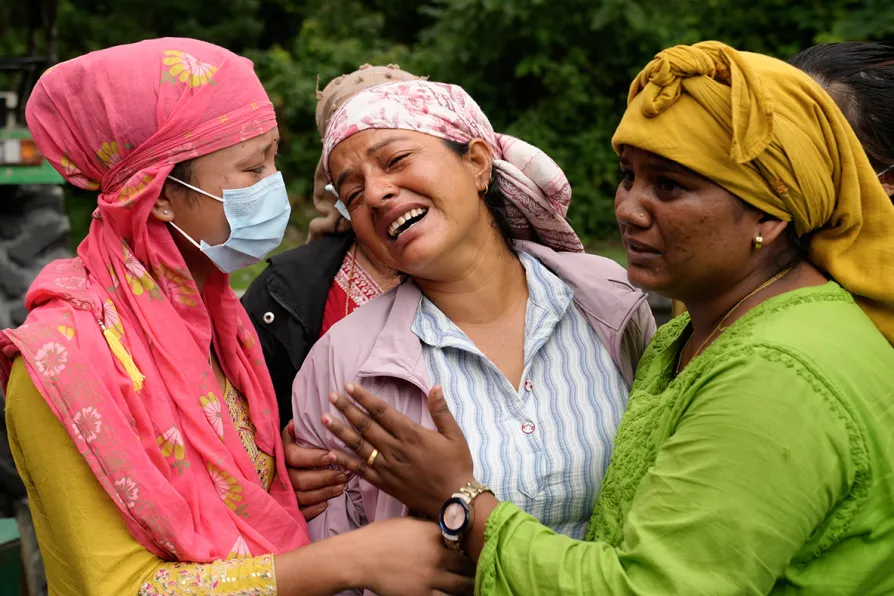
The glacier collapse in Nepal is yet another warning that a warming planet is making Himalayan disasters more frequent and destructive – but the countries facing the greatest risks are often those least responsible, says LI YANG