


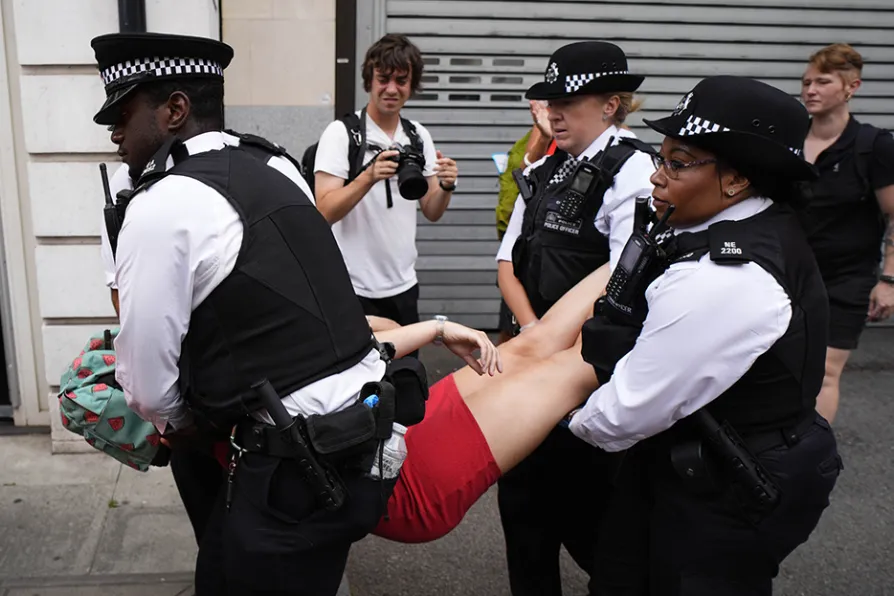
 Police arrest a demonstrator for expressing support for Palestine Action on Thursday
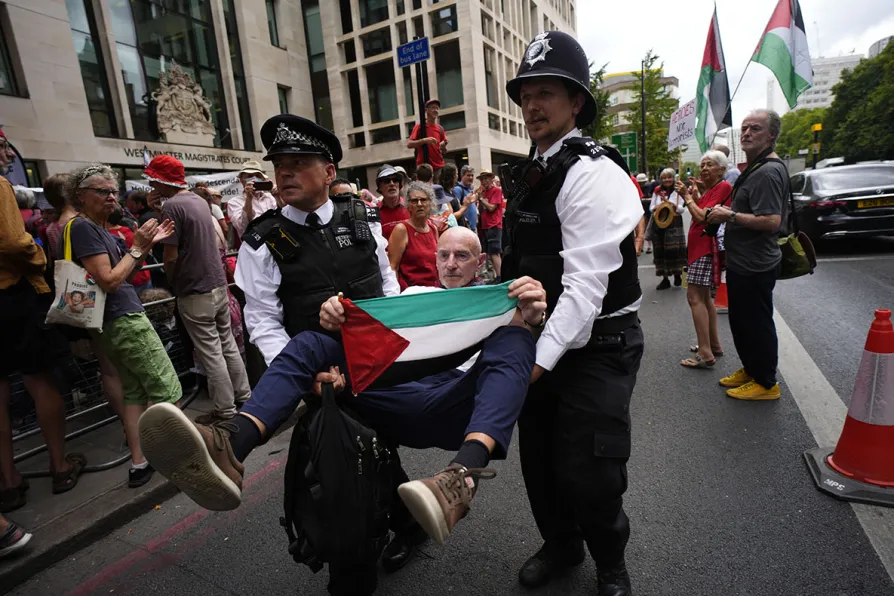





MASS arrests of peaceful Palestine solidarity demonstrators in London were the backdrop to Andy Burnham boasting of his commitment to enlarging Britain’s nuclear arsenal in Barrow-in-Furness this week.
The left has a lot of work to do to turn the existing majority against British complicity in Israeli genocide, and the growing hostility to military partnership with a Donald Trump-led United States, into a more consistent rejection of the militarist agenda being forced down the country’s throat.
Not many will see a connection between the Palestine Action ban and Trident renewal, and many will even oppose the former while supporting the latter.
But the ban on Palestine Action — itself part of a wider project to suppress public solidarity with Palestine, from new police powers to outlaw protests to the prosecutions of peace movement leaders like Ben Jamal, Chris Nineham, Alex Kenny and Sophie Bolt — was never a random act of repression.
Nor — though this view is common on the left — was it primarily about banning criticism of Israel or a result of pressure from the Israeli state or its supporters, though of course both welcomed it.
The huge Palestine solidarity movement is a threat because it exposes the ugly truth about British foreign policy and the role the British military plays in the world.
A state which tries to warn international courts off investigating genocide is no defender of international law or human rights.
The armaments companies that help supply the weaponry for that genocide are complicit in it. They are also the beneficiaries of Labour’s militarist splurge.
And a military which actively assists the army committing the genocide — through the way bases like RAF Akrotiri act as staging posts for weapons supplies, or all those RAF surveillance flights over the killing fields of Gaza — is not a force for good in the world.
Early in the course of Israel’s invasion of Gaza, militarist pundit Paul Mason urged that it be reined in because outrage over Palestine would undermine support for the military more widely and for Britain’s interventions in other conflicts, notably Ukraine.
He was right to worry, though actually the implications of our complicity in Israeli war crimes, and more recently in the illegal US-Israeli war launched against Iran, are not widely enough recognised.
British military power is not used to deter aggression, but to enable it. Our principal allies are the most warlike countries on Earth, the readiest to resort to violence and the likeliest to plunge us into a new world war.
Once that is understood, the reckless rearmament drive — which itself is the result of pressure from President Trump — is much harder to justify. It makes Britain and the world more dangerous.
And support for rearmament rests anyway on shaky foundations. A plurality of the public oppose increased arms spending if it means tax rises or public service or welfare cuts.
Constant government hysteria has failed to instil war fever in the general public. Half of young people (aged 16-29 in a major poll this spring) say they would never fight in a war and ministers admit to a recruitment and retention crisis in the armed forces.
The causes are complex, with MPs like Clive Lewis pointing out rightly that many young people see little worth fighting for given Britain’s grotesque inequality and lack of decent jobs or affordable housing. But the success of the Palestine movement in opening eyes to the truth about our foreign policy and our allies should not be disregarded.
The ruling class wants war, or at least a population ready to be sacrificed in defence of the US-led imperialist order should war be required to shore it up.
That explains the rearmament drive. It also explains the continued repression of dissenting voices. Authoritarianism and militarism go hand in hand: we must oppose both.

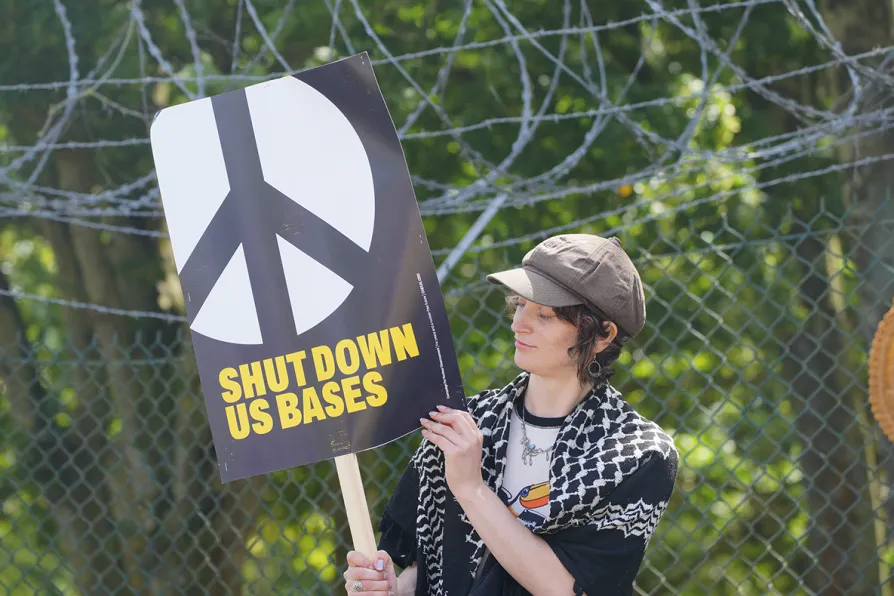
Peace activists and trade unionists to gather at RAF Fairford to protest against US bombers taking off from Britain to strike Iran
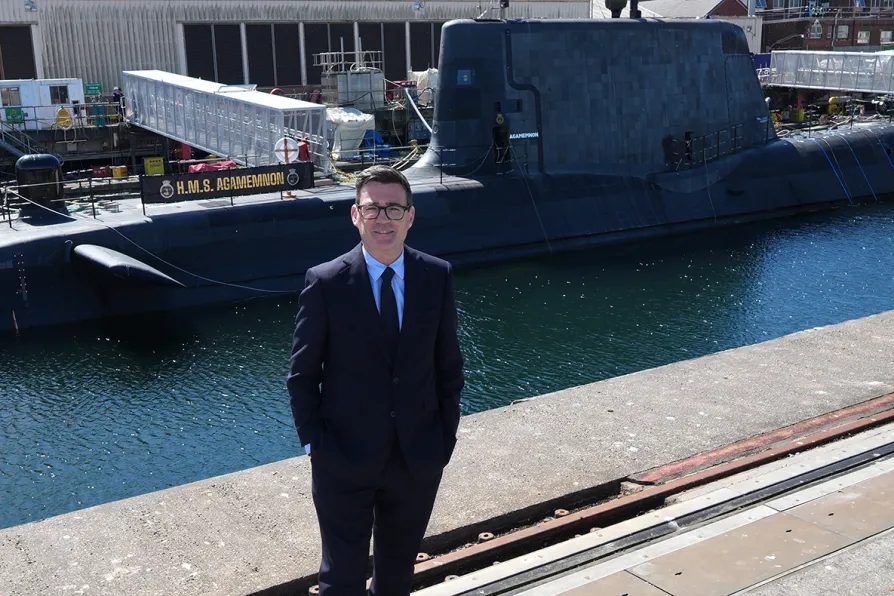
PM commits to blowing millions on nukes

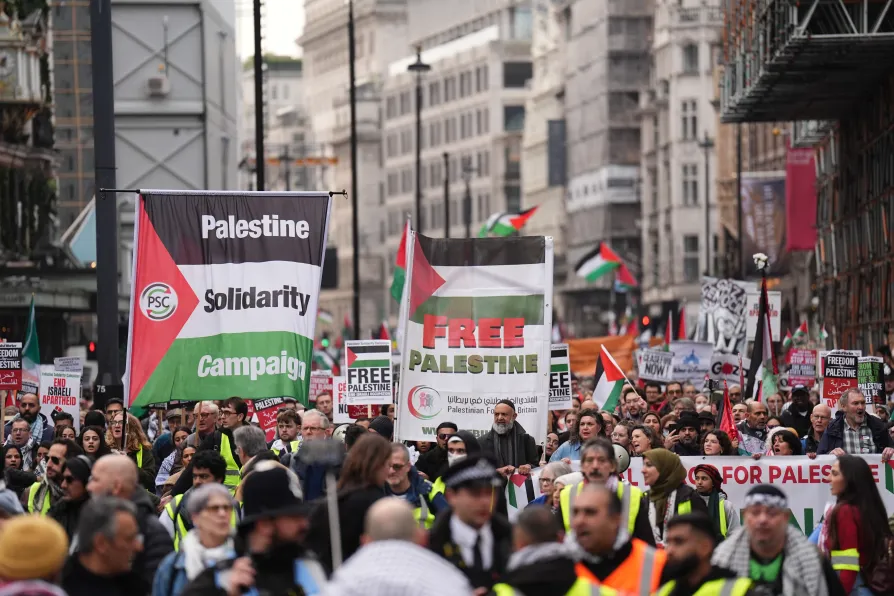
Trade unionists must raise our voices not only for justice and against occupation, but also to protect our fundamental right to protest, writes LOUISE REGAN, ahead of a not-to-be-missed PSC conference