


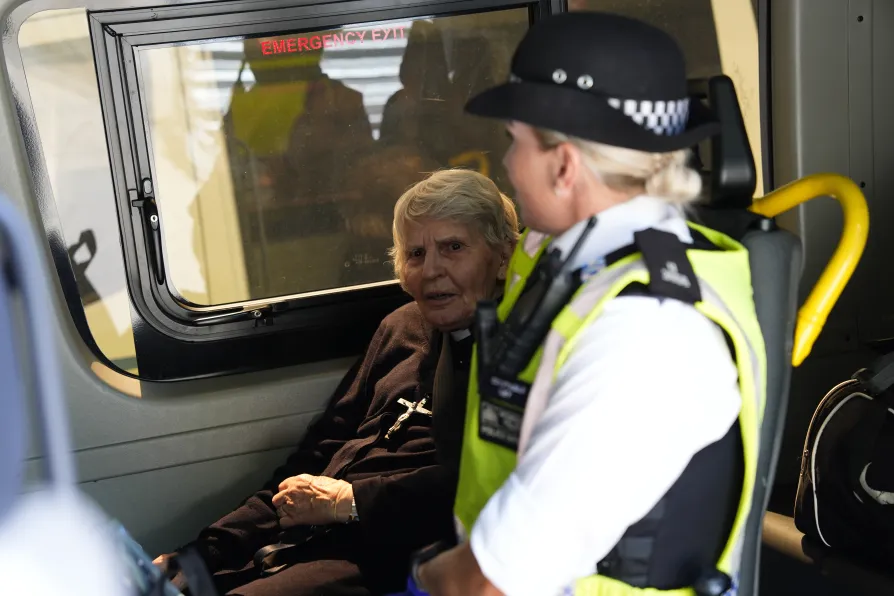
 HEAVY HANDED: A police officer detains Reverend Sue Parfitt who declared her support for Palestine Action
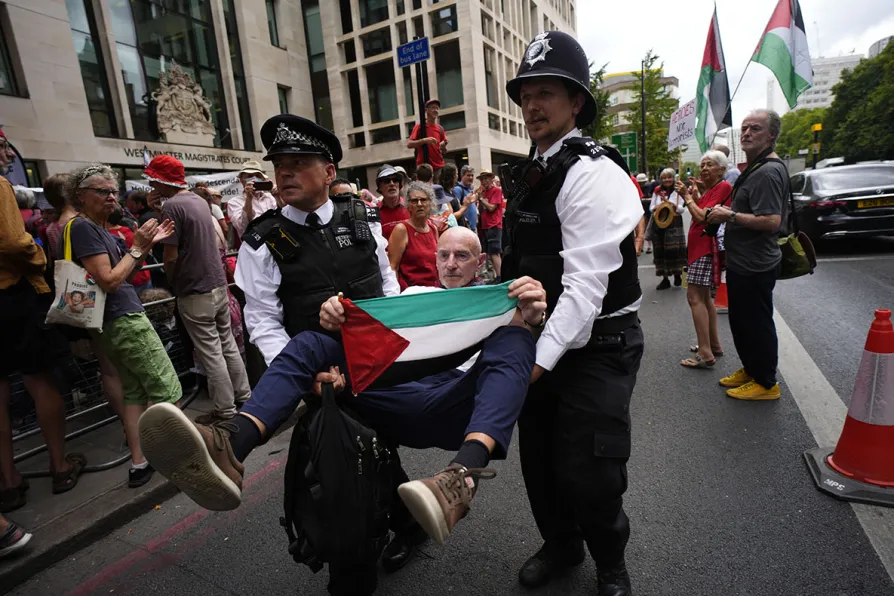





CREDIT where credit’s due. Andy Burnham’s apology for Labour’s record on Palestine is tribute to the resilience of the mass Palestine solidarity movement.
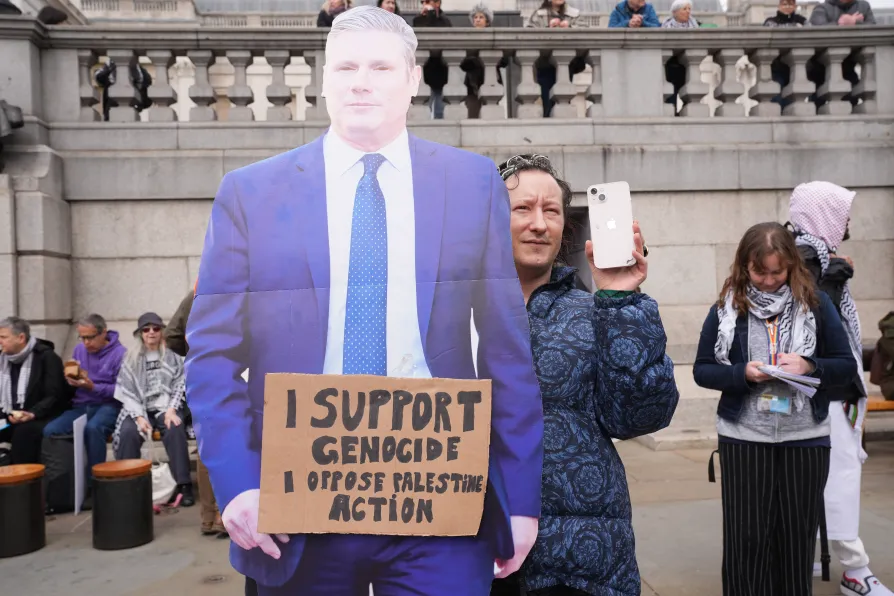
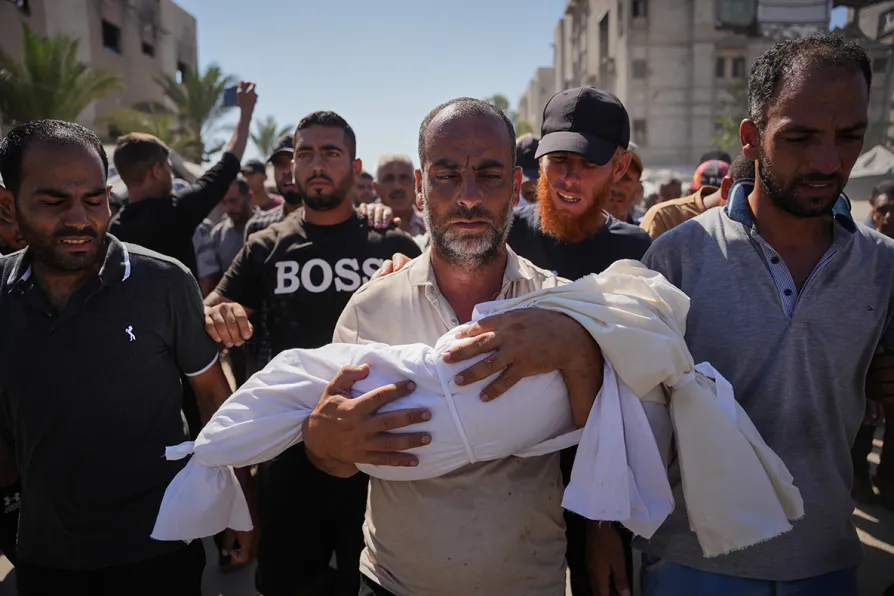
It’s a belated recognition of the damage done to Labour by its support for a live-streamed genocide, though Burnham daren’t use the word.
That has been obvious since 2024, when the election of five independent MPs on a Gaza solidarity ticket was a political earthquake — unseating one of Labour’s most senior politicians, Jonathan Ashworth, and coming close to toppling another (Wes Streeting).
And the impact’s still deepening, belying the disgraceful claim by an anonymous Labour figure in 2023 that losing Muslim votes was just “shaking off the fleas.” Polling shows that among those voting in this year’s local elections who voted Labour in 2024, less than half voted for the party again; that eight in 10 of those switchers went left, at least in foreign policy terms (40 per cent to the Greens, 30 per cent to the Lib Dems, 9 per cent to independents — just 6 per cent went to Reform) and that more than half of those cited Palestine as a factor. It really matters.
Before addressing the detail — or lack of it — in Burnham’s “reset,” it is worth stating that this is a vindication of the peace movement’s refusal to stop marching for Palestine.
Frustration at the extremely limited shifts in government policy, and the ongoing, horrific suffering of Palestinians still being blown to pieces in Gaza or having their homes torched by settlers in the West Bank, has led some to question the effectiveness of national demonstrations, sometimes dismissed as “A to B” marches.
The marches are just part of the Palestine movement, and the importance of direct action, of the willingness to face arrest by those at the mass sit-down protests and of the boycott, divestment and sanctions campaign should not be understated.
But the movement derives much of its moral authority from its enormous scale, through the repeated demonstration that the majority stand with Palestine and we will not let politicians forget it.
This explains the government’s determination to criminalise peace movement leaders like Ben Jamal, Chris Nineham, Sophie Bolt and Alex Kenny, the plan to ban protests based on their “cumulative impact” and the harsh policing intended to dissuade protest-goers.
That brings us on to Burnham’s actual words. The strongest sign of a new direction on Palestine would be to end the repression.
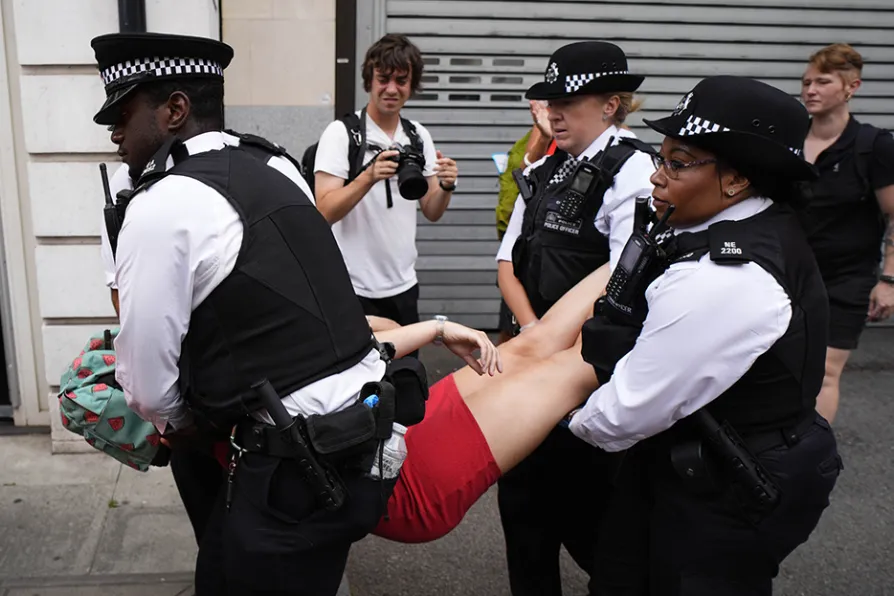
Reverse the outrageous ban on Palestine Action as a “terrorist” group. Stop the legislation placing further restrictions on protests. Apologise to the thousands rounded up by police for sitting down holding placards. Burnham mentions none of this.
On genocide, he hints it’s for the courts to decide. So address Britain’s appeal to the International Court of Justice to refuse to hear the genocide charges against Israel brought by South Africa, and state that we will no longer obstruct these cases. Call out the US bids to undermine international courts for daring to hold Israel accountable, and its sanctions on UN rapporteur Francesca Albanese.
Burnham rightly observes that Israeli PM Benjamin Netanyahu seeks to make a two-state solution impossible. But pretending that Netanyahu’s excesses have nothing to do with what went before will not wash.
The occupation and colonisation of Palestinian land has proceeded over decades and a fundamental break with Tel Aviv on this, tied to sanctions and a total ban on arms sales, is urgent.
Ultimately that means a fundamental break with Washington. Burnham will hardly say so, but our movement must raise the stakes.
Britain supports the illegal occupation of Palestine because we are tied into a wider network of imperialist alliances led by the United States.
It is inconsistent to demand justice for Palestine while backing Trump’s rearmament drive and remaining a junior military and intelligence partner to the United States. We need an independent foreign policy.

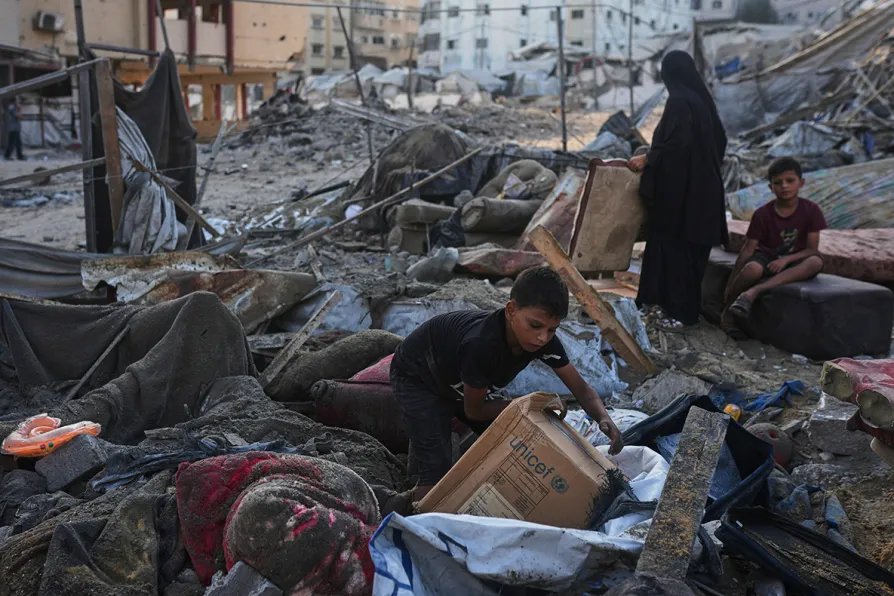
Andy Burnham’s leadership will be judged on whether he charts a genuinely different course, argues BECK ROBERTSON
The electoral cost of Labour’s stance on Gaza is impossible to ignore – the new leadership must take heed, argues PETER LEARY