
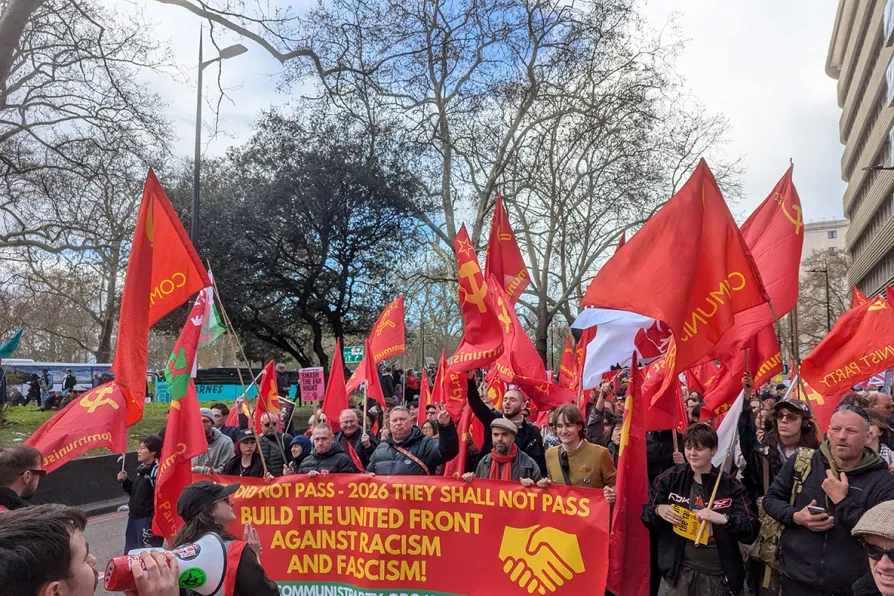
Working people across Britain are fighting back against austerity, war, repression and exploitation. The challenge now is to unite those struggles, says Communist Party of Britain assistant general secretary JOHNNIE HUNTER

Burnham’s acceptance speech promised everything and named nothing
The new PM’s opening addresses offered hope, council homes and reform — but little detail on how any of it will be delivered, warns CLAUDIA WEBBE
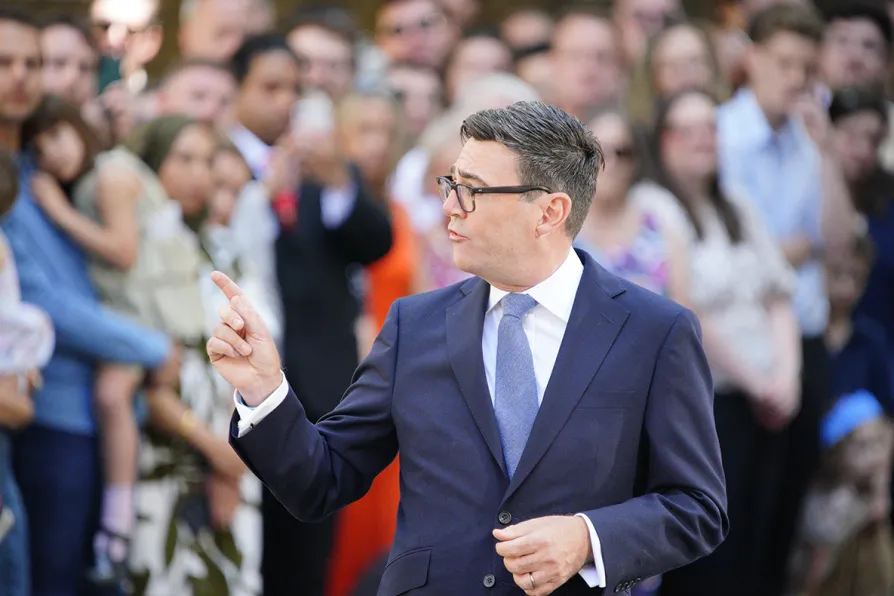
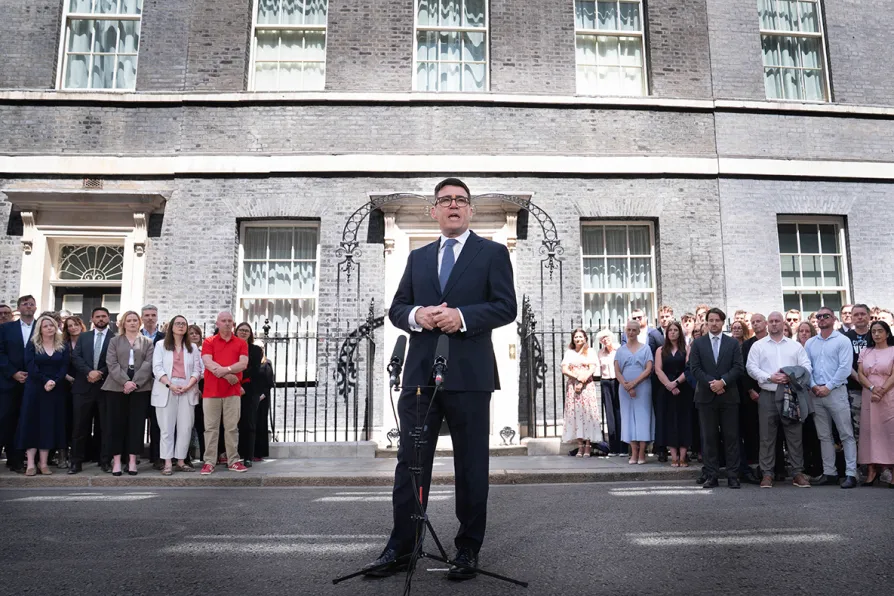
 New Prime Minister Andy Burnham makes a speech outside 10 Downing Street, London, after meeting King Charles III and accepting his invitation to become Prime Minister and form a new government, July 20, 2026
Train drivers’ union Aslef general secretary DAVE CALFE speaks to Ben Chacko about his hopes that Burnham’s devolution agenda will include the importance of the railway
DIANE ABBOTT provides an analysis of the reasons for EU and British voters’ dramatic swing to the right
Some of the review’s proposals could make the benefits system less cruel and dehumanising. But its vague plans for services and non-cash support revive the threat that disabled people will lose control over the money we need to survive, writes DYLAN MURPHY
Believe it or not, there was a time when the US government built beautiful homes for working‑class Americans to deal with a housing shortage, writes ERAN BEN-JOSEPH
MAT COWARD has heaps of good advice on recycling garden and household waste over the winter





ANDY BURNHAM was confirmed as Labour leader at a special conference in London on Friday, and within minutes of taking the stage he had already delivered the line his team clearly built the speech around the line that this is “the most significant change moment in our politics for 40 years.”
It is a striking sentence. It is also, on inspection, almost entirely empty, and three days later, formally appointed prime minister outside No 10, Burnham widened the list without deepening the substance.
Burnham told the hall on Friday that Britain took “a series of wrong turns in the 1980s” when “political power was centralised and economic power privatised.” This is a correct diagnosis as far as it goes.
However, what follows is the problem. Having identified four decades of privatisation as the source of national decline, Burnham’s prescribed remedy amounts to “more public control,” reindustrialisation, and a promise to move power out of Whitehall.
Yesterday, from Downing Street, that diagnosis acquired specific pledges for the first time: he will “issue his first instruction to end rough sleeping,” build “more council homes,” change “the education system” so more young people move into work, provide “more mental health support” for young people, and announce cost-of-living measures “starting tomorrow.”
These are concrete commitments, more concrete than anything in Friday’s speech, and they deserve to be taken seriously as commitments rather than dismissed.
But the framing attached to them is where the analysis needs to sharpen. Burnham did not present council homes, education reform and youth mental health support as an expansion of public investment funded through taxation of wealth or capital. He presented them, in his own words, as part of “a fair and sustainable way to bring the welfare bill down.” This is a significant tell. It suggests that support for young people, at least in the government’s own initial framing, is being positioned as a cost-reduction measure rather than a rights-based expansion of the social wage.
The speech’s emotional register borrowed heavily, almost note for note, from the register Keir Starmer used outside Downing Street after his own landslide less than two years earlier, according to observers who watched Burnham’s earlier by-election victory speech deploy the same cadence.
Hope, unity, a break from division, a promise that “we’re going to give them hope back.” By Monday, “hope” had become a “new economic model” and a “circuit breaker for Britain,” phrases that gesture at systemic change without specifying what changes in ownership, taxation, or class relations they actually entail.
What is most conspicuous across both his speeches, Friday’s speech on becoming Labour Party leader and yesterday’s acceptance speech as Prime Minister, not what Burnham eventually said but what he still has not.
He spoke of ending “the insidious briefing culture” and “factionalism” that has “bedevilled” his party on Friday. Yesterday he spoke of rough sleeping, council homes, education and mental health. In neither speech did he mention Gaza. He did not mention Palestine. He did not mention the International Court of Justice’s finding that genocide is plausible, nor the arms licences the Starmer government has kept active while suspending only a fraction of the total, nor the almost 3,000 people arrested under terrorism legislation for supporting a banned protest group.
For a Downing Street address introducing “the biggest changes in the last 40 years,” its total silence on the defining moral question facing the outgoing government is not an oversight. It is a choice, repeated for a second time in four days.
There is a further silence worth noting. Burnham’s language of “ending factionalism” implies a problem without a documented cause, when Labour’s own commissioned inquiry, the Forde Report, already investigated precisely this failure and made concrete recommendations, chiefly that the party’s internal bureaucracy function with genuine neutrality rather than as an instrument of factional advantage. Those recommendations were largely rejected by the national executive committee under Starmer.
Burnham’s acceptance speech, and his Downing Street remarks, use the vocabulary of ending division without once referencing the document that already diagnosed it.
In a recent speech, Jeremy Corbyn at the launch of the Your Party, Wales branch, raised the democratic legitimacy question, which extends into the mechanics of how Burnham actually arrived in Downing Street. A leadership transition within a sitting government is constitutionally normal in the British system; Gordon Brown succeeded Tony Blair the same way, and Rishi Sunak succeeded Liz Truss without a general election either.
But normal is not the same as democratically satisfying, particularly when, as Corbyn notes, many of the same MPs who spent two years working to remove Starmer stood to applaud his departure, and the succession that followed involved no wider consultation of the electorate.
Layered onto Burnham’s own history within the party, having received just 19 per cent of the membership vote in the 2015 leadership contest against Jeremy Corbyn’s roughly 59.5 per cent, the arrival of Burnham in Downing Street 11 years later, via internal transition rather than fresh mandate, gives Corbyn’s “travesty of democracy” line real weight rather than mere rhetorical flourish.
Burnham also used the acceptance moment to praise his predecessor extensively, crediting Starmer with taking Labour “from its worst electoral defeat in a century to one of the largest election victories in our history” and citing falling NHS waiting times, stronger workers’ rights, and the passing of the Hillsborough Law as achievements to build on.
This is a curious rhetorical move for a leader and now Prime Minister positioning himself as a rupture with the recent past. You cannot simultaneously claim to be building “a new economic model” and thank the architect, for at least the past two years of the old one for laying your foundations. The contradiction was not resolved in either speech.
The specific pledges from Monday, rough sleeping, council homes, education and mental health, are the strongest material Burnham has offered so far, and a fair review must credit that they are more concrete than Friday’s abstractions. But each arrives without a number of homes, without a timeline for the education changes, without a funding figure for mental health services, and, most tellingly, bundled explicitly into a strategy for reducing welfare spending rather than expanding it.
It is also concerning that Burnham’s preferred language of “public control” over utilities such as water, rather than public ownership, requires pause for thought and a nervousness about how far any reform would actually go.
That is not the language of a government breaking with neoliberalism. It is the language of a government managing its edges more compassionately while leaving its foundations untouched.
There is a genuine constituency, and the Guardian’s own sketch of Burnham’s earlier victory rally noted it directly, that is desperate to believe him, precisely because the alternative is exhaustion with a political class that has broken every previous promise of renewal. That desperation is real and should not be mocked. But desperation for hope is not evidence that hope has been supplied or funded.
Burnham inherits a party whose progressive wing has, by the account of party insiders, substantially walked away, and his own team has described his recent Gaza apology as delivering only “a tonal shift” rather than a change in substance. A Downing Street address that lists rough sleeping, council homes, education and mental health, while omitting Gaza entirely and folding the domestic pledges into a welfare-cost narrative, does not read as an accident of framing. It reads as confirmation that compassionate language, not structural change, remains the strategy.
What Burnham’s recent speeches achieve, intentionally or not, is a template for how modern British political rhetoric now operates: identify a real historical wrong, list several sympathetic policy areas, and fund the list by trimming the safety net elsewhere rather than taxing wealth. Until the government he leads attaches numbers, timelines, and a funding source untethered from welfare reduction, “the biggest changes in the last 40 years” will remain, as of today, a list from a doorstep rather than a fact about the country.
Claudia Webbe was member of Parliament for Leicester East (2019–24). You can follow her at www.facebook.com/claudiaforLE and x.com/claudiawebbe.

Similar stories
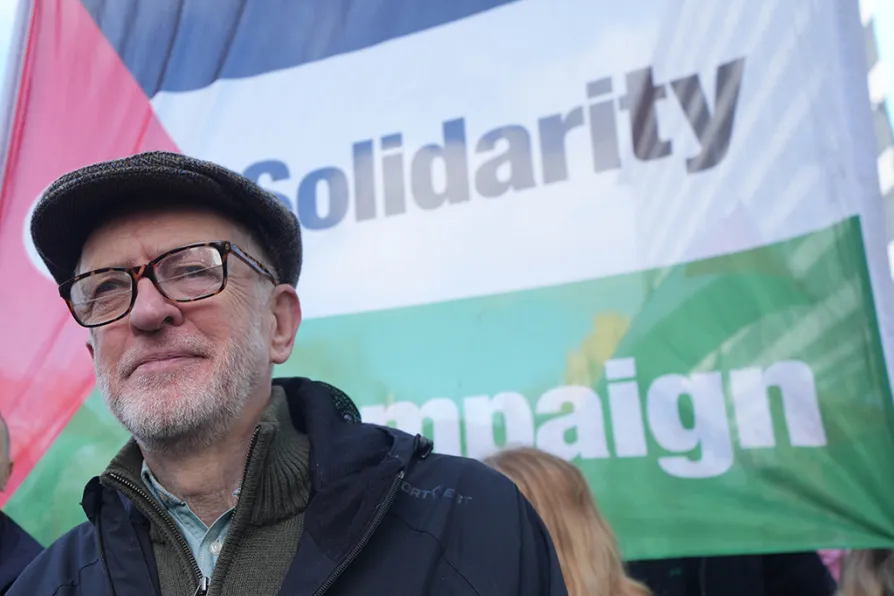
In a wide-ranging interview, JEREMY CORBYN talks to Ben Chacko about the difficulties the new Prime Minister faces and why he sees no future in Labour
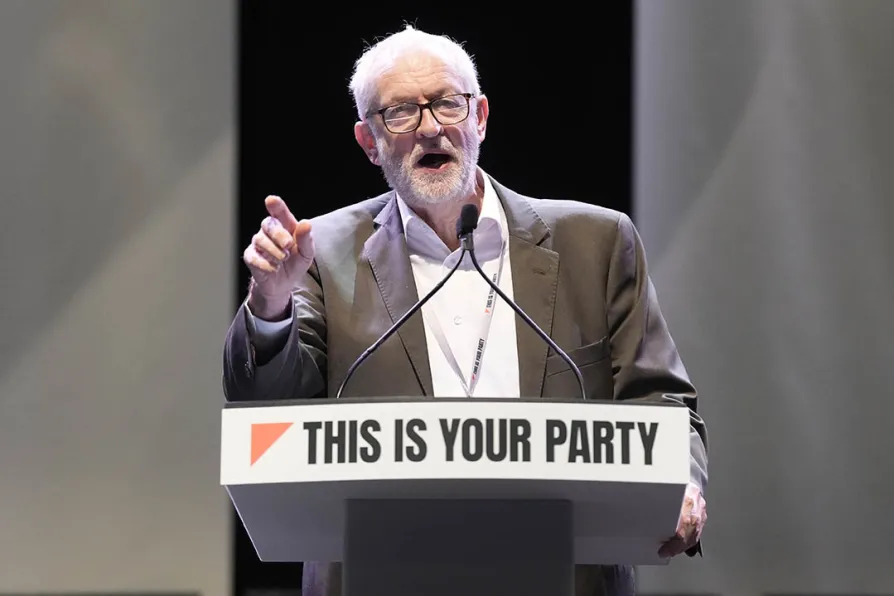
Your Party can become an antidote to Reform UK – but only by rooting itself in communities up and down the country, says CLAUDIA WEBBE
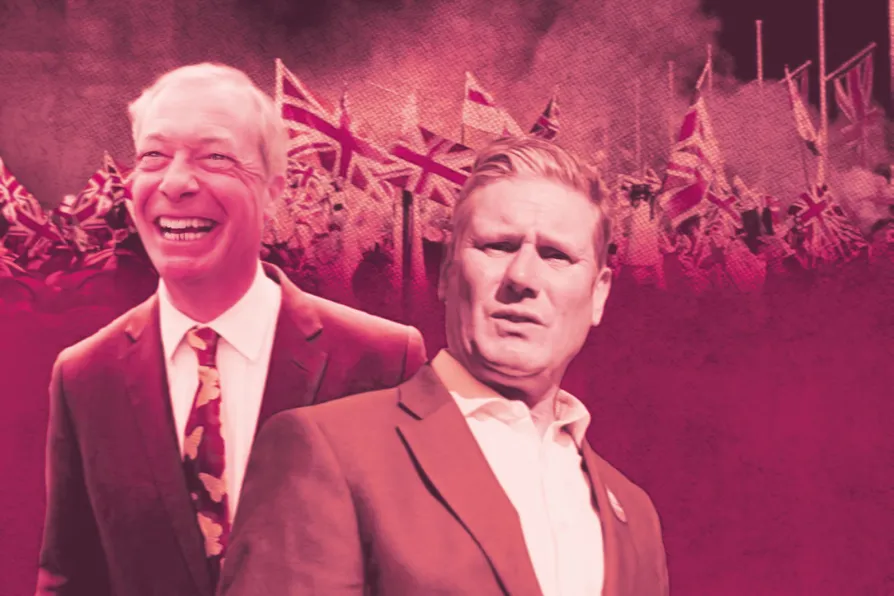
CLAUDIA WEBBE argues that Labour gains nothing from its adoption of right-wing stances on immigration, and seems instead to be deliberately paving the way for the far right to become an established force in British politics, as it has already in Europe