The attacks on black academics are well-funded and relentless, writes DIANE ABBOTT, and they need to be fearlessly resisted by all concerned



The rats we ignore
The real ‘humanitarian threat’ isn’t Cuba but the United States, where poverty, lack of healthcare and illiteracy abound, writes LINDA PENTZ GUNTER
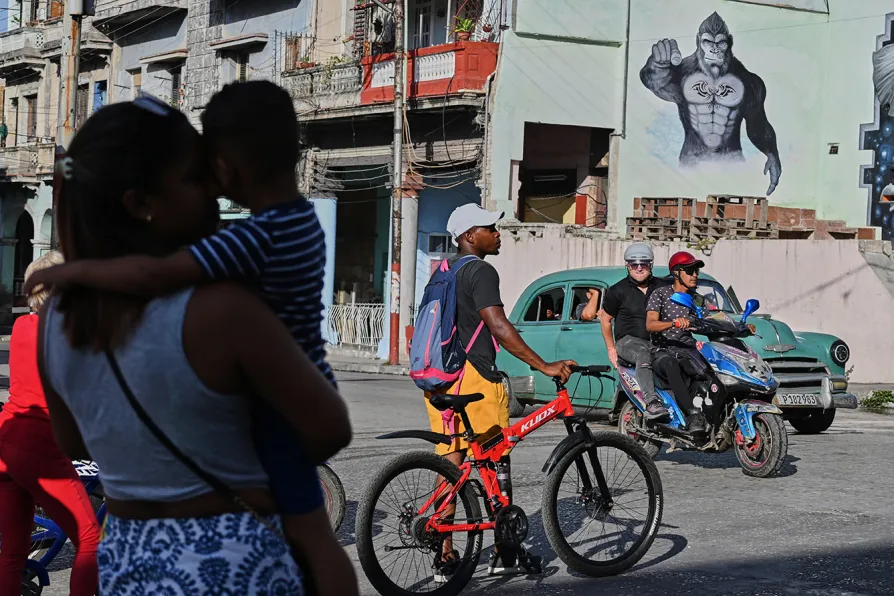
 People cross a street in Havana, Cuba
Extreme hot weather resulting from environmental change needs to be tackled through greater firefighting investment instead of fewer jobs and less resources, writes COLIN BROWN
There are many intricate details about the new Saudi, Turkish and Pakistani alliance we do not yet know, suggests ROGER McKENZIE, but its impact could be considerable
Holyrood incompetence has cost jobs and put the future of Clydeside’s Ferguson Marine shipyard into jeopardy. Its future should have been assured, argues KENNY MACASKILL
Hot and dry conditions are threatening British species unequipped for drought, explains PAUL ASHTON
The Baltic state is set to reverse its constitutional prohibition on nuclear weapons and foreign bases as part of accelerated Nato war preparations, warns TOM UNTERRAINER





IF YOU go looking for rats you will find them. Rats are so ubiquitous here in Washington, DC — and I am referring specifically to the rodent variety — that I saw one trotting along the pavement the other day in broad daylight just a few feet in front of a strolling family and their dog. (It was the dog who eventually spotted it.)
In Washington, DC, the rats outnumber us by as much as five to one. In New York City, rats represent about a third of the human population, numbering an estimated three million.
Down in the New York subway system, there is a particular, indefinable stench that has remained the same for decades. A rat sighting down there is dismissed by New Yorkers with the same nonchalance as spotting a celebrity — a shrug and a wisecrack.
Homeless people begging for change or a sandwich are similarly invisible. New York has the highest rate of unhoused people of any city in the country, at more than 100,000, and the highest number of super-rich, topping even Silicon Valley.
One of these latter, Amazon billionaire Jeff Bezos, probably can’t spot the homeless people, or the rats, from atop the 24-storey Manhattan apartment building where he occupies multiple floors.
There are no daily headlines here describing the United States as awash in “flies, rats, waste and foul odours.” Stories of deprivation are indeed reported, but they do not define the US as a country (even though, arguably, they should.)
Instead, as Roger D Harris and Sara Flounders just wrote on these pages, those narratives are reserved for Cuba.
Reporters and politicians visiting Havana see the rats because that is what they are looking for. And it’s what they want to find.
Personally, when I did the requisite walk around “Havana by night,” I never saw any rats. I did see a rather distressing number of stray cats, which could account for the apparent paucity of rodents.
To elaborate on the point Harris and Flounders made in their article, for the US to point fingers at Cuba about “foul odours” reeks of something else; hypocrisy. For example, in Mississippi 27 per cent of children live in poverty, the highest rate for any state in the country and where 38 per cent of the population is black. In Todd County, South Dakota, 65 per cent of children live below the poverty line. The population there is 88 per cent Native American.
Travel to Appalachia, or an Indian reservation, and you will find families in shacks, some living without electricity or running water. Tens of thousands of Appalachians, mostly in rural parts of Kentucky, Virginia and West Virginia, do not have indoor plumbing. At least 54,000 Native Americans have no access to electricity, most of them on the Navajo Nation that spans several states in the south-west.
Around 43 million Americans — 21 per cent of the adult population — are considered functionally illiterate. About 54 per cent of American adults read at or below the level of an 11-year-old.
After the Cuban revolution succeeded in 1959, the Castro government launched a National Literacy Campaign and all but eliminated illiteracy in the space of a single year. It was one of the first initiatives of the victorious revolutionary government, which immediately recognised the value of literacy and education to empower and enfranchise the population.
Close to half the US population can neither afford nor has access to quality healthcare, according to polling conducted a year ago. Black, Hispanic and low-income households are the most affected.
Every citizen of Cuba has access to free medical, hospital and dental care. But a cursory search for information about the renowned contribution of the Cuban medical profession, both in Cuba and internationally, instead yields one negative article after another, including the suggestion that the doctors are effectively trafficked abroad and enslaved at home.
Never mind that beginning in 1990, and for more than 10 years after that, as was so movingly portrayed in the Cuban feature film, A Translator (Un Traductor), more than 21,000 children, mostly from Ukraine, were flown to Cuba for treatment for illnesses resulting from exposure to the radiation from the 1986 Chernobyl nuclear power plant disaster there.
And while there are no stories about Cubans dying of cancer or other serious but treatable diseases because they could not afford their hospital bills — because there are no bills — research by the US National Institutes of Health has estimated that as many as 68,000 Americans die every year due to lack of access to affordable healthcare.
And yet President Trump has labeled Cuba a “humanitarian threat.” Perhaps he should look that word up in his untouched dictionary.
US hypocrisy was on full view again on May 20 when the Department of Justice issued an arrest warrant for former Cuban president Raul Castro for ostensibly ordering the shooting down in 1996 of two aircraft flown by a group calling itself “Brothers to the Rescue,” resulting in four American deaths.
Brothers to the Rescue, a Cuban exile group out of Miami, Florida, had already conducted multiple flights into Cuban airspace, dropping propaganda leaflets. It had been warned more than 25 times by the Cuban government to cease and desist. Even the US Federal Aviation Administration had urged the group not to “taunt” the Cuban government.
By contrast, the Trump administration has been blithely blowing small civilian craft out of the waters off Venezuela, with scant evidence that they are drug-running and with clearly no threat to US national security. Since last September, almost 200 people have been killed in these incidents, many of them likely fishermen or other civilians, according to human rights groups.
But despite the clear illegality of these actions — and so many others, equally eligible for prosecution — no-one has yet issued a warrant for Trump’s arrest. There may be some rats in Cuba. But the ones we should be worrying about are inside the White House.
Linda Pentz Gunter is a writer based in Takoma Park, Maryland and the author of No To Nuclear. Why Nuclear Power Destroys Lives, Derails Climate Progress and Provokes War, published by Pluto Press.

Similar stories
On its revolutionary founder’s 100th birthday, Cuba remains the revolution that ‘does not give up’ and socialism humanity’s only hope of avoiding the abyss
On the centenary of Fidel Castro’s birth, Communist Party international secretary KEVAN NELSON salutes the ongoing example of a revolutionary people facing a brutal US siege
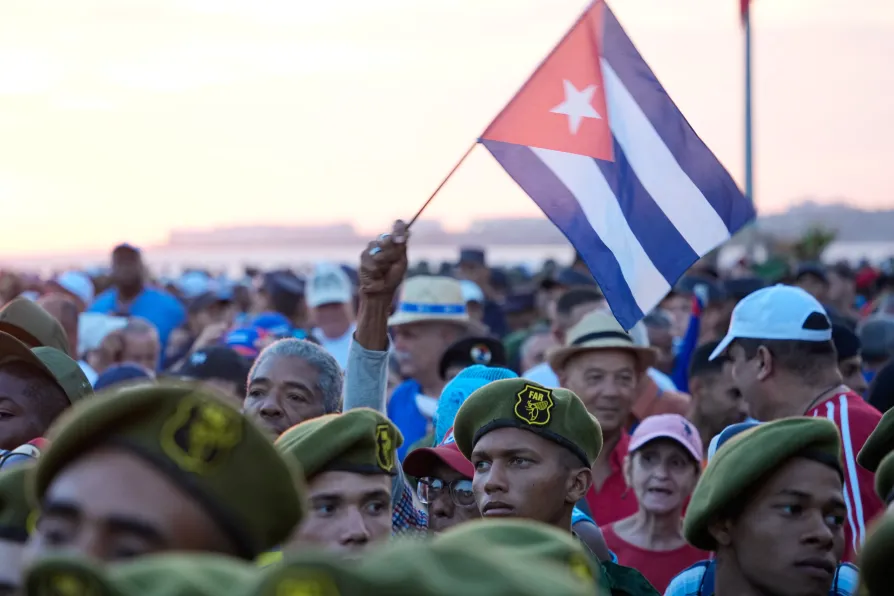
ROGER D HARRIS and SARA FLOUNDERS challenge propaganda against the blockaded socialist island
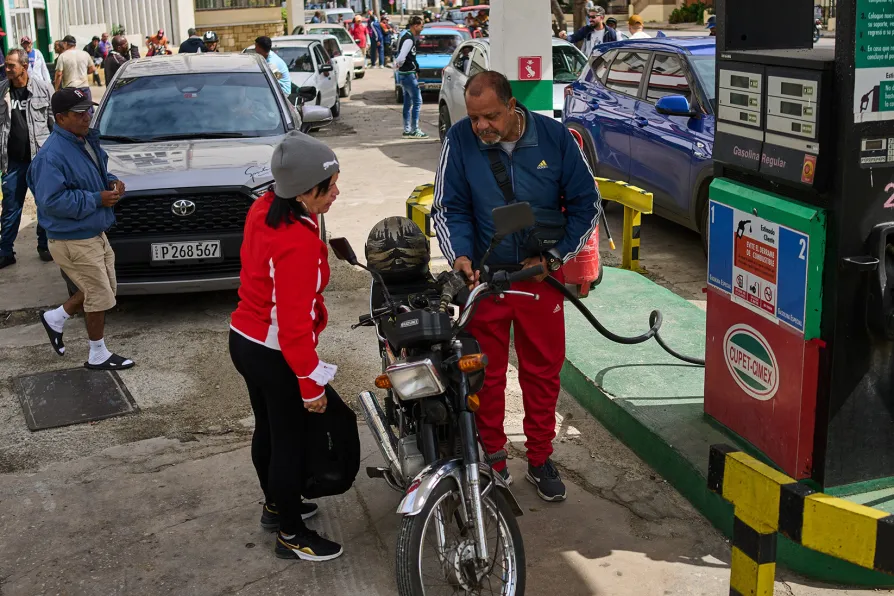
On January 29, US President Donald Trump declared Cuba an ‘unusual and extraordinary threat’ to US national security and tightened the blockade against the island nation MANOLO DE LOS SANTOS reports