Committee for the Defence of the Iranian People’s Rights general secretary GAWAIN LITTLE discusses the impact of the US-Israeli war on the Iranian people and economy


 Latest editorial

Agriculture in crisis worldwide
Blocked fertiliser exports and an extreme climate fluctuation may spell disaster for global food production, write ROX MIDDLETON, LIAM SHAW and MIRIAM GAUNTLETT
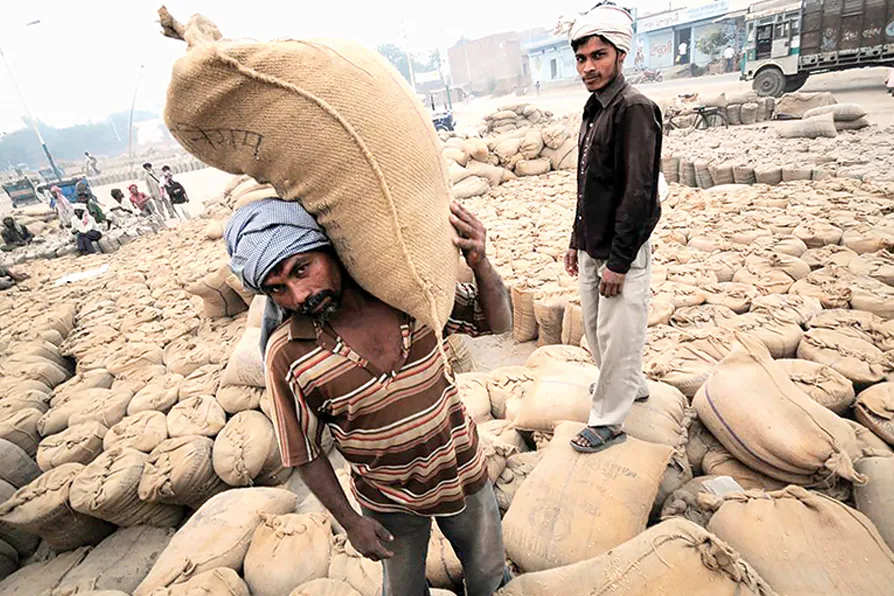 Rice packing center, in Sangrur, in south eastern Punjab, India operates seasonally for procurement / Pic: CIAT/NeilPalmer/flickr/CC
Capitalism has extracted itself from crisis before, argues PRABHAT PATNAIK – but through methods no longer available. So it is turning to authoritarianism, militarism and neocolonialism
The five young men killed in the A66 crash were responsible for a devastating tragedy — but the crash should force us to ask difficult questions about wider society, argues RENATA MEDEIROS MIRRA
Britain funds the policing of black culture 16 times better than the culture itself. The Diamond Jubilee is the moment to end that, argues CLAUDIA WEBBE
Despite Andy Burnham’s declaration defending the continued partition of the island, all major international and internal trends are converging to make Irish reunification inevitable
Humans are part of the ‘animal kingdom’ – and of nature in general – but also distinct from it and labour (work) is part of what makes us unique, declared Engels. His insights 150 years ago into how our species came to be and how we differ from the rest of nature, are as important today as they were then, says the MARX MEMORIAL LIBRARY





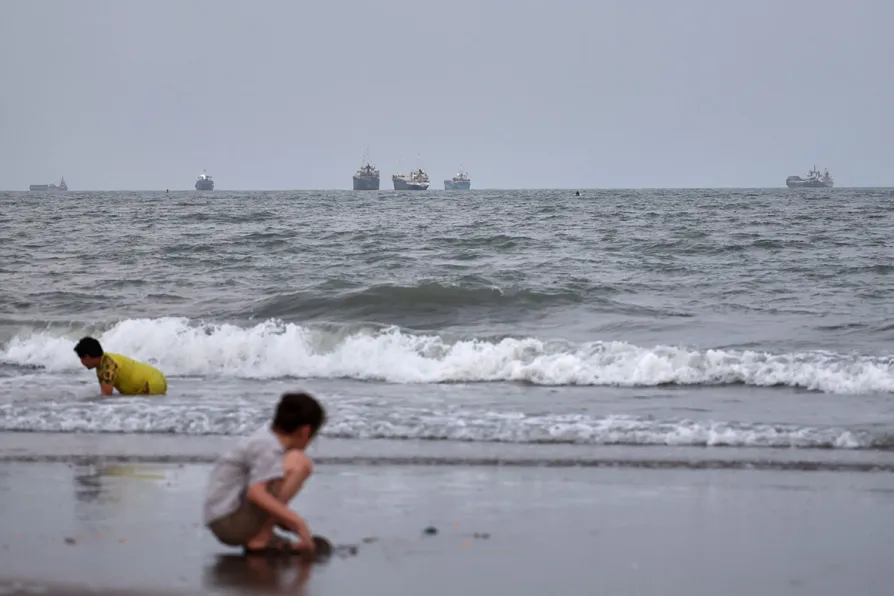
THE Strait of Hormuz between Iran and Oman has been effectively closed since February 28 2026, following the commencement of the illegal US-Israeli war on Iran.
Iran’s strategic use of the Strait of Hormuz was a predictable and rational response to the existential threat of an illegal war, but it seems to have been totally unanticipated by US leadership.
The closure of the strait means that maritime traffic cannot pass from the Persian Gulf out into the open ocean, thereby disrupting shipping routes between the Gulf states (such as Qatar, the UAE and Saudi Arabia) and the rest of the world.
This has had a dramatic effect on oil and natural gas supply chains: approximately 20 per cent of the world’s oil and liquefied natural gas supplies pass through the strait.
A lot of media attention has focused on potential fuel shortages caused by the blockade, and the subsequent driving up of petrol prices. However, there is another key commodity that is also being affected by the closure of the strait: fertiliser.
Almost half of the world’s urea supply (the most widely used fertiliser) is exported from Gulf countries, as well as key fertiliser ingredients such as ammonia. The world’s largest urea plant is in Qatar, which was shut down shortly after the closure of the strait.
In early March, urea export prices from the Gulf region surged by about 40 per cent. At the time of writing, prices are 50 per cent higher than this time last year.
Urea, which is produced naturally in the human body and excreted in the urine, as in other animals, is produced on an industrial scale by processing liquefied natural gas.
First, the gas is combined with water and nitrogen from the air to produce ammonia. This step uses the Haber-Bosch process discovered by German scientists in the early 20th century, allowing humanity to produce synthetic fertiliser without relying on traditional natural sources like animal manure — it’s now the source of fertiliser for half the world’s population.
This ammonia is then reacted again to make urea. Put simply, much of the world’s food supply relies on natural gas from this region.
The closure of the strait has therefore not only affected direct exports of fertilisers, but also the ability of other countries to manufacture fertilisers themselves. By March 18, India had already closed down three of its urea plants, while Bangladesh had also shut down production at four out of its five fertiliser factories.
Al-Jazeera reports that farmers all over the world, from Mexico to India to Malawi, are already feeling the pressure of increased fertiliser costs and lack of supply.
Countries in the global South are particularly vulnerable to this, as many post-colonial states have been forced into heavy dependence on imported agricultural commodities, from seeds to pesticides to synthetic fertilisers. This neocolonial capitalism is pernicious.
For example, about 80 per cent of fertiliser used across sub-Saharan Africa is imported, while Brazil imports nearly all of its fertiliser from abroad. India spends well over £7.5 billion annually on fertiliser imports to support an agricultural sector that includes over 100 million farming families.
Where natural fertiliser was once part of the ecosystem of local farming in all regions, imported urea now rules the game.
Across the global South, use of fertilisers has become critical in recent years in order to boost crop yields to a level that satisfies both domestic and international demand.
Indian rice accounts for a quarter of the world’s rice exports, while Brazil accounts for almost 60 per cent of soya bean exports. The fertiliser crisis thus exposes the fragility of an agricultural industry dependent on imports of key commodities (rather than domestic production) that is under extreme pressure to produce high yields for export.
UN development chief Alexander De Croo warned that 30 million people could be pushed into poverty by increased food insecurity due to fertiliser shortages. But that’s not the only pressure on food production.
The timing of the US-Israeli bombardment of Iran came at a time when planting is most intensive, in the spring months of the northern hemisphere. And climate scientists are forecasting a “Godzilla” El Nino effect in 2026, which would further threaten crop yields.
El Nino is the name given to a global climate phenomenon, in which variations in sea surface temperature and wind over the Pacific Ocean lead to higher than normal air pressure over Indonesia, Australia and across the Indian Ocean to the Atlantic.
This in turn causes short-term spikes in global average temperature, and can therefore lead to intensified drought and heatwaves. The “Godzilla” El Nino is a term coined by a scientist in 1998 to refer to more extreme versions.
Scientists are particularly concerned about the coming forecasted extreme El Nino’s impact on Indonesia, which is predicted to have a longer, drier dry season with significantly reduced rainfall, persisting from April until October.
A previous strong El Nino event triggered massive forest fires across large swathes of south-east Asia in 2015-16. In Indonesia, the fires were so significant as to be declared a major public health emergency.
The 2026 fire season in Indonesia has already begun to escalate, with over 32,000 hectares already burning by February (around twenty times more than in 2025). That this is occurring well before the peak of the dry season is a major cause for concern.
The balance of food available globally is an entangled web, and threats to food availability take time to propagate globally, as new crops grow towards harvest, and stockpiles run short.
The full effect of the fertiliser crisis is yet to be felt, though many farmers are already experiencing the pinch. Alongside the dramatic climate effect of El Nino, the precarity of the system is becoming obvious.
The illegal war that the US and Israel chose to wage has already killed thousands and injured tens of thousands more. Its direct consequences now threaten the food supply of millions.
