A California union’s decision to host a meeting about US policy towards Cuba has prompted a congressional probe and renewed attacks on international solidarity, writes CAMERON HARRISON



150 years since Custer’s Last Stand — has the US changed at all?
The ghosts of Custer’s doomed campaign haunt a modern America still devoted to waging imperialist war, says STEPHEN ARNELL
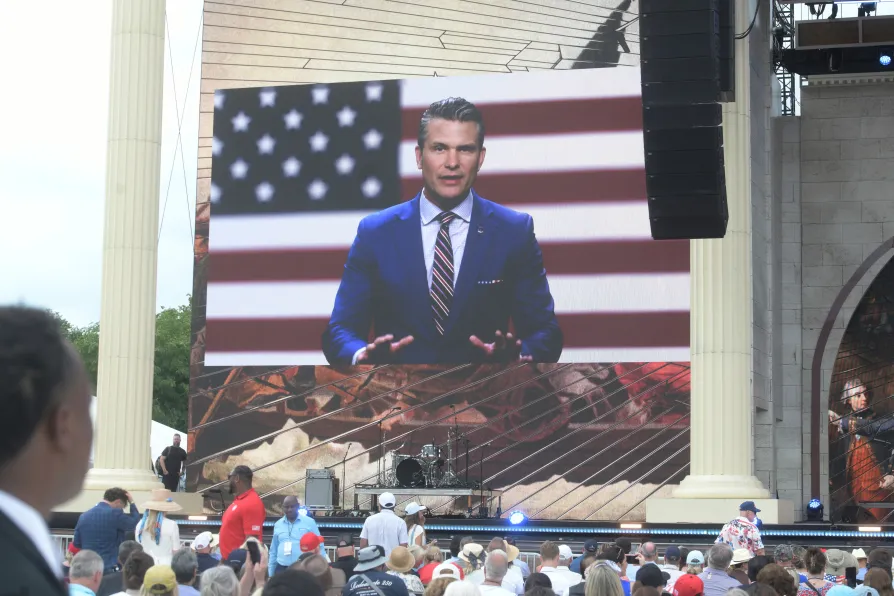
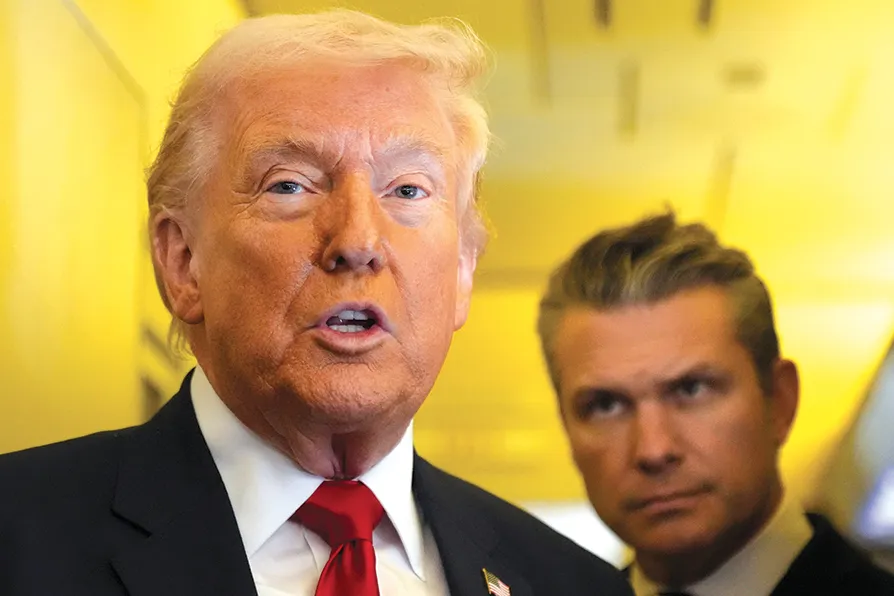
 Defense Secretary Pete Hegseth speaks on screen during the Rededicate 250: A National Jubilee Of Prayer, Praise & Thanksgiving, May 17, 2026, in Washington
The Baltic state is set to reverse its constitutional prohibition on nuclear weapons and foreign bases as part of accelerated Nato war preparations, warns TOM UNTERRAINER
Long-term underfunding and state neglect, while simultaneously probation services have been undermined, have intensified the prison crises, argues SOLOMON HUGHES
Holyrood incompetence has cost jobs and put the future of Clydeside’s Ferguson Marine shipyard into jeopardy. Its future should have been assured, argues KENNY MACASKILL
With the agitated debate now raging in the media about the early release schemes, Prison Officers Association general secretary STEVE GILLAN gives the view of those who work in the sector
The hounding of the late Jason Arday is an all too familiar experience for many black people. ROGER McKENZIE calls for collective action to combat what can feel like personal isolation





THE 150th anniversary of the Battle of the Little Bighorn, aka Greasy Grass, aka “Custer’s Last Stand,” will be on June 25-26 2026.
Led by a flag-waving egomaniac, US forces openly disdain the rules of engagement and offer “no quarter” to launch a brutal assault against a foe they deride as little more than “barbaric savages,” only to be administered a humiliating reverse.
Donald Trump’s undeclared war against Iran of course, but also very similar the events of the Great Sioux War 150 years ago, when the US ignored treaties to pursue a campaign of near extermination against the free Lakota Sioux, Northern Cheyenne and Arapaho of South Dakota and Wyoming’s Black Hills.
And the comparisons don’t end there; “Ole Bone Spurs” Trump we can discount as an analogue of 7th Cavalry commander George Armstrong “Autie” Custer; too elderly, corpulent and unmartial a figure by far. But another lies within boot-licking distance of DJT’s gilt-slathered White House throne.
Was Custer the reportedly a vain, bloodthirsty, rash, boastful egomaniac, or the tragic “American Leonidas”? (the Spartan king slain by the invading Iranians/Persians at Thermopylae) with an admixture of Alexander the Great, for his early civil war exploits?
Modern opinion tends towards the former, and with good reason.
Custer could be regarded as a kind of proto-Pete Hegseth — the cocksure, strutting egoist that currently bestrides the US “Department of War” Hegseth has has Custer bullshit quotient to be sure but falls lamentably short of the renowned “Indian Fighter” in many ways.
Hegseth has failed to distinguish himself on any battlefields, aside from those conducted from the couches of Fox News during the seemingly never-ending culture wars.
Custer wasn’t the berserker Christian nationalist that the tattooed Hegseth performatively plays; neither was he the aggressive booze-addled piss-artist the war secretary was until his supposed reformation.
But both Hegseth and Custer rank almost equally in terms of crass immaturity, according to biographers.
Custer did, as they used to say, “have an eye for the ladies” other than his wife Libby, but apparently was more of a gentleman than Hegseth, whose less than gallant amorous adventures included paying $50,000 to a woman alleging he sexually assaulted her in 2017.
While Custer was a compulsive gambler who lost a fortune at cards and on the horses, Hegseth is a far more successful one, if frequent reports of insider trading are to be believed.
Custer’s early stirring success (and a brevet generalship) in the US civil war faded as swiftly as his once glorious lengthy mane of blond hair retreated from his noggin (no attempted Trumpian combover), and he became ever more determined to recapture his early fame, in part to dig himself out the financial pit his profligate spending and behaviour had led to.
At Little Bighorn, Custer was simply out-generalled by Native American leaders Sitting Bull, Crazy Horse and Chief Gall. Rather than facing an overwhelming tide of warriors, the 7th Cavalry boasted 700 troops and scouts, against 1,100-2,500 warriors from the Nations of the plains. Not bad odds — if Custer hadn’t divided his force into three and failed to scout the enemy’s dispositions. He still had surprise on his side at first, but blew it.
Custer lost 268 slain, with 55 wounded (six of whom later died of wounds); the opposing tribes 31-100 killed, up to 160 wounded and 10 non-combatants (ie women, children and old folk) slaughtered.
The US under Trump and his gurning myrmidon Hegseth seems to have learned nothing.
The US bombing of the Minab girl’s school in Iran resulting in the death of 168 people including around 110 children (according to Iranian officials) bears some comparison with Custer’s 1868 Washita River Massacre, although the toll at that event was actually less than Trump’s (up to 75 women and children killed).
Shamefully, but with his typical swagger, Hegseth announced in September 2025 that 20 US troopers from the 7th Cavalry will retain their Medals of Honor for the 1890 Wounded Knee massacre, rejecting calls to rescind them for the butchering of roughly 250 Lakota Sioux.
Hegseth exalted: “We’re making it clear that they deserve those medals. This decision is now final, and their place in our nation’s history is no longer up for debate.”
As even Custer could occasionally show some empathy with the Native Americans, Hegseth’s Wounded Knee pronouncement surely makes him an even worse shit than the late “Son of the Morning Star” (no relation).

Similar stories
Washington’s response to a downed jet shows a superpower still reaching for overwhelming force even as its wars repeatedly fail, says NICK WRIGHT
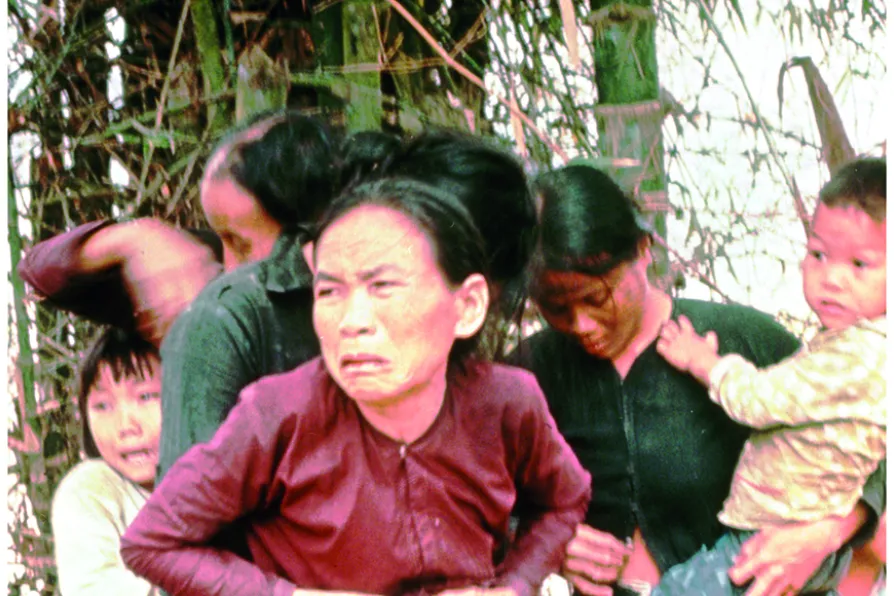
PATRICK CHURA reflects on the mass murder of civilians in wartime and his own visit, 10 years ago, to My Lai where US soldiers slaughtered over 500 men, women, children and infants
RAMZY BAROUD looks at how Western media are being forced to kowtow to the Establishment’s war narratives