A California union’s decision to host a meeting about US policy towards Cuba has prompted a congressional probe and renewed attacks on international solidarity, writes CAMERON HARRISON



Kanya King CBE – she built the stage the industry refused to
Claudia Webbe pays tribute tribute to KANYA KING CBE, February 12 1964 to June 3 2026
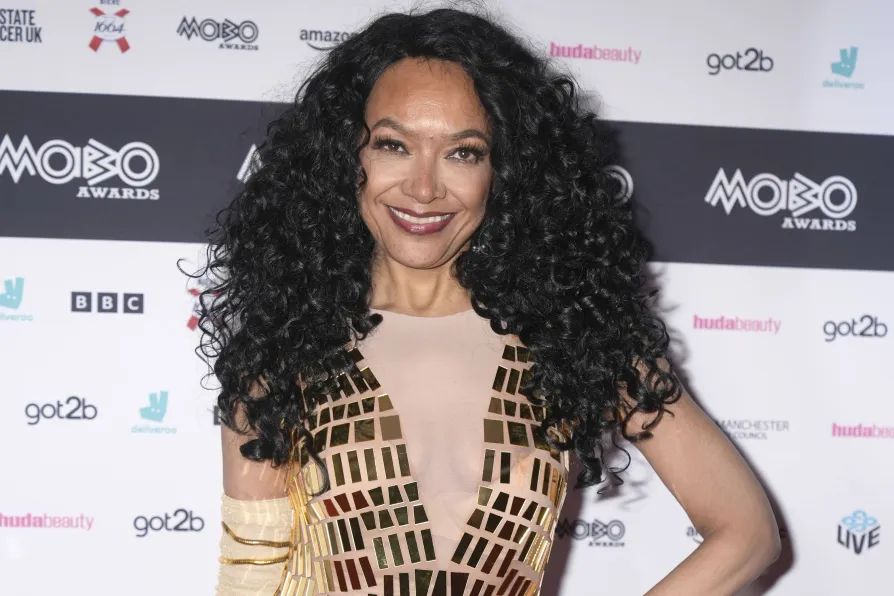
 GREAT LOSS: A file photo of Kanya King attending the Mobo Awards at Co-op Live Arena, Manchester earlier this yearGREAT LOSS: A file photo of Kanya King attending the Mobo Awards at Co-op Live Arena, Manchester earlier this year
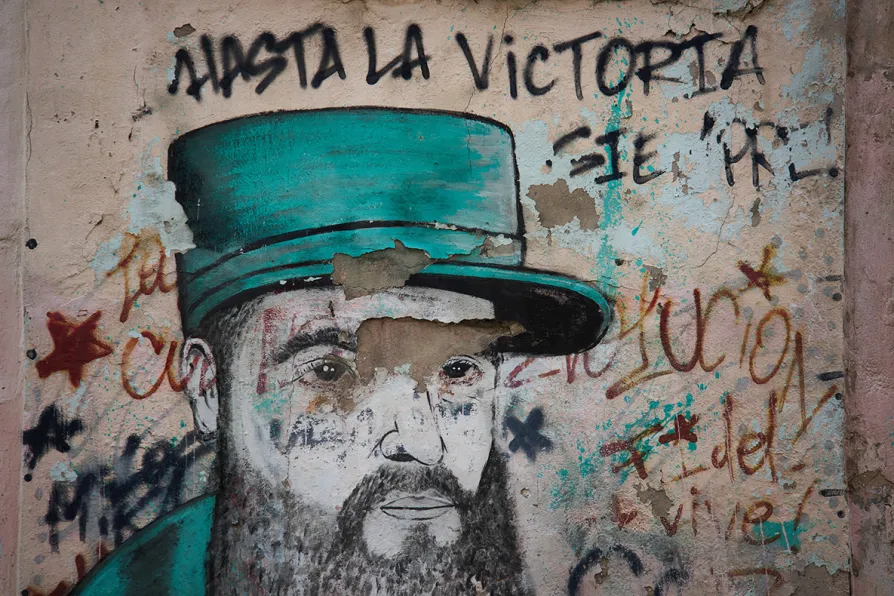
The Baltic state is set to reverse its constitutional prohibition on nuclear weapons and foreign bases as part of accelerated Nato war preparations, warns TOM UNTERRAINER
Long-term underfunding and state neglect, while simultaneously probation services have been undermined, have intensified the prison crises, argues SOLOMON HUGHES
Holyrood incompetence has cost jobs and put the future of Clydeside’s Ferguson Marine shipyard into jeopardy. Its future should have been assured, argues KENNY MACASKILL
With the agitated debate now raging in the media about the early release schemes, Prison Officers Association general secretary STEVE GILLAN gives the view of those who work in the sector
The hounding of the late Jason Arday is an all too familiar experience for many black people. ROGER McKENZIE calls for collective action to combat what can feel like personal isolation





KANYA KING CBE died on June 3 2026. She died peacefully, surrounded by her family and close friends, after a courageous battle with colon cancer. She was 62 years old.
She should have had decades more. That age needs to sit with us, not least because she had deliberately kept it from the world: a quiet, strategic act of self-preservation by a black woman who understood exactly how the industry she was operating in would use it against her. Even that final private detail speaks to the conditions she was navigating every single day of her working life.
She was born in Kilburn, the youngest of nine children, to a Ghanaian father and an Irish mother. Her father died when she was 13. She became a mother at 16. She was told, by a career’s adviser, to be realistic.
“That put a fire in my belly,” she later told the Evening Standard, “and gave me the motivation to say, why should I not have ambition?”
She studied English literature at Goldsmiths, worked as a television researcher, and then, in 1996, remortgaged her home without institutional backing and in six weeks organised the first MOBO Awards, broadcast to the nation by Carlton Television from the Connaught Rooms in London. She was told there was no market for black music. She built the market anyway.
Thirty years later, the numbers tell their own story. UK Music’s landmark Black Music Means Business report, published in March 2026, found that music genres of black origin contributed 80 per cent of the total value of recorded music in the UK over the past 30 years: £24.5 billion out of a total £30bn market. The same industry that told Kanya King black music was niche was being sustained, above all else, by the culture she refused to let be ignored.
The artists whose names are now synonymous with the best of British music gathered in grief this week. Stormzy, who has seven MOBOs to his name and whose first major award came on the MOBO stage. Alesha Dixon, who wrote: “Kanya King, one of one. Incredible woman. Your impact is immeasurable.” Idris Elba posted: “You inspired me. Your dedication is unmatched. I will miss you.” Oritse Williams of JLS said she had “created a powerful platform that championed cultures, communities and talent that were often unseen and underrepresented” and that she had “created belief. Belief in our culture, our creativity and our potential.”
The Mayor of London Sadiq Khan called her “a true pioneer who changed the face of culture and music.” The MOBO organisation stated simply: “What Kanya created was never simply an awards ceremony. It was an act of cultural justice.”
Beverley Knight’s tribute cut to the heart of what the early years actually looked like. “The music made in large part by black urban artists like myself was ignored,” she said. “Kanya King remortgaged her house and used the proceeds to fund an awards ceremony that personally helped to expose my music to a mainstream audience. It was, for years, vilified in some corners of the media. But Kanya persisted and stayed true to her vision. Thirty years later the MOBO Awards are now globally recognised.”
That persistence was not stubbornness. It was ideology. It was the insistence that black music was not a subcategory of British culture but its beating heart.
What is often underexamined, even in the most generous tributes, is the breadth of what MOBO became. It was not simply a ceremony. It was a pipeline. Under Kanya’s leadership, the organisation developed MOBO Unsung to platform emerging talent, took the awards out of London across Britain from Newcastle to Glasgow to Sheffield, and in the final year of her life opened the House of MOBO in Gipsy Hill, south London: a community venue that reimagined the traditional pub as a place where everyone could feel at home.
She opened it, she explained, because she had never felt at home in pubs growing up. They were not built for people like her. So, she built her own.
What is equally underexamined is who she was when the cameras were off. Her son, in a letter she shared publicly on Mother’s Day, captured it better than any obituary could. He wrote about watching her as a child in a shop, returning clothes without a receipt, knowing full well the staff were going to say no. “You’d stay calm,” he wrote, “explain your case with precision (and a bit of flair!), and refuse to accept defeat. Eventually, after some back-and-forth and a visit from the manager, you’d walk away with the refund — and a lesson for me in perseverance.” He signed it simply: Son x.
The lesson he took from that ordinary moment at a shop counter was the same lesson that built MOBO. She was teaching it long before she was famous.
When she received her stage four colon cancer diagnosis in September 2024, she refused to be diminished by a verdict not hers to accept.
“While this journey will undoubtedly be challenging,” she said at the time, “if my story can save just one life, then it’s a story worth telling.” She stood on the MOBO stage in Newcastle in February 2025, months after being told she had months to live, and told the audience: “I never allowed someone to define my limits. Not in life. Not in business. And I’m certainly not going to have that happen now.”
I was holding her hand when she took her last breath on June 3 2026. What I witnessed in those final months, the courage — the clarity, the absolute refusal to be defined by her illness — was the same thing her son described at that shop counter.
She was consistent all the way to the end. She used the time she had left to campaign for early detection in black communities, because she understood, as the Black Women Rising charity has long been documenting, that the disparities in cancer outcomes for black women are not medical anomalies. They are the consequences of structural inequality: of an NHS stretched by years of austerity, of cultural barriers to screening, of a healthcare system not built with her community’s specific needs in mind.
In what would prove to be one of her final interviews, published in The Voice newspaper in March 2026, she said: “What matters becomes obvious. Titles fade. Noise fades. What remains are people, purpose and time.”
People, purpose and time. It is the truest possible summary of a life lived in service of others, and a sharp indictment of every system that failed to give her more of it.
In 2020, Kanya wrote an open letter to Culture Secretary Oliver Dowden calling racism “the worst pandemic we are facing.”
She wrote: “The music industry could and should have dealt better with black artists, black-run companies and taken on more black executives. The black businesses, institutions and communities that give rise to black expression have not been able to benefit or partake in the financial rewards that have driven billions to the UK economy and helped create entire industries.”
That was six years ago. It remains true today.
The 2026 MOBO Awards, the 30th anniversary, will be dedicated entirely to her memory. Good. And then the music industry that gathered to mourn her this week owes it to her memory to reckon honestly with the fact that the inequalities she spent 30 years fighting are still here. Black music professionals remain underrepresented at senior level. The health inequalities that shaped the circumstances of her death are still killing black women at disproportionate rates.
Kanya King did not just open doors. She held them open. She widened them. And she refused, categorically refused, to let them close behind her.
The least we owe her now is to stand in them and hold them open for everyone who comes next.
Rest in power, Kanya King CBE. Born February 12 1964. Died June 3 2026. You built this. All of it.
Claudia Webbe was the member of Parliament for Leicester East (2019–24). You can follow her at www.facebook.com/claudiaforLE and x.com/claudiawebbe.
