TUC president and POA leader STEVE GILLAN speaks to Ben Chacko on the eve of Congress 2026


 Latest editorial
The growing culture of lab meat
Innovation in biotechnology is changing how we conceive of meat, say ROX MIDDLETON, LIAM SHAW and MIRIAM GAUNTLETT of SCIENCE AND SOCIETY
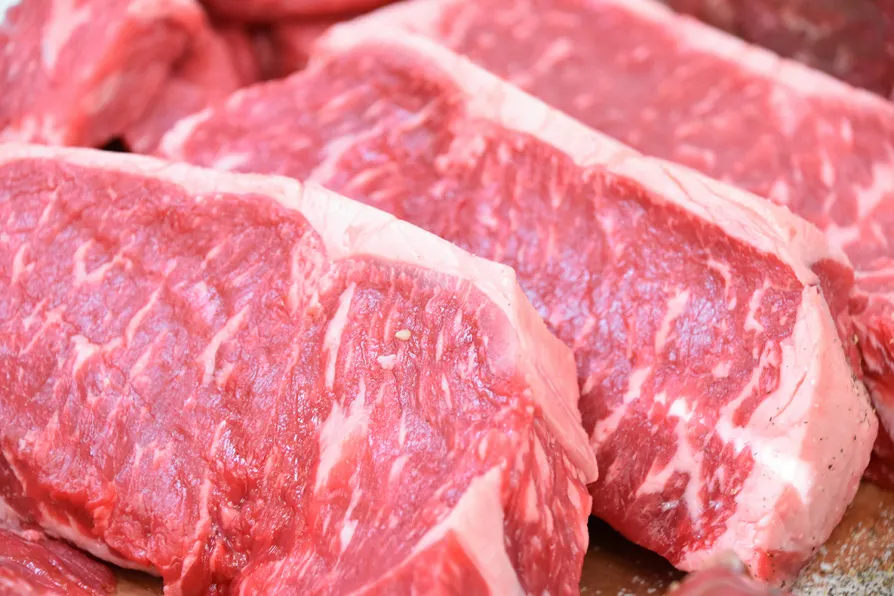 Meat [Pic: Cindie Hansen / Creative Commons]

As Cuba faces the most dangerous moment in its recent history, Britain must do more than condemn the US blockade at the United Nations, writes KEVIN COURTNEY, chair of the Cuba Solidarity Campaign
The Together Alliance is hosting two summits, North and South, to build power and plan action against the scourge of racism peddled by the right. DANIEL KEBEDE urges mass participation
Morning Star assistant business manager BERNADETTE KEAVENEY and international editor ROGER McKENZIE remember attending the 2001 TUC, suspended midweek after news of the World Trade Centre attacks
Whether it’s dented bike frames or broken ferries, MATT KERR wishes politicians had the same steely staying power of elite engineering instead of chasing disposable self-importance
The events of 9/11 reverberated across the United States and then the world. JOHN WIGHT remembers the eerie atmosphere that exposed racial divisions at the heart of Hollywood





LAST weekend was the 48th birthday of Louise Joy Brown, the world’s first baby to be conceived in a lab outside of the human body through in vitro fertilisation (IVF).
Sperm and egg cells were taken from the bodies of her parents and successfully kept alive in a Petri dish until they fused in conception. This once-revolutionary procedure now allows half a million people a year to be born to parents who would have been otherwise unable to conceive.
A crucial element in the technique is the ability to keep cells happy in a clean, balanced nutrient-rich liquid. For human conception, this is done on a small scale, literally a petri dish — but by scaling it up, all sorts of cells can be kept thriving outside of the body.
New stem cell engineering allows us to imagine medical treatments in which tissues are regrown outside the body and implanted. Cells can be extracted, transformed back into stem cells, and then cultivated to become needed body parts or grafts. This is a hot area of research at the moment, with scientists understanding how to scale up the growth of larger areas, more complex mixtures of differently differentiated cells, and structured organs to mimic those we grow naturally.
Human cells aren’t the only cells that can be cultivated. The farming of cells in an unstructured way is a more established technique. Cells can be kept alive inside a bioreactor, which regulates their nutritious growth fluid and allows them to thrive. Bioreactors are the successor to vats used for fermentation, like brewing beer.
In 1979, using a bioreactor to grow E. coli cells allowed the production of human insulin outside the human body, made by genetically engineered bacteria. This was the first bioengineered drug produced by genetic modification, achieved just a year after Louise Joy Brown was born. This method for making insulin changed the lives of diabetics all over the world. Rather than needing 4,500kg of pigs’ pancreases to extract a measly 250 ml of insulin, it could simply be harvested from the bioreactor.
Bioreactors and genetic engineering allow for the unprecedented production of proteins, an extraordinarily diverse host of molecules encoded in DNA. Food production has been a major test of the capacity to scale this technology.
Some of you may have already tried the product of these tests: the meat alternative Quorn is made from a mycoprotein — a type of protein derived from fungi — grown on a large scale in bioreactors. Unlike insulin, rather than simply harvesting the protein, Quorn products also contain the fungal cell bodies, long thin fibrous cells that give it texture, intended by its creators to mimic muscle fibres in meat.
But what if rather than mimicking muscle fibres, you could just grow the muscle cells themselves in a bioreactor? This idea is now being realised in cultivated meat — the growing of meat cells directly in a bioreactor. Stem cells (embryonic cells with the potential to differentiate) are coaxed into making viable living muscle cells which can be harvested.
Currently these cells are grown on a scaffold to give them structure, rather than growing the structure themselves. The first cultivated meat was eaten as a science publicity stunt in 2013, when research in the Netherlands funded by a Google co-founder produced a single burger made from real living beef cells, which was cooked and eaten in front of cameras in London. Just thirteen years later, there are several companies which are making and selling meat products entirely produced from cells that have never been part of a whole animal.
In Britain, the first cultivated meat products are currently under review for licensing for human consumption by the Foods Standards Authority and Food Standards Scotland, and a decision on their distribution is expected in early 2027, when they could become available to consumers in supermarkets.
In fact, the cost of producing these meats is still so high that it’s unlikely they will actually reach supermarkets for some time. In other countries where these meats are already certified for human consumption, they are more commonly available at novelty tasting events in restaurants than in grocery stores.
However, proponents believe the costs will come down. With a dramatic reduction in land needed compared to animal farming, they claim that cultivated meat has the potential to sustainably meet the world’s growing meat consumption.
Cultivated meat has actually already been seen for sale, briefly, in a shop in Britain. In a gimmick in 2025, Pets At Home Brentford briefly stocked a chicken dog treat that contained real lab-grown chicken mixed with plant-based ingredients. Because it wasn’t for human consumption, the safety testing of the food is significantly lower, allowing a first in animal feed, although not one that is currently economically viable.
The sterile environment cultivated meats are grown in means they can be made without antibiotic use. That’s a huge advantage when over 70 per cent of the world’s antibiotics are currently used on farm animals.
The pushback from the farming lobby is serious. In March this year EU law banned 31 meat-related words (“meat,” “beef,” “chicken” etc) from being applied to plant-based meat or cultivated meat. Italy and Hungary have already explicitly banned cultivated meat, although it seems likely this could contravene eventual EU law.
Depending on the animal that the stem cells come from, cultivated meat could be beef, chicken, salmon — with apparently no limit to the kind of meat that can be grown this way. Some researchers have pointed out this could extend to the meat of extinct animals. It could also result in meat engineered for enhanced nutrition. The meat doesn’t need to fill any functions other than human nutrition, expanding the horizon of what can be genetically programmed in.
Is it realistic? We could definitely expect that scaling and infrastructure investment could bring production costs down. But the economic case for cultivated meat becomes tangled.
Although it has environmental and health benefits over killing whole animals, the technology will be controlled by companies — many of which have already patented all parts of production — even up to stem cell lines, the biological material itself.
It’s patent costs and oligopoly which until recently made insulin increasingly expensive, rising dramatically until legislation capped its price. The cost of production fell radically as predicted, the quality of the product really could improve people’s lives, but its production within the capitalist economy prevented the benefits being fully realised.

Similar stories
China’s investment and commitment to scientific research is already paying off, pushing the country to the centre stage of global technological advance, writes S Krishnaswamy


Fertiliser chaos triggered by Gulf conflict could send prices soaring and leave millions facing devastating hunger, writes DYLAN MURPHY
New research into mutations in sperm helps us better understand why they occur, while debunking a few myths in the process, write ROX MIDDLETON, LIAM SHAW and MIRIAM GAUNTLETT