
Working people across Britain are fighting back against austerity, war, repression and exploitation. The challenge now is to unite those struggles, says Communist Party of Britain assistant general secretary JOHNNIE HUNTER

Joy, ancestors and the politics of liberation
ROGER McKENZIE looks at how ancient traditions practiced today can be the cornerstone of anti-imperialism in Africa
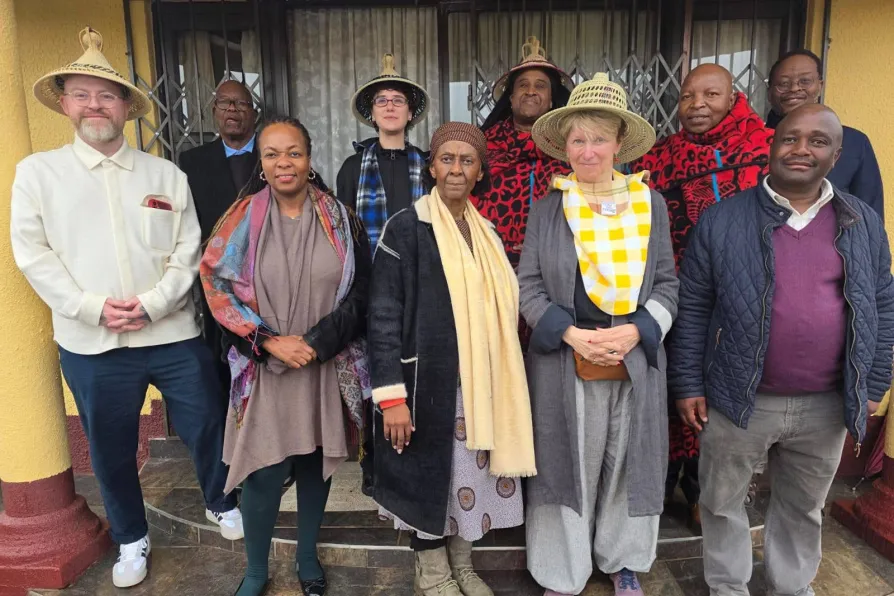
 Roger McKenzie (back row, middle) with members of Manifesto Press and the Bakoena Royal Council in Eastern Free State, May 2026
Train drivers’ union Aslef general secretary DAVE CALFE speaks to Ben Chacko about his hopes that Burnham’s devolution agenda will include the importance of the railway
DIANE ABBOTT provides an analysis of the reasons for EU and British voters’ dramatic swing to the right
Some of the review’s proposals could make the benefits system less cruel and dehumanising. But its vague plans for services and non-cash support revive the threat that disabled people will lose control over the money we need to survive, writes DYLAN MURPHY
Believe it or not, there was a time when the US government built beautiful homes for working‑class Americans to deal with a housing shortage, writes ERAN BEN-JOSEPH
MAT COWARD has heaps of good advice on recycling garden and household waste over the winter





IT WAS as if a train was approaching The Forge in Johannesburg, South Africa. It was actually more than a dozen women from the landless movement singing and dancing as they headed down the street towards the venue.
It felt to me like they were coming to bless or wake up the room with their joy.
As I looked out the high windows of The Forge, I could see people walking by as if this was an everyday occurrence — because it was. You don’t just turn up to a workshop, meeting or conference in South Africa. You come with intent and you enter the room with joy.
The singing and dancing continued for many moments into the time that the meeting should have begun. It was as if this were their way of recalling the discussions or events that had already taken place and were readying the room for the time to come.
Nobody, as far as I could see, got vexed because of the slight delay. People understood the importance of the moment.
This is a culture of resistance that is natural to the African diaspora. The tradition implores us to celebrate our ancestors and to sometimes pour out a libation on to the ground to recognise their importance.
I have seen similar demonstrations of jubilant reverence to African ancestors in other places around the world.
I have seen similar among African-Americans in the US and in Kenya.
In the Kenyan capital Nairobi I remember feeling very awkward about people singing and dancing around the room of a posh hotel (yes they do have them in Nairobi) until my reticence was swept away by a number of people grabbing me to join in. After that it felt like the most natural thing in the world — of course for them it was simply a part of their culture.
The reverence towards ancestors is not just on joining a room but it is also followed at the end of a gathering — even where there has been disagreement.
So it was in Johannesburg where at the end of the day, leading African National Congress and South African Communist Party members, writers, publishers, activists and artists all joined together to celebrate the day’s work.
After leaving Johannesburg our party from Manifesto Press and Red Star Media travelled to the rural areas of the Free State and Kwa-Zulu Natal.
During one of our visits we were taken to a small village. Each of the homes in the village had traditional circular buildings called rondavels.
These structures have been in use for centuries and have played a significant role in the culture and traditions of the people who inhabit these areas. They are typically constructed using a combination of natural materials such as rock, mud and thatch.
The origins of rondavels in southern Africa are hidden in mystery. Some historians believe that they were introduced by Bantu-speaking tribes who migrated to the region from west Africa around 2,000 years ago.
In southern Africa, rondavels hold a profound cultural importance. They are often used in customary rituals and celebrations and are seen as a strong symbol of African culture.
We were told that the rondavels are used as an important way for family members to stay in touch with their ancestors. They can go quietly to ask the ancestors for advice on solving any problems or simply as a way of gathering strength to deal with any difficulties ahead.
The circular nature of the structure is also important as a means of demonstrating that everyone in the room is equal.
Another aspect of African culture often gets looked at through the prism of a similar institution in Western society — royalty.
We met two “royal families” during the visit which still appear to retain considerable local support in many areas, although they have been removed from power by the people in some parts of South Africa.
The ANC has legislated for these dynasties to allow for women to assume the thrones, in line with the country’s constitution’s equality provisions. But, from what I could see, this appears to be a far from likely proposition in many areas and something not likely to be insisted on with any genuine force by the ANC.
Neither of the two sets of royals we met seemed in any great rush to change the current situation.
During one visit the mother of the current king had been called on to act as regent for a short time on the death of her husband because the incumbent was only 15 years old at the time. But that was as far as her leadership role stretched.
One of the important issues for me was the fact that royalty did not diminish the role that was played in the anti-apartheid movement.
The current king’s father was jailed for more than a year by the apartheid regime for leading protests in his area after the Soweto uprising of June 6 1976, during which the settler regime murdered 23 people.
The reverence to the heroes of the anti-apartheid movement by the royals was palpable. When we mentioned we had met Ronnie Kasrils, the SACP and ANC freedom fighter, the response from the king’s mother was “our Ronnie.”
This same reverence for the importance of culture to the people of Africa was on display again in La Biennale di Venezia.
The Democratic Republic of Congo pavilion not only showed powerful images of men and boys mining with their bare hands for gold but there was also a very striking and moving video on constant display.
The video showed an African family up to their waists in water in what appeared to be their home. Perhaps a metaphor for the perilous situation that Africa is facing as the climate emergency worsens. But the family also asked whether water was a living being.
In African mythology, the elements of nature-water, earth, fire and air, each carry symbolic meanings and represent different aspects of life and spirituality.
Water symbolises life, purification and renewal, with many beliefs across the continent taking rivers and lakes as sacred spaces.
Earth is often viewed as the mother, fire represents transformation, destruction and protection, while air is the breath of life.
It is far too easy just to dismiss these cultural beliefs as mumbo-jumbo but, while not in any way supporting them, surely we must take people from where they are rather than where we would like them to be.
When faced with the worsening climate emergency, millions see it as more than a physical challenge but also a spiritual one.
We need to understand that many in Africa, and perhaps elsewhere, are having to tackle the emergency on that dual basis. It may not meet our Western/Northern ancestral belief systems, but it is a factor for many millions.
Decolonising the socialist movement also requires rethinking the way we interact with the way tens of millions of people in Africa and the global South view the world rather than just through the prism of Babylon.

Similar stories
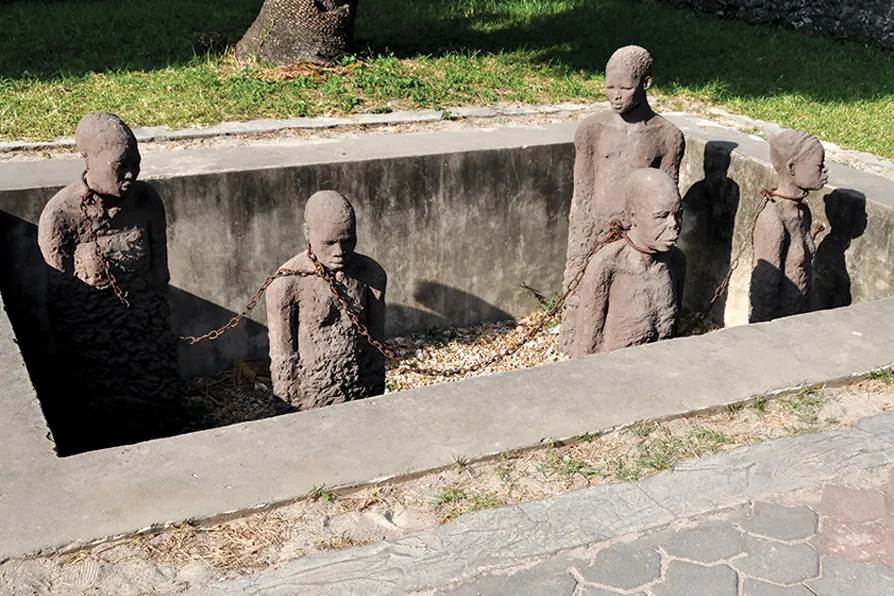
Trade unions should be at the heart of the anti-racist push for reparations for the historic legacy and continuing impact of slavery, writes ROGER McKENZIE

ARTHUR WEST surveys the achievements of the Scottish campaign against South African apartheid and how we can draw on them to fight a rising far right
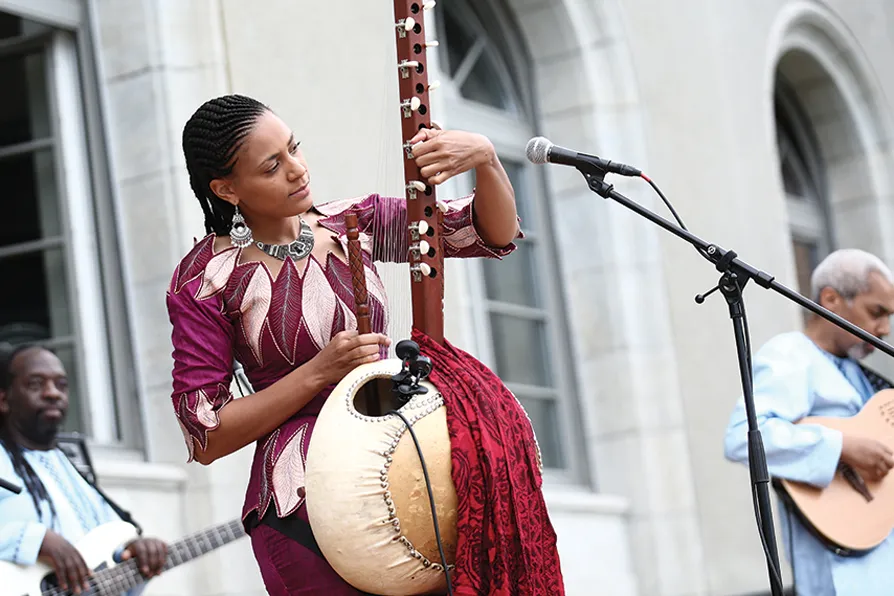
ROGER McKENZIE draws attention to the much-neglected oral traditions of the global South that define the identity – and therefore the liberation – of its custodians
ROGER MCKENZIE recalls the one-in-a-generation communist leader murdered at the dawn of a new South Africa 33 years ago last April 10