

 Latest editorial

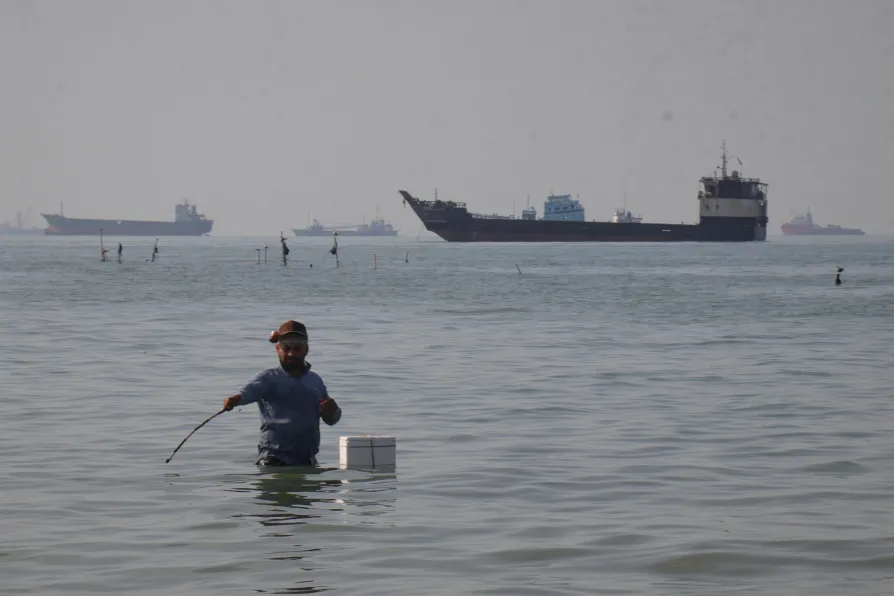 A man stands in the water, appearing to fish, as bulk carriers, cargo ships, and service vessels line the horizon in the Strait of Hormuz off Bandar Abbas, Iran, April 27, 2026






IRAN and the United States exchanged conflicting claims about the Strait of Hormuz today as the ceasefire between them threatened to come apart.
The US claimed to be operating “Project Freedom” which President Donald Trump said was a way to help ships stranded in the Strait get out.
The project appears to consist of advising ships how they can best avoid being hit by Iranian fire, though, and few seem willing to take the chance. Iran says passage through the strait can only be negotiated on a ship-by-ship basis with its armed forces.
Iran also said it had twice struck a US frigate with missiles near the strait as it ignored warnings to halt, but the Pentagon denied any of its ships had been hit. For its part the US said it had successfully guided two merchant vessels through the strait, which Tehran said was a lie.
Varying ceasefire and peace proposals are being shuttled between the two countries via Pakistan, but Iran warned today that the US needed to be more “realistic,” saying it is only interested in negotiating an end to the war — not an indefinite truce — which reassures it that the US and Israel will not launch more unprovoked attacks on it, as they did this and last year.
Today the US said it had transferred the Iranian crew of a cargo ship it seized in the Arabian Sea to Pakistan for repatriation to Iran, a gesture Pakistan called a “confidence-building exercise.”
Aside from guarantees against future attacks, Iran is calling for ongoing recognition of its rights to control the Strait of Hormuz, as well as to develop civilian nuclear power.
Another sticking point is Lebanon, where Israel continues its invasion. Iran says any deal must involve a cessation of hostilities there, too.
Today Israel added another six towns to its exclusion zone in Lebanon, ordering residents to withdraw at least a kilometre beyond their boundaries or risk being bombed.
In Gaza, its troops have pushed beyond the so-called “yellow line” demarcating its post-ceasefire presence and even an “orange line” buffer zone beyond it, directly occupying about 60 per cent of the strip’s total territory. This prompted a rebuke from the European Union today.
