
The US administration is endangering lives by reversing environmental protection laws, CHAUNCEY K ROBINSON argues

A chilling glance through the Overton window
Gavin O’Toole talks to anti-racism researcher HARRY SHUKMAN about the rise of the far right
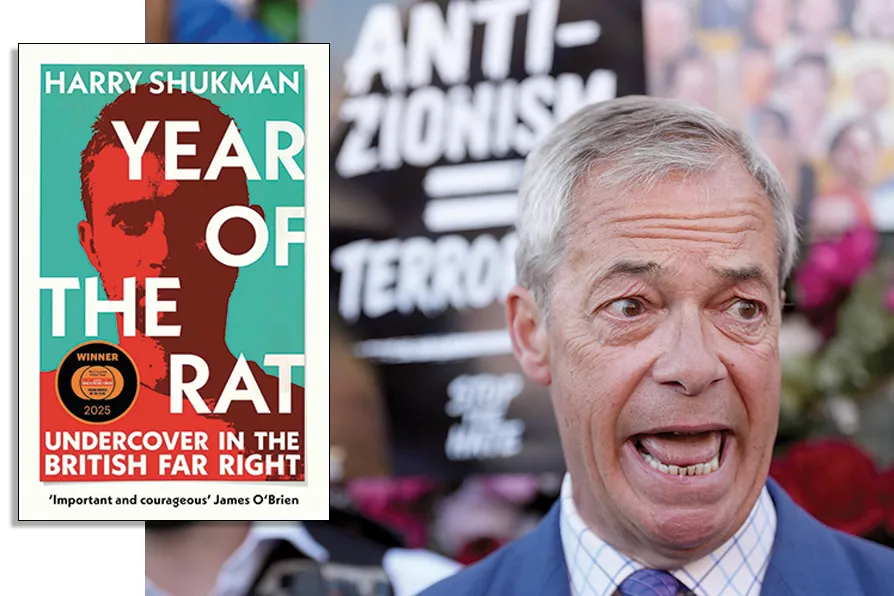
 THE ARCH OPPORTUNIST: Reform UK leader Nigel Farage in Golders Green on Thursday April 30, 2026
It’s time to stop retreating and go on the offensive to promote working-class interests, argues DOUG NICHOLLS
Marco Rubio wants to defeat socialism in Nicaragua, not restore ‘democracy,’ writes JOHN PERRY
Believe it or not, there was a time when the US government built beautiful homes for working‑class Americans to deal with a housing shortage, writes ERAN BEN-JOSEPH
DIANE ABBOTT provides an analysis of the reasons for EU and British voters’ dramatic swing to the right
Train drivers’ union Aslef general secretary DAVE CALFE speaks to Ben Chacko about his hopes that Burnham’s devolution agenda will include the importance of the railway





IT WAS a coincidence that the day I met intrepid anti-racism researcher Harry Shukman to discuss the progress of the far right in Britain, it was reported that the Home Secretary was smarting from a bruising collision with the Overton window.
The concept is key to understanding the success extremists have had in shifting public debate, and in a timely example of this Shabana Mahmood had been barracked by hecklers accusing her of “out-Reforming Reform” over her migration proposals.
The Overton window — the range of ideas acceptable to the mainstream — is at the heart of Shukman’s work at Hope Does Not Hate which, since the publication of his groundbreaking book last year, has sharpened its focus on Reform UK.
That book, Year of the Rat, is a shocking exposé of the extremists in our midst after Shukman, a former journalist, had spent a year undercover within far-right groups, a high-risk endeavour requiring nerves of steel.
With uncanny timing, he was writing it as far-right riots erupted across the country — underlining the violence they conceal as they slip ideas surreptitiously into mainstream debate.
Soft-spoken and precise, the researcher is worried, because since those riots and the May 2025 elections, politics has opened up to far-right ideas far more rapidly than expected.
“The Overton window has moved so fast, probably faster than even the activists I was hanging out with would have ever dreamed of,” he says.
“I went to a far-right conference in Tallinn in Estonia in 2023, the theme of which was the year 2050.
“They had hoped that by that year there would be at least a discussion about the possibility of ‘remigration’, the euphemistic term for ethnic cleansing, and bring about a white-only society in Europe and that this would begin to happen by then.
“But now the idea of mass deportation at the very least and this much more pernicious concept of ‘remigration’ are in the public domain—I think they’re really happy about the speed with which that discussion has moved.”
One reason why the mainstreaming of hitherto repugnant ideas has gathered momentum is undoubtedly the onward march of Reform UK.
When Shukman was writing the book, the party was celebrating its 14.3 per cent share of the vote in the 2024 general election: as it heads into the May 7 local elections, it is leading the polls with nearly double that, at 26.5 per cent.
Shukman says: “It’s fascinating and really disturbing what Reform are, what they represent and the kind of support that they enjoy. When I was writing the book they were a much more marginal force, they had the biggest number of MPs that any far-right project had yet had, but I think we were still really shocked at the extent of their extremeness and the support that they have enjoyed.”
Complex forces are at work behind Reform’s rise, from anti-immigrant bigotry to economic insecurity. What seems without doubt, however, is that the party is an Overton window cleaner, putting a sheen of respectability on ideas that have no place in a multicultural democracy.
Shukman says: “Clearly what Reform is offering is a really extreme platform that does appeal to people who have quite reactionary or aggressive views.
“Something that I’m really concerned about is their manifesto calls for the withdrawal of citizenship from dual nationals if they commit crimes, which would create a two-tier justice system of the kind that Reform always say is prejudiced against white people.
“This manifesto was praised by people on the far-right at the time, proper activists saying this is a great start for the kind of policies we want to see.”
A key sign that the Overton window has shifted is that expressing such extreme views now enjoys an impunity it did not once have, with Shukman pointing to Enoch Powell’s 1968 racist “rivers of blood” speech — for which he was sacked from the Tory shadow cabinet.
No penalties for extreme comments of this kind operate today which Shukman notes, for example, has allowed senior Reform councillors to say openly racist things. Indeed, even Keir Starmer sank this low with his infamous “island of strangers” phrase last year.
But even if bread and butter issues like the cost of living may tempt people to back Reform, evidence suggests self-interest should make the same voters wary on May 7.
Shukman notes: “When Reform won in last year’s elections more than a dozen local authorities, they said this would be like a shop window for their performance as a potential national government.
“Actually, what we have seen is when Reform are given the chance to run a local authority, taking important decisions over people’s lives, they completely mess it up.”
Nonetheless, if Reform spells trouble for British politics, it is the tip of the iceberg.
Shukman’s undercover work exposed the extremism of far-right groups of all kinds, from the shadowy Basketweavers to the blunt Britain First, in some cases explicitly financed with American cash.
A key problem facing the left’s efforts to build resistance is that there is no clear class dynamic explaining the attraction of the groups that have proliferated.
And of course, the right-wing press has much to answer for, by platforming extreme views uncritically and being duped by the methods far-right pundits use to appear palatable.
Worse still, the extremists are becoming emboldened. Shukman suggests there are signs that while a lot of far-right activism used to be about culture, it is increasingly about race — which is much more extreme.
He says: “Once these forces have been emboldened, how will they stop? When you have got representation in Parliament, when you have got MPs from Reform or Restore who are advocating for something as extreme as mass deportation or full-throated remigration, ethnic cleansing, how does that energy dissipate, where’s the off ramp? I’m not sure I have a good answer.”
Year of the Rat: Undercover Investigation into the British Far Right by Harry Shukman is published by Chatto & Windus, £20.
