
The US administration is endangering lives by reversing environmental protection laws, CHAUNCEY K ROBINSON argues

The cost of work is still far too high
ANN HENDERSON, of the FiLiA Trade Union Women’s Network, highlights the need for workplace action on stress, asbestos and sexual harassment — and more women leading on safety
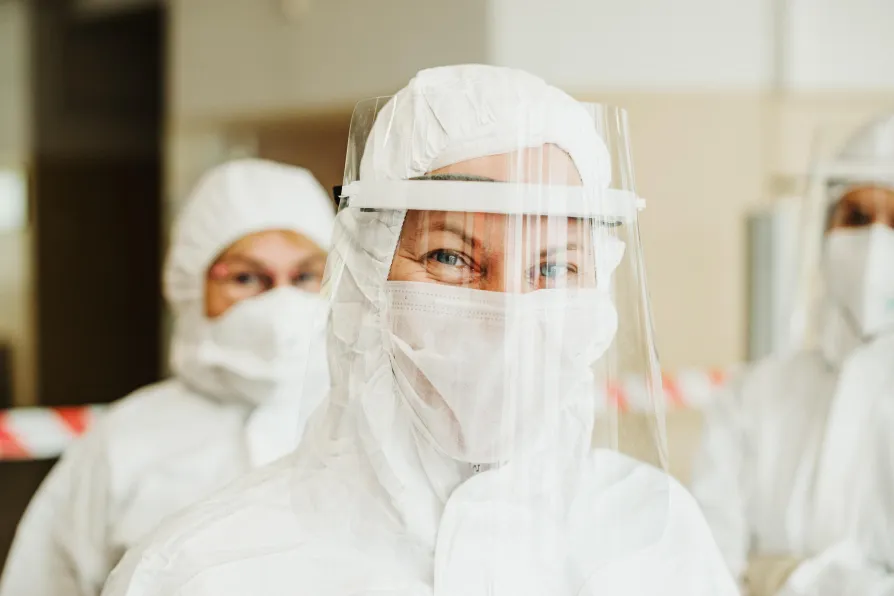
 PROTECTION: The correct PPE is vital in many industries

It’s time to stop retreating and go on the offensive to promote working-class interests, argues DOUG NICHOLLS
Marco Rubio wants to defeat socialism in Nicaragua, not restore ‘democracy,’ writes JOHN PERRY
Believe it or not, there was a time when the US government built beautiful homes for working‑class Americans to deal with a housing shortage, writes ERAN BEN-JOSEPH
DIANE ABBOTT provides an analysis of the reasons for EU and British voters’ dramatic swing to the right
Train drivers’ union Aslef general secretary DAVE CALFE speaks to Ben Chacko about his hopes that Burnham’s devolution agenda will include the importance of the railway





THIS week members of trade unions, communities and families gathered to mark International Workers Memorial Day (IWMD).
Taking time out each year to remember the lives of those who died at work, or as a consequence of injuries or health conditions acquired during the course of their employment, is really important, and is an international moment of recognition of those lives lost.
Events to mark IWMD take place in over 70 countries across the world.
The slogan “Remember the Dead, Fight for the Living” commits us all to remember, but also to look to the future. Everyone who goes to work should be able to do so confident that they will come home again.
The focus for IWMD this year is stress — a workplace issue that is experienced by so many people, and which could and should be addressed by employers and trade unions working together for prevention.
Last month the FiLiA Trade Union Women’s Network (TUWN) hosted a webinar which looked at the background to IWMD, but also considered current challenges in the workplace, and the important role that health and safety reps have in supporting workers and in prevention of accidents and poor workplace health.
Speakers at the webinar placed a particular emphasis on women’s health, women’s experience in the workplace, and the opportunities for women to make a difference by taking up health and safety rep roles.
Kathy Jenkins of Scottish Hazards explained the links with the STUC, TUC and the UK Hazards network. The International Labour Organisation estimates that nearly three million deaths each year are attributable to work incidents.
As most are preventable, these should be seen as incidents not accidents.
In the UK, the Health and Safety at Work Act 1974 places a duty on every employer to ensure the health, safety and welfare of all employees.
Subsequent regulations and European directives enhance this legislation, and where trade unions and employers work together, outcomes are better. However, as with any legislation, inspection and enforcement are crucial, and the Health and Safety Executive suffered a dramatic drop in resources between 2009-19, a decline yet to be addressed by the current UK Labour government.
There are a number of aspects of health and safety at work which pertain particularly to women: appropriate and correctly fitting personal protective equipment (PPE); an acknowledgement of the physical difference between women and men and the sex-specific conditions including pregnancy and at different stages of life; the concentration of women in particular employment sectors where chemical and other hazards have a particular impact on their health; and concentration in sectors where union organisation is less strong, and hazards may be overlooked.
The “double burden” of family and work life also increases risk factors.
The second speaker at the FiLiA webinar, Perdy Paterson of the University and College Union (UCU), gave a very helpful account of her own experience as a health and safety rep, explaining how agendas for meetings with management can be structured to ensure health and safety issues are addressed, and how a rep can make a difference simply by being available to listen to workers’ concerns, sharing their knowledge of legal requirements for a healthy workplace and addressing problems as they arise. Prevention is crucial.
The final speaker, Susan Aitouaziz, highlighted the impact of asbestos and the risks to health. Although its use in buildings was banned in 1999, the legacy continues, and should not be seen as solely linked to manufacturing or our industrial past.
Asbestos is within many of our public buildings, hospitals, schools, libraries — and with a majority female workforce in the public sector, many women and girls are still being exposed to risk.
A Westminster parliamentary committee recommended in 2022 that a national strategy must be devised for tackling this, the government at the time rejected this. It is urgent that this be revisited.
With the recognition by the Health and Safety Executive, the TUC, the STUC, that stress is a workplace issue, it is clear that sexual harassment at work can be a major contributory factor.
At the recent STUC Congress in Dundee, speakers from the rail and ferry sectors spoke of the rising levels of abuse faced by public transport workers, and highlighted the increase in sexual harassment and abuse against women employees in those settings.
Also at Scottish TUC Congress, Edinburgh Trade Union Council brought forward a proposal which was endorsed by Congress, to establish a Scottish commission on health and safety, to improve monitoring across all sectors in Scotland, reporting to Parliament and Scottish government.
Although the health and safety legislation enforcement rests with the UK Parliament, there is much more that could be done in Scotland to improve standards. The Scottish government and stakeholders make frequent commitments to “fair work” principles, which must include safe workplaces for all.
Although stress is recognised as a health and safety matter, the Health and Safety Executive does not recognise sexual harassment specifically, a point raised in the FiLiA webinar and on the floor of the STUC Congress. This should be addressed. Women must feel able to go to work in an environment that is free from sexual violence or abuse.
Everyone can make a difference and contribute to making workplaces safer and healthier. In particular, we should encourage more women to take up roles as health and safety representatives. Women are a majority of the trade union movement, and, as workplaces change, the stresses and threats to health change too — women being round the table is in the interests of us all.
Watch a recording of the whole webinar at tinyurl.com/FiLiAsafetywebinar. Find out more about the FiLiA Trade Union Women’s Network at www.filia.org.uk/filia-trade-union-womens-network.
