The campaign against the Bank of England’s ongoing theft of Venezuelan gold is gaining support across the labour movement and beyond, writes MATT WILLGRESS


 Latest editorial

Crisis point reached in Scottish prisons
A major new report highlights the the dire state of our prison system – and demands urgent action from government, explains PHIL FAIRLIE
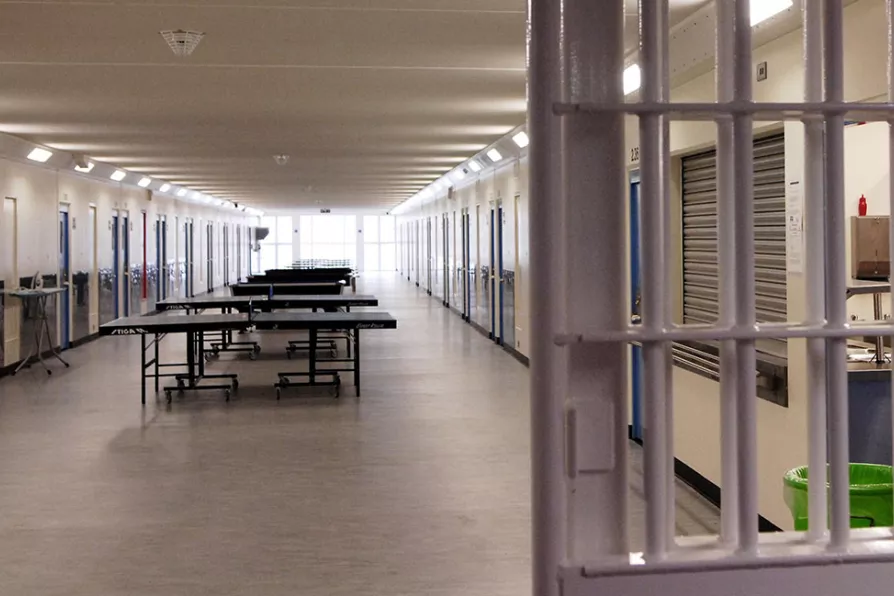 A general view of Monro Hall, a prisoner accommodation block at Polmont Young Offenders Intitution near Falkirk, Scotland, March 2007

The new Prime Minister must abandon decades of automatic support for US foreign policy, which makes us all less safe, argues DIANE ABBOTT MP
Claims that Nicaragua has abolished elections followed a headline that stripped Daniel Ortega’s remarks of their historical and political context. The full speech tells a different story, says BECCA RENK FOSTER
Media Lens at 25: David Cromwell and David Edwards reflect on a quarter-century of media criticism, explaining why independent journalism is more important than ever
MAT COWARD introduces some of the electoral oddballs of the political fringe who remain one of the liveliest features of British democracy, despite efforts to abolish them
by Weyman Bennett and Maz’s family





LAST autumn at the POA Scotland’s conference in Peebles, my union launched the Crisis Point Reached report, an in-depth examination of the pressures facing Scotland’s prison officers.
The report was commissioned against a backdrop of record prisoner numbers and overcrowding, increasing levels of violence and drug misuse, the impact of organised crime gangs, a staff cohort under pressure like never before and the prisoner early release scheme.
Authored by the team at Unity Consulting Scotland, the project looked into all aspects of Scotland’s prison system.
During the course of the research, serving prison officers were interviewed about their work, a comprehensive survey of POA’s members was undertaken and an extensive policy review was carried out.
The result is a comprehensive report with over 43 recommendations for change, all of which have come from front-line prison officers working within Scotland’s prisons.
The reality is that despite the temporary relief brought about by the early release of non-violent prisoners, Scotland’s prisons have indeed reached “crisis point.”
The toxic combination of overcrowding and understaffing combined with an increasingly complex prisoner population is having a huge impact on every prison officer in every Scottish prison.
If we are to address these fundamental issues we need to make a choice. Either a society-wide honest conversation about the purpose of prison and what that then looks like, or accept that we need a very financially expensive alternative of a sustained and increased investment in both personnel and the prison estate.
While the new HMP Glasgow and HMP Highland prisons will help, they alone cannot address the need for more prison capacity. Scotland has one of the highest rates of incarceration in Europe.
While the POA supports the construction of new public-sector prisons, building our way out of the crisis is not ideal, we more importantly believe there has to be a serious national conversation about the purpose of sentencing policy and the purpose of prison.
This is long overdue. We will never jail our way to a crime-free society. We have to address the root causes of offending — poverty, substance misuse, alienation and feelings of hopelessness.
Our members are skilled professionals who want to work with prisoners to prevent them from reoffending. They want to help prisoners gain an education, live lives free of substance misuse, be rehabilitated and return to a society where they can live, work and support their family but they are being prevented from doing so because of the pressures they are under. This has to change.
Central to the report’s recommendations is the need for a budget allocation that meets the demands of a 21st-century prison service. We cannot address the major issues facing the justice system on the cheap.
From recruitment through to retirement multiple issues were identified by POA members.
They identified the urgent action to address problems with recruitment and retention with a return to in-person interviews and assessment a first step.
Online interviews must end and the vetting of recruits has to be more robust.
The current six-week foundation training period for new recruits is viewed as wholly inadequate. New recruits have to be equipped to meet the demands of the job with “jailcraft” a key element of a new extended training period.
Prison officers said that they value, and see as crucial, those tutoring trainees having front-line experience of working in a prison, and new officers should be taught strategies to identify coercion and manipulation by prisoners as key skills.
One of the most frequently raised concerns was the impact on officers’ health and wellbeing. The expectation is that prison officers work until they are 68. There are apparently conversations going on in government circles looking to increase the state retirement age to 70, and as things stand that includes prison officers. That is an absurdity that has to end now.
Everyone knows that our physical health declines with age. Against a background of rising prison violence this is putting staff and prisoners at risk. We need a sensible, realistic and humane retirement age for all UK prison officers.
Drugs and contraband are a huge issue in Scotland’s prisons. Drugs are a valued commodity, mainly supplied by organised crime gangs.
Access to them fuels violence, self-harm and can result in deaths in custody. Meanwhile the provision of vapes is fuelling their use exposing our members to the effect of passive inhalation — in no other workplace would this be deemed acceptable. It should not be accepted in prisons either.
While recent years have seen improvements to prison officer pay we need to see full pay restoration to make up for the pay cuts imposed during the year of Tory austerity. This must reward our members for the challenging and vital work they do.
The Crisis Point Reached report has been taken seriously by the Scottish Prison Service. The POA will be keeping the pressure up on our employer to ensure the recommendations of the report are implemented and Scotland’s prison system is fit for purpose.
You can read the full report at tinyurl.com/POACrisisPointReached.
Phil Fairlie is the assistant secretary of the Prison Officers’ Association.
