

 Latest editorial

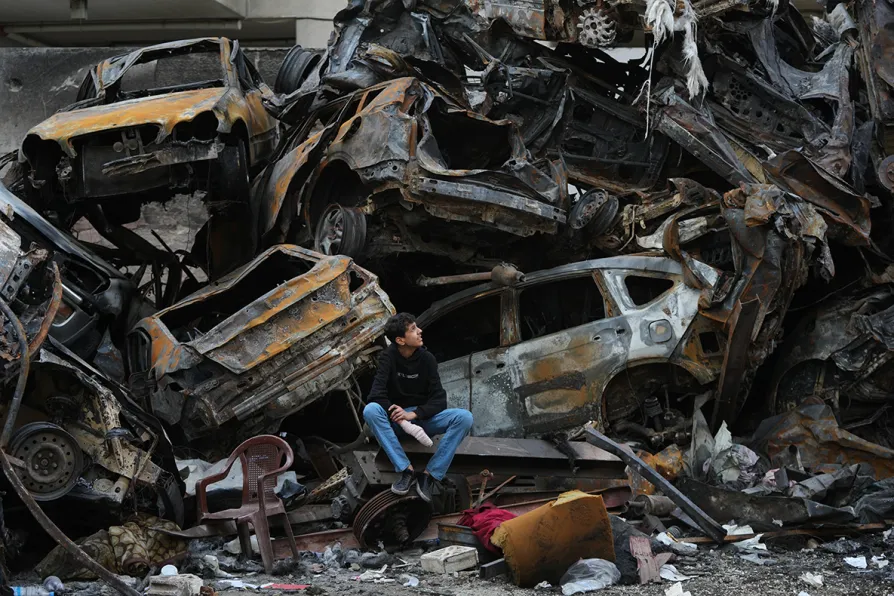 A man sits next to charred cars and wreckage where a building was destroyed by an Israeli air strike the previous Wednesday, in central Beirut, Lebanon, April 14, 2026

Prime Minister must give young workers the right to guaranteed hours and ending the scourge of insecure work, TUC says





THE TUC has slammed Nigel Farage and Kemi Badenoch’s support for the Iran war after the IMF predicted it will hit Britain harder than any other G7 nation.
TUC leader Paul Nowak hit out at the Reform and Tory leaders after the International Monetary Fund (IMF) wiped off half a percentage point from its predicted GDP growth for Britain this year.
He said: “Those who enthusiastically cheered on Trump’s disastrous misadventure should hang their heads in shame.
“It’s their constituents — and British families up and down the country — who will foot the bill through higher food, energy and housing costs.”
The IMF’s revised forecasts of 0.8 per cent growth for Britain, with inflation nudging 4 per cent and unemployment of 5.6 per cent, were based on the market prices on March 10, when it was still hoped the conflict could be short-lived.
Bank of England head Andrew Bailey warned today that the war in the Middle East has caused “a major supply shock” and a “large” jolt to the global economy, while remaining tight-lipped on what it could mean for interest rates.
Mr Nowak warned British households must not pay the price for “Trump-slump” and called for emergency energy support package for at-risk firms.
“This is the last thing working families need,” he said.
“Donald Trump’s illegal war of choice risks making us all poorer. The longer it goes on, the bigger the threat to our economy and to living standards.
“Households and firms are already being hammered by Trumpflation — especially gas-dependent industries like chemicals, ceramics and glass.
“That’s why the government must urgently bring forward a temporary targeted gas price cap to stabilise the price of gas for critical industries and protect British manufacturing — and press the accelerator on the energy support scheme making sure it reaches crucial sectors like steel.
“And longer term, ministers must go all out to protect the country from a sustained Trump-slump – and ensure those with the deepest pockets shoulder the cost.”
The conflict has hit oil and gas supplies as Iran blocked the Strait of Hormuz in retaliation to US-Israeli bombings.
Mr Bailey chairs the bank’s monetary policy committee, which sets interest rates that affect the cost of borrowing, with a big impact on mortgage-holders.
The nine-strong group will next meet on April 30 to make a decision.
