


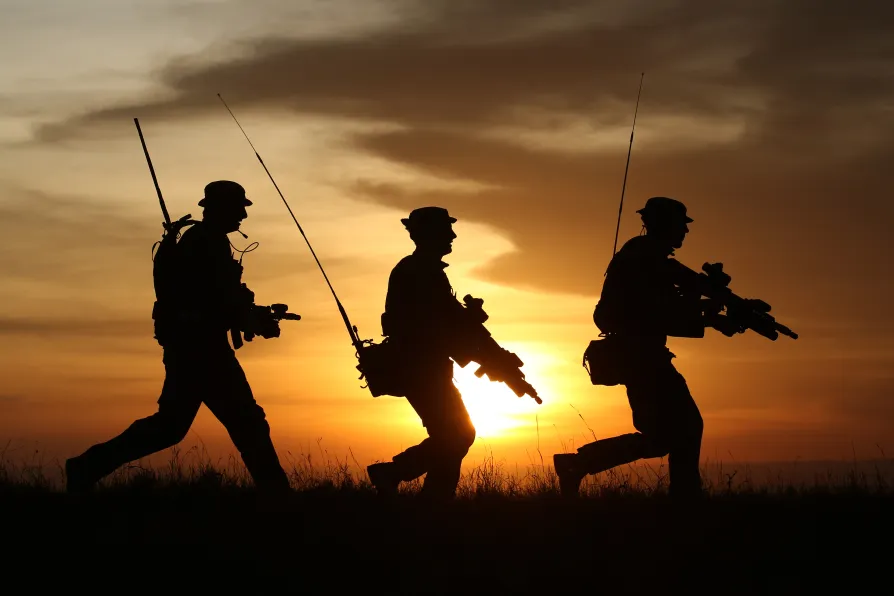
 Soldiers on patrol
‘Ah the irony:’ Aamer Anwar says he doubts Reform has handed over the names of the far-right thugs who went on the rampage in Glasgow last weekend to the Police





SAS troops accused of war crimes were not referred to military police over morale fears, newly released Afghanistan inquiry evidence revealed today.
A former chief of staff of UK Special Forces (UKSF) said he believed the allegations were not reported as an investigation could disrupt operations and negatively affect morale.
The second highest ranked officer in UKSF, known as N2252 to the inquiry, said another factor was that evidence had partly come via a rival special forces regiment.
Military police did not learn for years about fears that the SAS was carrying out extra-judicial killings and submitting falsified reports as a result.
N2252 told the inquiry of his concerns over specific tactics, techniques and procedures (TTP) used by the sub-unit under scrutiny, known as UKSF1.
He said: “We had a duty of care to our soldiers to do everything we could to ensure that they were safe when they went about their duties.
“But we also had a duty of care, in my view, to the detainees.
“Having taken them off-target, I think we were maybe legally I don’t know, but certainly morally I thought responsible for their wellbeing while they were in the care of UKSF detention.
“My concern with that TTP is I just wondered if we had the balance between those two things right.
“We seemed to be prioritising the safety of our own soldiers over the safety of the Afghan detainees.”
His testimony came from closed-door evidence to the Independent Inquiry relating to Afghanistan.
The Afghanistan inquiry is investigating allegations that the SAS committed war crimes during “kill or capture” night raids during operations between 2010 and 2013.
UKSF1 is accused of unlawfully killing 54 Afghans, including unarmed children and civilians, during just one six-month tour in Helmand Province.
The probe is examining whether the SAS had a policy of executing males of “fighting age” who posed no threat in Afghanistan – a practice colloquially called “flat packing.”
It is also looking at whether there was an alleged cover-up of illegal activity and inadequate investigation by the Royal Military Police.
The latest batch of testimony was heard in 2024 but only released in summarised form by the inquiry yesterday.
The inquiry continues.
