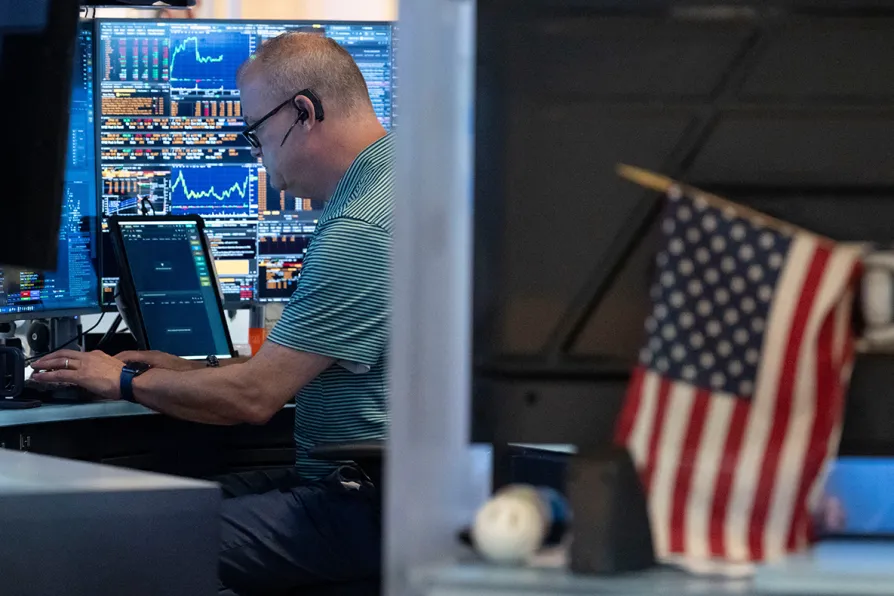
Growing instability in the US economy and financial markets could have serious consequences worldwide because of the central role of the US dollar and financial system, argues MICHAEL BURKE


 Latest editorial

The state’s attack on the right to protest has a long history
KEITH FLETT looks at the state’s efforts to limit protest rights from the 19th century to today’s repression of the Palestine movement
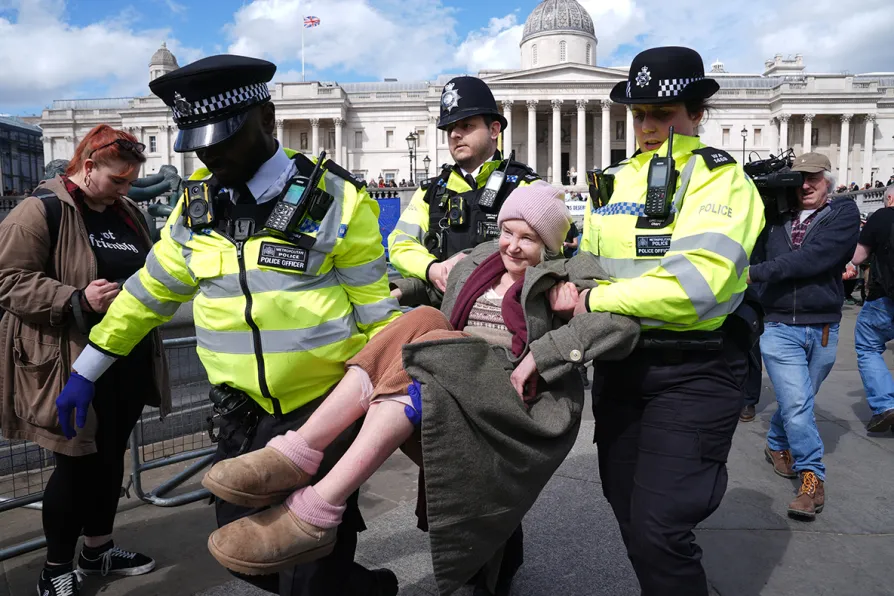 Police remove a protester at a demonstration against the ban on Palestine Action, in Trafalgar Square, central London, April 11, 2026
Despite Andy Burnham’s declaration defending the continued partition of the island, all major international and internal trends are converging to make Irish reunification inevitable
The left needs a bold energy vision – because if it fails to provide one, others will shape the future in their own interests, argues ALAN SIMPSON
From Margate to Deal, mining memories are being kept alive. National co-ordinator for General Strike 100, HENRY FOWLER continued his nationwide tour of partner organisations in the Garden of England
Humans are part of the ‘animal kingdom’ – and of nature in general – but also distinct from it and labour (work) is part of what makes us unique, declared Engels. His insights 150 years ago into how our species came to be and how we differ from the rest of nature, are as important today as they were then, says the MARX MEMORIAL LIBRARY
Boxes of books, family photos and heirlooms, labour movement anniversaries, along with nostalgic memories of glorious childhood days on the Ayrshire coast still leave room for a wistful MATT KERR to hope for a better future





THE conviction of Chris Nineham and Ben Jamal on public order charges at Westminster Magistrates’ Court recently has renewed concerns about the state’s attack on the right to protest.
The charges related to a Palestine demonstration in central London in January 2025. The police didn’t have any credible evidence to explain their actions in court but that did not stop a magistrate from convicting.
Along with the unexplained decision by the Met Police to begin again arresting protesters who display placards in respect of Palestine with words that Shabana Mahmood and Keir Starmer don’t want to see, it underlines a further authoritarian drift.
John Rees of the Stop the War Coalition has described it as the most sustained legal attack on the right to protest since the 1950s.
The background has been increasing restrictions on protests which have led the Met to police what placards can be displayed on protests, what slogans can be shouted and what assembly points and routes can be used.
The police force in its modern form has not always existed. The decision to professionalise and centralise the police in the mid-19th century was resisted by Chartists, trade unionists and some impact was made. The police remain largely unarmed for example.
The concern however was that the force would increasingly be used to enforce the policies of the state, and that meant intervening on the side of the rich and powerful and not just when it came to protest either.
The Victorian socialist William Morris noted “the propertied classes, who reacted to the rumour that there were now socialist agitators in the streets (making speeches against their property!) with seemly terror. In general the police were impartial, attempting to sweep off the streets with an equable hand street-traders, beggars, prostitutes, street-entertainers, pickets, children playing football and free-thinking and socialist speakers alike.” Very often as in 2026 the pretext was a complaint from a trader or member of the public that they had been impeded in whatever it was they were doing.
The template had been set with Peterloo in Manchester on August 16 1819 when the Yeomanry, businessmen on horseback, attacked a demonstration for the vote and killed and injured numbers of people.
It was not something the state decided, particularly in the light of the protests that followed, that it would be sensible to repeat. The rights of the “Freeborn Englishman” were to be respected including the right to political protest, although not the vote. This informal agreement did not extend to industrial disputes and its boundaries were frequently tested.
The testing has tended to occur at key moments when the state feels it is being challenged.
Peterloo with the right of mass assembly and the vote was one. The current Palestine protests are clearly another. A third can be located in 1960-62 when the direct-action-focused Committee of 100 broke away from CND.
It held mass sit downs in Trafalgar Square, the biggest of which saw 1,314 arrests. It then moved to protests at military bases which mobilised both thousands of protesters and thousands of police and soldiers.
The state response was ramped up with charges escalating from breach of the peace to conspiracy and incitement. Some substantial jail terms were handed out.
A “democratic liberal” society’ is meant to be one where peaceful and non-violent protest is regarded as normal.
However when the state feels challenged this has not always been the case which is why the Chartists had the slogan, peaceably if we can, forcibly if we must. If democratic protest is frustrated by authority history suggests more robust revolts may follow.
