LEO BOIX applauds an audacious, self-questioning film about grief, friendship and film-making


 Latest editorial

An outstanding exploration of the quicksands of journalism
CHRISTOPHE DOMEC relishes a dizzyingly precise fiction that relays the problem of reporting the truth
MARY CONWAY admires a brave and topical study of Armageddon that is, unfortunately, unable to come to a conclusion
ANDY HEDGECOCK, JAMES WALSH and JAMIE BRITTON review Hanging by a Wire, I Want Your Sex, The Pout-Pout Fish, and Rise of the Foot Soldier: Retribution
Chris Searle speaks to US pianist RAN BLAKE
EWAN CAMERON trawls the Edinburgh fringe for new political drama
In a season of Greek mythology NIAMH THORNTON looks at an intriguing relocation of Medea to contemporary Mexico





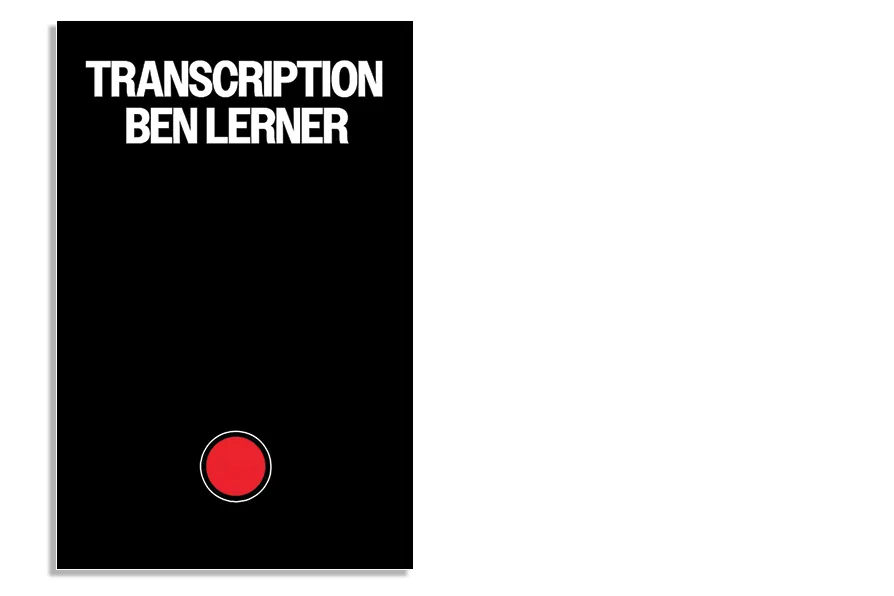
Transcription
Ben Lerner, Granta, £14.99
IN the shortest of the three chapters which make up Ben Lerner’s latest novel Transcription, the narrator is forced to account for a lie. This Lerner-like narrator admits to having fabricated — though he would prefer to say “reconstructed” — part of a magazine interview with his mentor Thomas, a renowned artist and philosopher.
His confession, made to an audience of Thomas’s peers and students at an event in his honour, was immediately met with anger. They felt betrayed. The interview had become Thomas’s last published words.
“You, well, you more or less confessed that you falsified a big part of what many of us thought of as his, I don’t know, testament,” one of them tells the narrator.
“I told the story of an embarrassing personal anecdote,” the unnamed narrator defends himself, later adding that reconstructing quotes is “entirely typical of interviews, like journalists often take notes and write it up.”
To which his critic responds: “Funny to think of you as a journalist. You’d be the world’s worst journalist.”
As the narrator sees it, his admission was supposed to be one of those endearing stories you tell a group of your peers in the hopes to ingratiate yourself to them. A small confession which should bring you closer to them. But here, it backfires.
Transcription’s plot is driven by this original sin: moments before he is to meet Thomas, the narrator accidentally drowns his phone/recording device in the hotel bathroom sink. He nevertheless decides to go ahead with the conversation and even allows Thomas to believe their conversation would still be recorded, placing his broken phone on the table between them as though it were switched on.
In many ways, Lerner’s fifth work of fiction does not deviate from his previous novels in terms of subject matter. Like the others, the main plot revolves around stories we are led to believe are his own. But Transcription is a more playful approach to his usual writing and asks us to question him more often than in previous works.
From the first chapter, a transcription of the reconstructed interview with Thomas, we are made to feel distrustful of the narrator, and ultimately of the author. Lerner asks us to wonder which parts of this story happened exactly as they appear on the page, and which were fictionalised.
The answer of course is a bit of both.
If the narrator, or Lerner himself, is in fact the world’s worst journalist, then what should we expect from this author whose name has become synonymous with the genre of autofiction?
Transcription answers all these questions in its author’s typical fashion, swaying constantly between the ironic, sometimes even sardonic, to the intensely sincere.
One of the most notable instances of this is his description of the vapid online content now well known as “slop,” often made for young children.
In the last section of the book, the narrator has transcribed a conversation with Thomas’s son Max, who tells the story of the moments leading to his father’s death and gives a heart-wrenching account of his daughter’s struggles with disordered eating.
Lerner’s ability to inhabit this character, as he did with many of his subjects in his previous novel the Topeka School, is dizzyingly precise. In fact, it is difficult to imagine he has not gone through all the experiences himself.
Max is quoted describing a scene through the eyes of his father Thomas: “You have to picture me sitting on the couch, seeing myself through my father’s eyes: ‘My son is eating neon-orange puffed corn, watching a babbling, purple-haired woman opening Mini Mystery Plushies on a tablet with my starving granddaughter.’ I mean, my dad used to go to concerts with Adorno!”
This sort of description encapsulates a lot of what Lerner is able to do in Transcription. In a few words, he is able to show us what it feels like to be the son of a famous artist, while still struggling with the realities of raising a child in the age of social media.
It’s not journalistic. In fact it’s unlikely any of those words were said. But, as Lerner’s narrator puts it, if part of it “was based on memory. That’s a scandal?”
