While international attention focuses on ceasefire frameworks, Israel is openly advancing plans for a permanent expansion of its control over Gaza, writes RAMZY BAROUD


 Latest editorial
UN slave trade vote exposes deep global divide over history, justice and power
A landmark UN resolution led by Ghana declares the transatlantic slave trade the gravest crime against humanity — but Western opposition and abstentions reveal enduring resistance to historical accountability, write ISAAC SANEY and JAMES COUNTS EARLY
Researchers PAUL HOLDEN and JESSICA MURRAY are calling for whistleblowers and documentary records to uncover how Labour Together helped build the parliamentary majority that now dominates the Labour Party
Cuba continues to embody a vision of internationalism that imperialism has never forgiven, argues ZOLTAN ZIGEDY
PCS general secretary FRAN HEATHCOTE explains why opposing war is inseparable from defending jobs, wages and public services – and why readers should come to the London Peace Conference on Saturday June 20
As protests erupt over Henry Nowak’s murder, ANDREW MURRAY argues that anger is being exploited to advance a wider racist and anti-immigration agenda
CARLOS MARTINEZ explains the sound case for car manufacturing co-operation with China





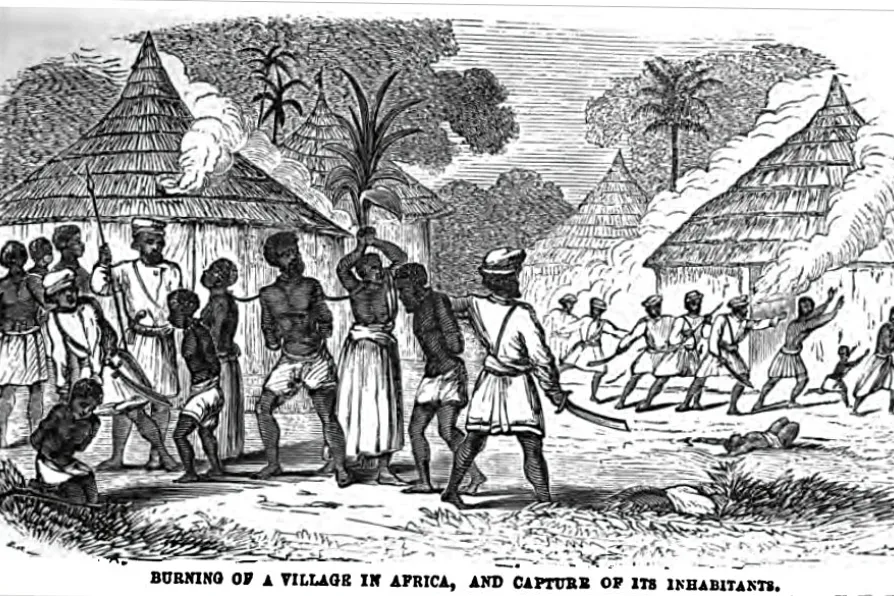
THE recent UN vote to declare the European transatlantic slave trade — “the trafficking of enslaved Africans and racialised chattel enslavement of Africans as the gravest crime against humanity by reason of the definitive break in world history, scale, duration, systemic nature, brutality and enduring consequences” — marks a profound moment in the ongoing global struggle over historical truth, justice and the meaning of humanity itself.
Spearheaded by Ghana and supported by 123 countries, the resolution reflects the overwhelming moral and political consensus of the global South.
Yet this consensus was met with stark opposition and evasion: three countries — the US, Argentina and Israel — voted against it, while 52 others, including all 27 EU member states among those the major European powers that initiated and profited from the slave trade, chose abstention. (The Netherlands is noted as the only European country to have issued a formal apology for its historical role in slavery).
This alignment is neither accidental nor neutral. It exposes a deep and enduring refusal among dominant Western states to fully confront the historical and structural realities of the European transatlantic slave trade and its foundational role in the emergence on a global scale of racialised, multicultural capitalist economies that qualitatively cohered and shaped the sociology of life-defining powers between the rich oligarchs and corporations and the poorer nations and social classes in the modern world.
This historical acknowledgement of the most consequential crime against humanity, a historical marker of moral depravity and inhumanity deliberately designed and brutally implemented to satisfy the greed for riches and power over the the wellbeing of the rest of humankind continues today in the light of the UN resolution.
The current global contestation led by countries in the global South, and significantly in the West by citizens and immigrants from former colonial countries in Africa, Asia, Latin America and the Caribbean, to create a new just and secure world order are now confronting a virulent revival of war-making to stabilise the existing Western-dominated world order — characterised by a global resurgence of racism, ultra-Eurocentrism, and threatening intentions from the US and EU to recolonise the global South.
This is already in play in the anti-immigrant expulsions in the US and EU, and the implementation by US President Donald Trump’s imperial “Donroe Doctrine” to dictate control over the American continent, including threats to Canadian sovereignty and independence, invasion of Venezuela and threats to take over Cuba.
At stake in this Ghanaian-African-Union-led resolution “gravest crime” is not a crude or competitive calculus of one group suffering greater than any other, as all crimes against humanity are morally and legally abhorrent, punishable, and warrant reparatory justice. Rather, it is an acknowledgment of horrendous historical consequences that despite monumental victories over colonialism and advances in liberal democracies achieved by working classes, discriminated, and oppressed citizens and immigrants, the European transatlantic slave trade still occupies a singular place in world history because of its scale, duration and systemic character, as well as its enduring global impact.
It was not merely an episode of exploitation; it was a world-historic rupture that reconfigured humanity itself.
Equally crucial was its role in producing the ideological architecture of modern racism. As WEB Du Bois famously argued, “the problem of the 20th century is the problem of the colour line, the relation of the darker to lighter races of men in Asia and Africa, in America and the islands of the sea.”
That colour line was neither natural nor inevitable; it was constructed through the processes of racialised chattel enslavement that reduced Africans to property — “chattel” — and declared and legislated them placed them outside the bounds of humanity.
This ontological violence, which denied the very being of African peoples, became embedded in global systems of knowledge, law and governance.
Thus, the European transatlantic slave trade did not simply exploit labour; it redefined what it meant to be human, and in doing so epitomised their own inhumanity. It established racial hierarchies that continue to structure access to wealth, power and dignity.
The global distribution of resources today — marked by stark inequalities between North and South, and along racial lines within nations — cannot be understood apart from this history. The past is not past; it is sedimented in the present.
It is precisely this historical and structural reality that the UN resolution seeks to name. To recognise the European transatlantic slave trade as the gravest crime against humanity is to recognise its role as the foundation of a global system of exploitation and oppression that remains operative.
It is also, inevitably, to raise the question of reparations — not as mere apology, forgiveness and certainly not charity, but as justice.
The opposition and abstentions must therefore be read politically. The vote by the US, Argentina and Israel against the resolution, alongside European abstentions, reflects an unwillingness to accept the implications of such recognition.
Acknowledging the full magnitude of the crime would necessitate confronting demands for reparative justice and systemic transformation — demands that challenge entrenched structures of global power.
This refusal is particularly striking in the context of recent geopolitical discourse.
Just weeks before the vote, Marco Rubio, speaking at the Munich Security Conference on February 14 2026, articulated a vision of Western resurgence that explicitly invoked the era of imperial expansion.
Celebrating centuries of European and US outward conquest, he lamented the decline of Western empires and framed anti-colonial struggles and socialist movements as forces of “civilisational erasure.”
His call to “restore a place in the world” for the West amounted, in effect, to an open ideological endorsement of renewed domination over the global South.
In this light, the US rejection of the UN resolution — and Europe’s collective abstention — cannot be seen as isolated acts. They are part of a broader pattern: a reassertion of imperial logics in the present, even as the historical crimes that underwrote those logics remain unacknowledged.
Du Bois, in 1953, extended his 1903 colour-line thesis with an analysis of racialised capitalist class exploitation and wretchedness enforced by state violence and war that reflects US and EU policy actions against reparatory justice and intent to to amp up its already unfolding new colonial surge: “But today I see more clearly than yesterday that back of the problem of race and colour, lies a greater problem which both obscures and implements it: and that is the fact that so many civilised persons are willing to live in comfort even if the price of this is poverty, ignorance and disease of the majority of their fellowmen; that to maintain this privilege men have waged war until today war tends to become universal and continuous, and the excuse for this war continues largely to be colour and race.”
By contrast, the overwhelming support for the Ghanaian resolution from the global South represents a different historical consciousness and political horizon.
It reflects a recognition that the legacies of slavery and colonialism are not relics but living structures. It affirms that confronting and dismantling these legacies is essential to building a more just and equitable world.
To name the European transatlantic slave trade the gravest crime against humanity is not to diminish other atrocities. It is to recognise a foundational crime — one that reshaped the world in ways that continue to determine life chances, social relations and global hierarchies.
It is to insist that any genuine project of human emancipation must begin with truth.
Ultimately, this resolution points beyond recognition to transformation. If the modern world was built on the dehumanisation and exploitation of African peoples, then remaking that world requires dismantling the structures that perpetuate inequality and injustice.
It requires envisioning and creating a global order grounded not in domination, but in dignity.
In this sense, the UN vote is not merely about the past. It is about building the future now — about whether humanity will continue to live within the shadow of its most consequential crime, or whether it will finally confront that history and forge a new path toward collective liberation.
But history clearly illustrates that progress and transformation will not emerge from resolutions alone. Africa and the global South and diaspora communities must continue to be proactive beyond resolutions, confronting neocolonialism and anti-working-class policies within, and aligning in actions across the global South in defence and protection, and in equitable solidarity collaboration against the new racist colonial exploits of the West.
Isaac Saney is a black studies and Cuba specialist at Dalhousie University and co-ordinator of the Black and African diaspora studies programme. He is the author of books including Cuba, Africa and Apartheid’s End: Africa’s Children Return!
James Counts Early is former Smithsonian Institution assistant secretary for education and public service and director of the Cultural Heritage Policy Centre for Folklife and Cultural Heritage. His scholarship encompasses Afro-Latin politics, history, and cultural democracy.
