


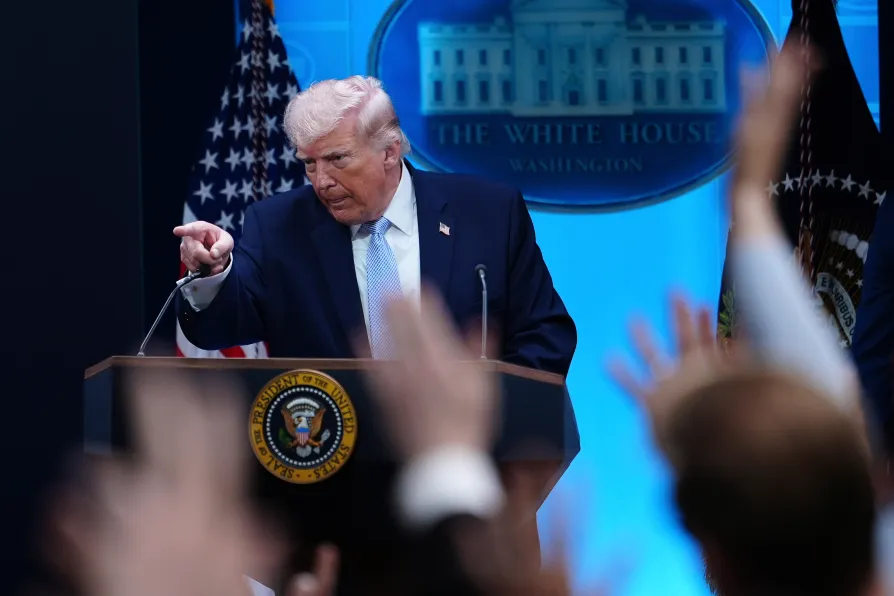
 President Donald Trump gestures while speaking with reporters in the James Brady Press Briefing Room at the White House, April 6, 2026, in Washington
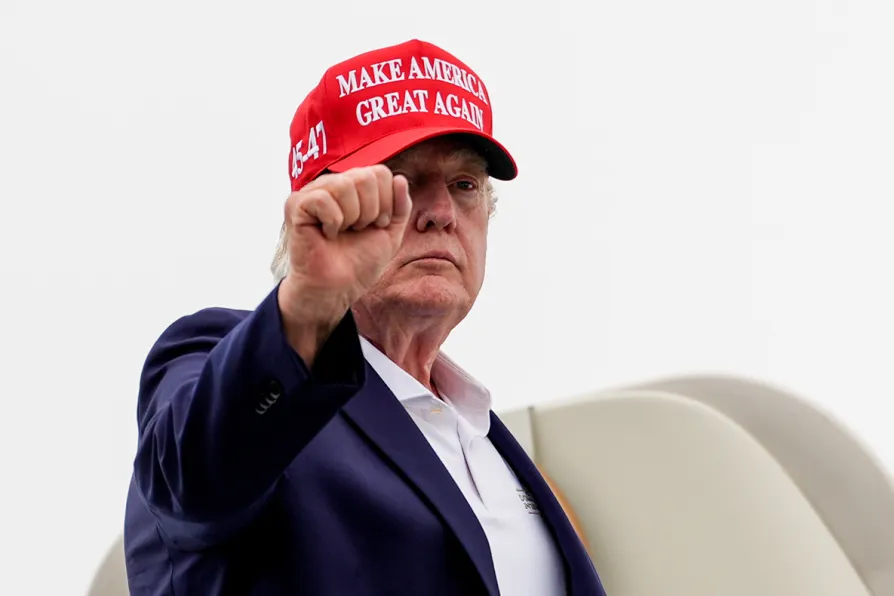





DONALD TRUMP’S bloodcurdling diatribes against Iran have shocked the world.
By the time this editorial is printed, if the US president carries out his abhorrent threats, US bombs will be raining down on Iranian bridges and power stations, ripping through a huge country’s civil infrastructure, cutting power to hospitals and homes. Bombing it “back to the stone age,” as he claims, or, in a chilling update: “A whole civilisation will die tonight.”
Israel warns Iranians not to travel by train, hinting at plans to target transport infrastructure. The escalation has begun already, with bombs falling on Kharg Island, a crucial oil export hub, and Israel again bombing the South Pars gas field, though the last time it did so Iranian retaliation caused damage to Qatar’s biggest liquefied natural gas terminal that will take years to repair.
Trump boasts that he is “not at all” bothered that what he proposes amount to war crimes. We should not be surprised.
Few wars have opened with a war crime as grave as this one did, on its very first day — the US “double tap” Tomahawk missile strike on a girls’ primary school in Minab, killing at least 175 people, most of them schoolgirls.
If it was a mistake, US War Secretary Pete Hegseth’s boasting two days later that Trump’s military would not bother with “stupid rules of engagement” suggest it was not one that caused any pangs of conscience. Since then the war crimes have come thick and fast. The US and Israel have bombed 600 schools and 30 universities. They have blown up energy infrastructure and targeted shoppers in crowded markets.
Trump’s threats are, as Scottish First Minister John Swinney rightly says, “unconscionable.”
Swinney is also right to ask what our government is doing to de-escalate matters — to stop these war crimes from happening. Britain has, in the past, occasionally restrained the United States — Clement Attlee famously flew to Washington to persuade Harry Truman not to use atom bombs in Korea.
Probably Keir Starmer has less influence with Trump than Attlee with Truman, but there is no sign he even intends to try. Labour’s party political broadcast is self-congratulatory drivel, the Prime Minister bragging that he has kept Britain out of the war where the Tories and Reform would have plunged us in.
But — as 14 more arrests at RAF Lakenheath yesterday attest — that isn’t true. Starmer has involved Britain directly in the war. Peace campaigners there report that over 100 US warplanes have deployed from that base — misnamed, since despite being in Suffolk it is exclusively used by the US air force, not Britain’s — to take part in Trump’s illegal war.
Starmer cannot even warn Trump this arrangement is over. That the US president’s public announcement he intends to commit war crimes means we cannot allow the US military to do so from our territory. He won’t even call the threats out for the outrage they are: the most his government can manage is the Education Secretary mumbling that “it is not language or an approach that this government would be taking.”
The US has, of course, committed war crimes before: often with Britain in tow. The 1999 assault on Yugoslavia saw massive destruction of civilian infrastructure, as did the 2003 invasion of Iraq.
The latter led to enormous cultural destruction too, the looting of ancient treasures and — in the ensuing civil war, which raged for years — the intentional demolition of heritage sites that had stood for thousands of years.
The price Iranians could pay may be higher still. Trump’s shameless celebration of war crimes means they will be committed with impunity, on an even larger scale.
Our government’s cowardice at this moment is unforgivable. Instead of standing up to Trump it arrests peace activists trying to stop the horror.
Starmer is, and remains, complicit: every Labour representative should be challenged on that.
