Supporters from both sides prepare to stand together against season ticket threats and exploitation, writes JAMES NALTON


 Latest editorial
The Fight of the Century in a divided America
Ali and Frazier’s historic 1971 clash mirrored a nation divided by race, war and resistance, writes JOHN WIGHT
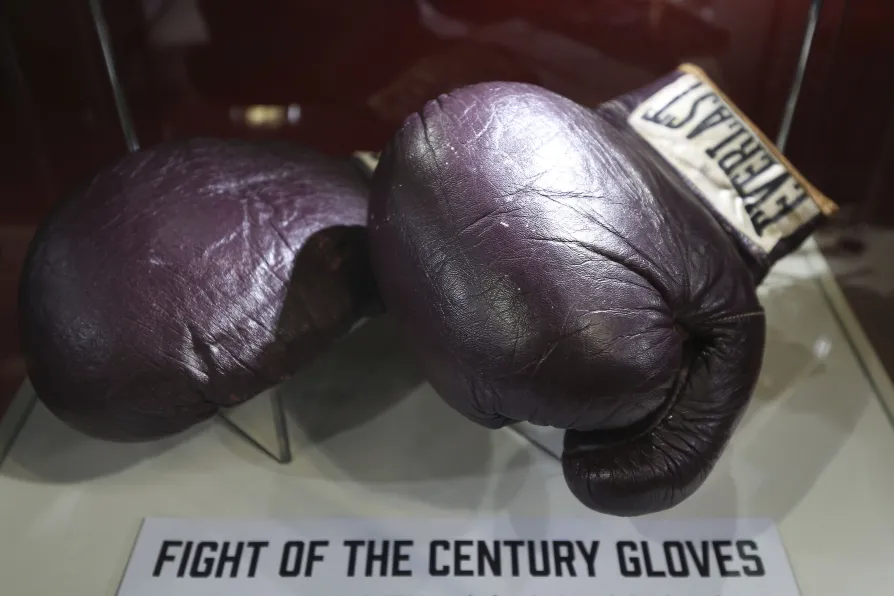 Boxing gloves worn by Muhammad Ali in his fight with Joe Frazier in 1971 billed as the fight of the century, on show ahead of the I Am The Greatest: Muhammad Ali at The O2 exhibition, London, March 3, 2016

French federation withdraws support as pressure mounts on Fifa president





MARCH 1971 was a month and a year to remember in the drama that punctuated the life of Muhammad Ali.
Having managed to endure and overcome the enmity of the US political establishment over his oppositional stance to the war in Vietnam — and been forced into a long three-year exile from the sport he’d once dominated — on March 8 1971, he climbed between the ropes at New York’s famed Madison Square Garden to face his fiercest ring adversary in the person of Joe Frazier.
Billed as the Fight of the Century, this was a heavyweight championship contest that in the lead-up took on the character of a globally seismic cultural event. It pitted two men against one another who stood as conflicting pillars of black American life.
Ali embodied the revolutionary black American mindset at a time when a disproportionate number of young, poor black men were being sent by Uncle Sam to die in a losing imperialist war overseas. Where he was concerned there was no, never could be, any compromise with the “man” or any of his malign works. There would instead be no weakening of the righteous rage informed by a history of slavery, Jim Crow segregation and cultural obliteration. Instead, there he stood in the ring: a prince of unforgivable blackness, radiating the spirit of a rebel and the mind of an outlaw.
Frazier represented the everyday black American: the men cleaning cars and the women pouring coffee in diners. They were working-class people who, while admiring Ali’s high-minded defiance of the status quo, still had bills to pay and families to feed. In that sense, Frazier was the more relatable of the two, even if less inspiring.
The actual fight itself saw the artistry represented by Ali being defeated by the artisanship of Frazier.
This was Ali’s third fight after returning to the ring following his three-year exile, and it showed. Gone was the fleet-footed specimen who’d once moved around the ring like a ballet dancer and whose hands were thrown at opponents in a blur of speed and precision. That version had given way to an attritional monument to sheer guts and determination, a fighter whose will to win was so fierce it was near biblical.
Frazier and his legendary trainer, Yank Durham, had come to the dance with a near perfect game plan. It involved Frazier placing an emphasis on his short height to come in low, weaving and bobbing under Ali’s renowned lead jab, forcing him to punch down and thereby leaving his chin exposed. This Frazier exploited again and again with his devastatingly effective left hook, as both men left nothing in the tank over fifteen of the most intense and punishing rounds ever to take place in a boxing ring.
In the packed arena beyond the ropes, an array of the rich and famous rubbed expensively clad shoulders with senior figures from the New York world of organised crime — and no wonder.
Ali had made the journey from sinner to saint in the hearts and minds of a country grown tired by the ravages of a war in Vietnam, which in 1971 evidenced no end in sight. The bodybags were arriving home in ever-increasing numbers, and the corresponding anti-war movement had grown in the streets, on the college campuses, and among the troops themselves to the point of becoming a material force.
Ali was their champion and his resulting redemption and vindication over his refusal to be drafted back in 1967 was made evident in his new found popularity. Where once people paid good money to see him put in his place, they were now paying to watch him succeed.
This first instalment of what would be an epic trilogy between Ali and Frazier ended in a unanimous points victory for the latter. By the end of the fight, the WBC world title that was at stake had been superseded by the unofficial title of champion over each other, such was the intensity of the rivalry forged.
Afterwards, following a fight that had involved Ali being dropped to the canvas by a ferocious left hook in the last round, the sense that nothing would be the same again was reflected in the mountain of column inches devoted to the puncturing of Ali’s seemingly ironclad invincibility as a fighter.
It was the first defeat of a professional ring career that had begun all the way back in 1960 against Tunny Hunsaker in Louisville, Kentucky. From then to now, the fighter who began life as Cassius Clay had travelled a journey to the status of cultural icon and folk hero of global repute as Muhammad Ali.
As for Frazier, his reputation as a result of the fight became tantamount to that of an unwelcome interloper, responsible for throwing the proverbial spanner in the works of the Ali legend. Like a thief in the night, his ownership of the heavyweight title was deemed by many to be an affront to the good in the name of the bad. Rough where Ali was ready, Joe Frazier was the unrefined product of a childhood moulded into steel as an adult, this at the hands of an abusive father who had been mired in the chaos of poverty as a sharecropper in the Deep South.
Frazier’s ensuing animus towards Ali was hereby and thereby developed. Slated as an Uncle Tom by the latter in the aftermath of this their first fight, the wound of this notorious slight in the affairs of black maleness and manhood cut deep. The result was a ring rivalry that left both men diminished in the end — Frazier spiritually and Ali physically.
The sad irony is that neither would have touched the greatness they each did without one another.
