

 Latest editorial

Campaigners warn soaring oil and gas prices are pushing households into another cost-of-living crisis
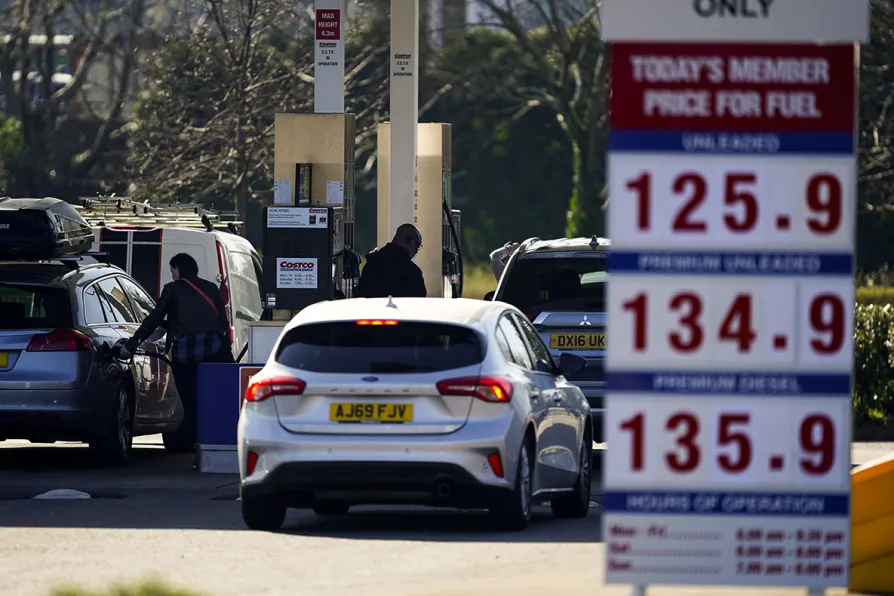 People dispense fuel at the pump at Costco Petrol Station in West Thurrock, Essex. The conflict in Iran has caused a surge in oil and gas prices, March 5, 2026

Prime Minister must give young workers the right to guaranteed hours and ending the scourge of insecure work, TUC says





TEN straight days of high oil and gas prices are pushing households into another cost-of-living crisis, campaigners warned today, as costs suffered from the US-Israel attack on Iran.
The warning came as Chancellor Rachel Reeves said she had asked the competition watchdog to “crack down” on “rip-off” fuel prices ahead of a meeting with energy bosses to warn against war profiteering.
Ms Reeves insisted she “will not tolerate” firms exploiting uncertainty in the Middle East for excess financial gain.
The government has promised to intervene if companies engage in “unfair” practices that would hit customers facing a rise in the price of home heating oil, which is not covered by Ofgem’s energy price cap.
Rural communities which rely on oil to heat their homes are already being hit hard, according to charity Rural Action Derbyshire (RAD), which runs an oil-buying scheme.
The heating oil market is closely connected to the daily market for jet fuel, meaning price rises are typically passed directly to customers.
RAD said homes in Derbyshire saw the cost of 500 litres jump from around £300 to £700-800 in the week after the conflict.
For an average household, 500 litres lasts two to three months.
Ahead of the talks with bosses, Ms Reeves wrote to the Competition and Markets Authority requesting that it stay on “high alert” for “unjustifiable” price hikes.
But the AA warned consumers “will be stung” with inevitably rising costs because of a global hike in prices, and called on Ms Reeves to delay a planned fuel duty increase to offset the impact.
The Chancellor has faced opposition pressure to abandon her decision to gradually phase out a 5p cut to the levy, starting with a 1p increase from September.
The RAC reported on Wednesday that diesel prices had risen by nearly 9 per cent since February 28, reaching an 18-month high.
Petrol prices were on average 6 per cent more across the same period.
In an interview with the BBC today, Energy Secretary Ed Miliband did not rule out direct support or extending the fuel duty freeze in the event of a prolonged war.
But he said the government would not row back on net zero action, or bend to calls for new North Sea exploration.
“We’ve got to have clean, homegrown power that we control,” he said.
“That’s the biggest long-term lesson of this crisis.”
End Fuel Poverty Coalition co-ordinator Simon Francis said: “Ten straight days of high oil and gas prices set this firmly in the realm of another cost-of-living threat for households.
“As long as the UK remains heavily dependent on fossil fuels, global tensions will continue to affect our energy bills.”
He said households have “already learned the hard way that fossil fuel price spikes come with a real cost.”
“With prices rising again, ministers should urgently meet with charities and frontline organisations to discuss plans for emergency support for those most at risk from high energy bills,” Mr Francis said.
“The only lasting protection is to cut our reliance on oil and gas through better insulated homes, more homegrown renewable energy and fairer energy pricing so bills are no longer dictated by volatile global markets.”
Uplift deputy director Robert Palmer said Britain’s dependence on fossil fuels “is making all of us poorer — all except for the oil and gas bosses and their shareholders, who once again will cash in at our expense.”
“It’s not just energy bills that look set to increase, but the cost of driving, mortgages and our supermarket shop,” he said.
“We’ve been here before — when [Russian President Vladimir] Putin invaded Ukraine, prices spiked, energy bills went through the roof and the government spent billions bailing people out.”
The only way to “insulate ourselves” from these risks is by doubling down on renewables and upgrading homes with solar power and heat pumps, he said.
