
The US administration is endangering lives by reversing environmental protection laws, CHAUNCEY K ROBINSON argues

Breaking the cycle of war
As tensions escalate over Iran, CAROL MOCHAN MSP argues that Britain must finally learn from the disastrous legacy of Iraq and choose diplomacy over another catastrophic conflict
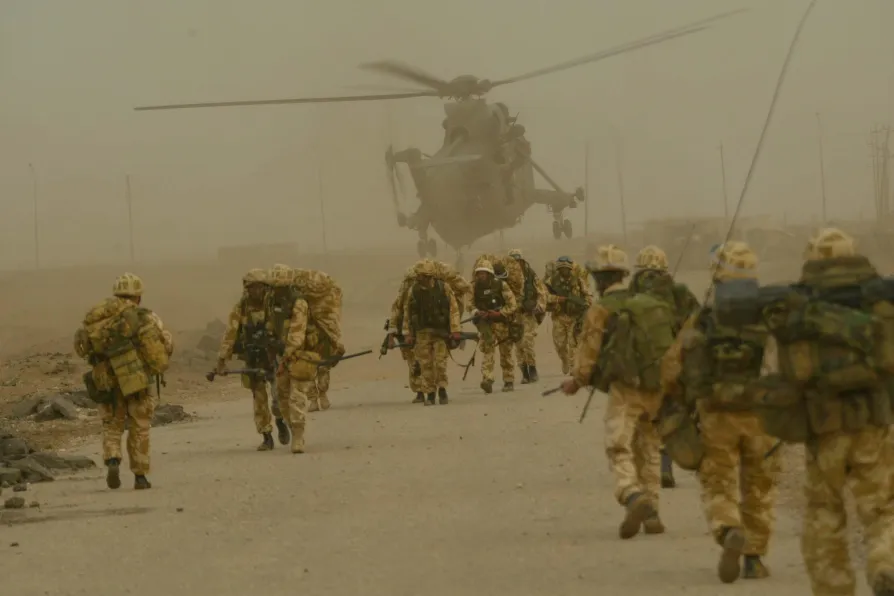
 British Royal Marines at the Alfaw Oil fields during the illegal invasion of Iraq, March 2003
It’s time to stop retreating and go on the offensive to promote working-class interests, argues DOUG NICHOLLS
Marco Rubio wants to defeat socialism in Nicaragua, not restore ‘democracy,’ writes JOHN PERRY
Believe it or not, there was a time when the US government built beautiful homes for working‑class Americans to deal with a housing shortage, writes ERAN BEN-JOSEPH
DIANE ABBOTT provides an analysis of the reasons for EU and British voters’ dramatic swing to the right
Train drivers’ union Aslef general secretary DAVE CALFE speaks to Ben Chacko about his hopes that Burnham’s devolution agenda will include the importance of the railway





SADLY in politics we often see governments and parties committing the same errors of judgement over and over again. I have always hoped to learn from the past and take account of the mistakes my party and others have made but it is not always a straightforward path. Old habits die hard.
There are positive signs emerging, however. I am pleased to be reading comments from the United States government expressing sincere dissatisfaction with Britain’s lack of co-operation with its latest attempt to destabilise the globe. This suggests a sea change in our foreign policy and it is one that, while not perfect, will save many lives in the long run. If it is successful it will hopefully set an example for future governments that peace is popular.
What the US and Israel are doing in Iran is simply regime change at any cost. We have seen schoolchildren lose their lives, entire city neighbourhoods flattened, and young working-class men and women from halfway across the world die in service to governments in Washington and Jerusalem that see them as nothing more than collateral.
War is the failure of diplomacy, it is the failure of humanity and it is a failure far too often caused by politicians. As such part of any peaceful solution must also come from that political sphere. If you are a councillor, MSP, MP or even just an active member of a political party, you have a responsibility to make it known that such a war will not be in your name. Peace is built by millions of individuals enacting constructive dialogue and initiatives, it is not simply going to materialise out of the clear blue sky. If we do not show there is a considerable distaste for war and violence whenever we can the voices of conflict will prevail.
The Prime Minister has set a different tone this time round, one that is clearly an improvement from the mistakes of the past when my party dragged us into a pointless war with Iraq in 2003. Tony Blair at the time marched willingly towards conflict, ignoring the many warnings that this was not only the wrong path but it may be one based on a mountain of misinformation. The consequences for millions of people and the future of the Labour Party were disastrous. We cannot blindly tread the same path all over again in order to keep favour with a US president who has lost his mind.
While Keir Starmer’s approach is not exactly a socialist one full of internationalist foresight, there has been a clear recognition that it is not in our interests to fall in behind our friends across the Atlantic. I would rather see no British base used at all for these efforts, but at least a distinction seems to have been made between defensive and offensive actions. We can only hope that it is not just a distinction without difference. Nonetheless, we need to be clearer that any use of British military or civilian infrastructure to carry out this war is going to make this country a target for a long time to come. We have to learn to live peacefully and to find ways to use diplomacy that do not end in rockets being fired indiscriminately into civilian areas.
We must use the large Labour majority at Westminster, alongside colleagues in devolved legislatures, to show a united front. This can be done in conjunction with other sensible parties to follow Spain’s example and resist the passive threats from the US. The more countries we can gather together that are unwilling to see bloodshed the stronger our voice will be.
When I go out campaigning across Ayrshire there are no working-class people demanding regime change in Iran or subservience to the demands of Benjamin Netanyahu. What people are concerned about is the cost of living, cuts to their NHS, and the long-term sustainability of their children’s education. Fomenting an air war across a key trading region is only going to increase those cost pressures on families and push thousands of people closer to the poverty line.
It is long past the time we realised the “special relationship” should not simply mean being subservient to US foreign policy. It should serve ordinary people. At the moment it is doing anything but.
A relationship that is not reciprocal is simply abusive and it is well past the time that we looked to examples like the Nordic countries who seem to do perfectly well without feeling that they need to be directly involved in every conflict that arises.
Our old empire is gone and it is time the imperial mindset went with it.
Carol Mochan is MSP for the South Scotland region.
