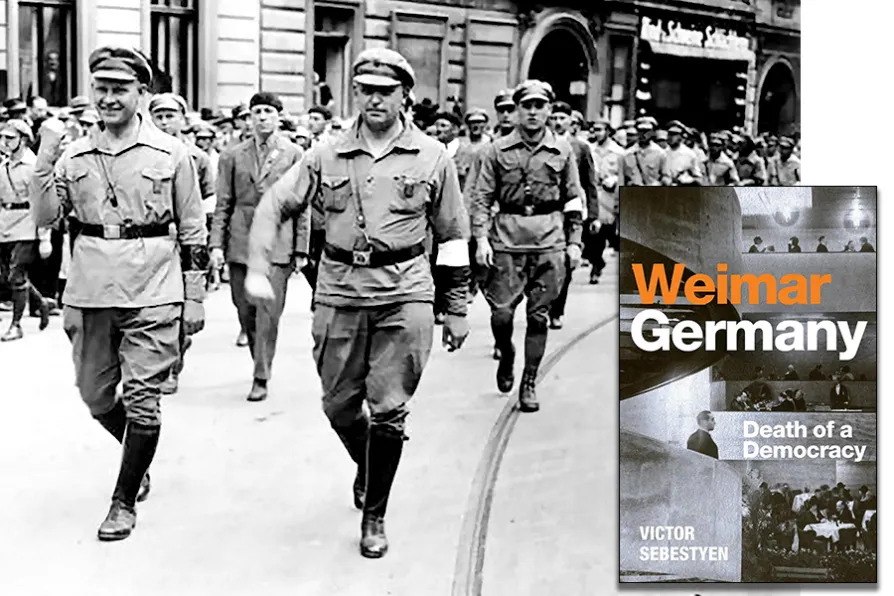
GORDON PARSONS recommends an entertaining account of the years between Germany’s defeat in WWI and Hitler’s seizure of power



US Policy in the Middle East: prevention of democracy
IAN SINCLAIR welcomes a mainstream scholar to the ranks of left-wing critique of US foreign policy
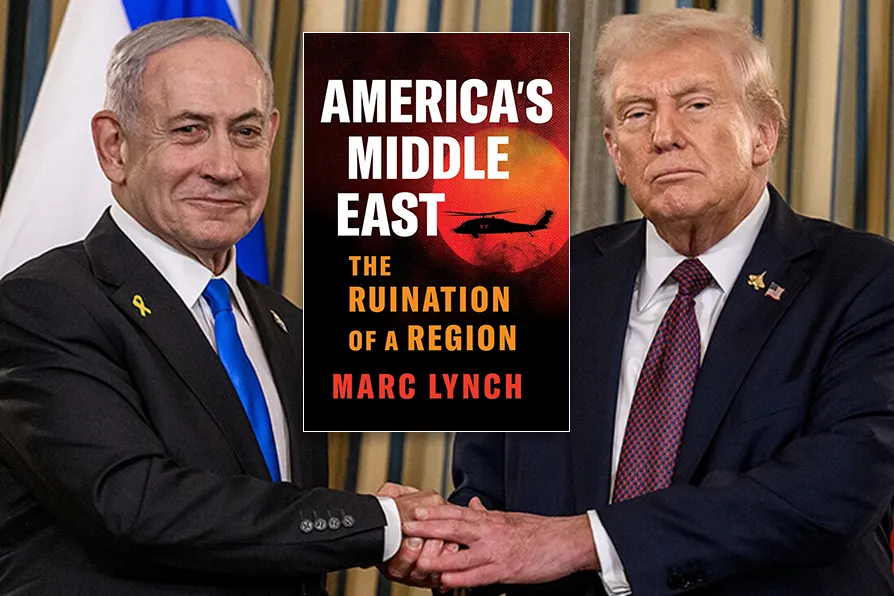
 PARTNERS IN CRIME: Trump and Netanyahu after announcing the US peace plan for Gaza, September 29, 2025 [Pic: The White House/CC]
MIGUEL YOSHIDA explains the evolution and influence of the Cuban Casa De Las Americas in joining culture to the revolutionary struggle
ANDY HEDGECOCK is charmed by a skilful adaptation of Tove Jansson’s lyrical portrait of three generations of a family, overcoming grief
ALEX HALL treads warily through a messy, dialectical struggle fought in the mundane machinery of driving licences, criminal law, and birth registries
MICHAL BONCZA, FIONA O’CONNOR, JAMES WALSH and ANGUS REID review Atlas of Disappearance, Love Me Tender, Bouchra, and This Tempting Madness
Flitting between myth and the modern world, Medusa is determined to steer clear of human affairs. When her resolve crumbles, the result is petrifying in every sense





America’s Middle East: The ruination of a region
Marc Lynch, Hurst, £25
“I BEGAN writing this book in a moment of rage” is not your typical first line from a senior, highly respected academic at the heart of imperial power.
Marc Lynch, Professor of Political Science and Director of Middle East Studies at The George Washington University, is referring to his reaction to ongoing US support for Israel as it has carried out a genocide in Gaza.
This horror is not an exception, he argues, just the most extreme case of US policy in the Middle East since 1990, which has been characterised by a “remarkable consistency” across different presidential administrations, both Democrat and Republican.
For Lynch, US primacy in the region “has generated unending conflict and instability for most of its people,” with “support for autocracy over democracy, routinised recourse to military means and defence of impunity over international law and institutions.”
He lists the US’s own self-defined interests: “protecting Israel, keeping the oil flowing, preventing Soviet (or, later, Russian or Chinese) influence, preventing the proliferation of nuclear weapons, combatting terrorism.”
Despite propagandistic, self-serving rhetoric about promoting democracy, Lynch notes “genuine democracy would be highly inconvenient to the functioning of America’s Middle East” as governments would likely be attentive to popular opinion which is strongly opposed to the US on key issues. Instead, he refers to the “prevention of democracy” as being at the heart of US policy in the region.
For readers of Noam Chomsky, Edward Said, Mark Curtis and the Morning Star itself none of this will be news, though the fact that a mainstream scholar has written a book echoing the arguments of left-wing critics of US foreign policy suggests the Overton Window has seen quite a shift over recent years.
Lynch admirably highlights two significant events in the region that have been neglected in the West – the murderous US-UK-led economic sanctions on Iraq in the 1990s, and the first Palestinian intifada from 1987 to 1993. Noting the latter was “one of the most important nonviolent mobilisations in Middle East history,” he explains “every non-violent Palestinian effort” to resolve the Israel-Palestine conflict, such as turning to the United Nations, has been “rebuffed” by the US.
He also notes that “covert interventions by the United States and its allies in Syria extended and exacerbated one of the most brutal civil wars in modern history.” Though it’s just a passing mention and not explored further, it nevertheless wholly contradicts the majority of mainstream commentary in the West about US (and British) involvement in the Syrian war.
Frustratingly, Lynch’s clear-eyed analysis seems to escape him when discussing the Obama administration and the Middle East. He argues that the 44th president of the United States “pushed for democracy and human rights not only in American adversaries but in the core allies,” though his “visionary agenda” was “defeated by the forces of the status quo.”
Those people working for democratic change in the Middle East, including in Bahrain, Kuwait, Oman, Qatar, Saudi Arabia, UAE and Palestine, would likely disagree. Ditto the untold numbers of Yemenis killed by US weapons supplied to Saudi Arabia by the Obama administration. Lynch mentions in the preface that he worked on both of Obama’s presidential campaigns, which a Google search suggests included advising the candidate’s team.
Moreover, his assertion that the US is unable to force close allies such as Israel and Saudi Arabia to follow its preferences seems to mirror the criticism he makes of others – minimising US influence in the region. For example, I’m guessing the US withdrawing military support from these nations, or even threatening a military intervention to protect the people they are repressing and killing, would indeed shift their behaviour.
These, though, are relatively minor criticisms. Overall Lynch’s book is a compelling and accessible critique of US power projection in the Middle East, and therefore a hugely useful resource for those working to change US (and British) foreign policy for the better.
