ROB WARZYNIAK wades knee deep through a pile of ‘dead canaries’ of Trumpist policies which exacerbated the horrors of US capitalism domestically


 Latest editorial

Assisted suicide Bill unravels as lords highlight risks to vulnerable
Evidence to peers from medical leaders, patient safety officials and the children’s commissioner has intensified fears that the Bill’s safeguards are inadequate, writes ADAM JAMES POLLOCK
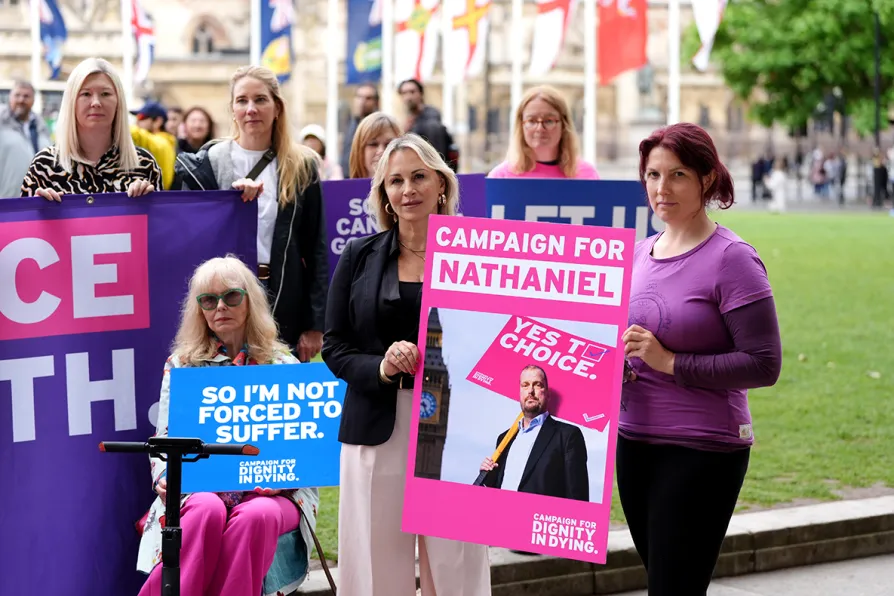
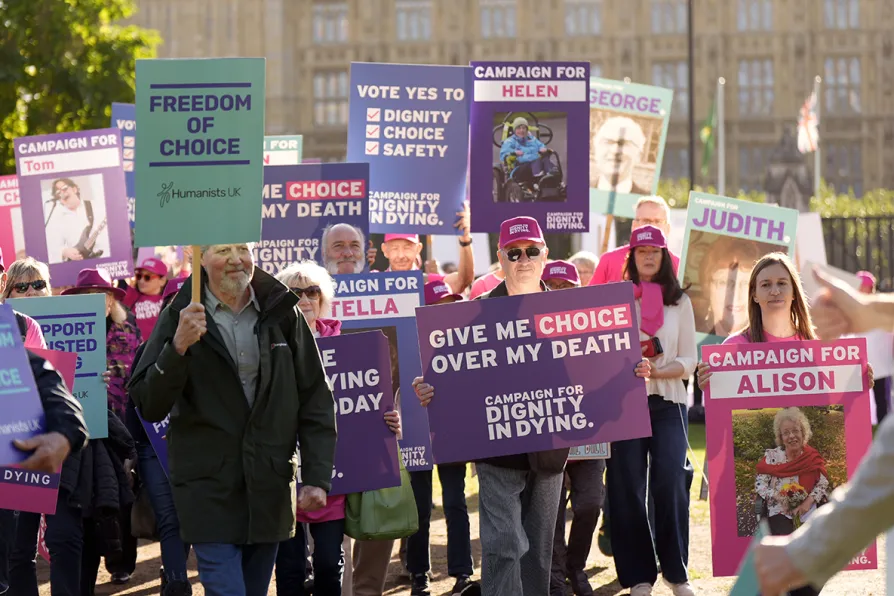
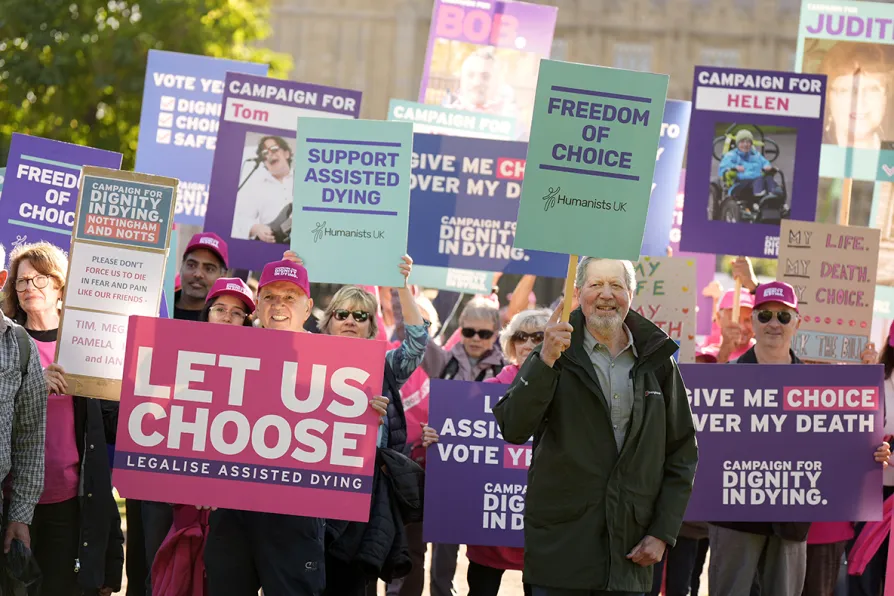
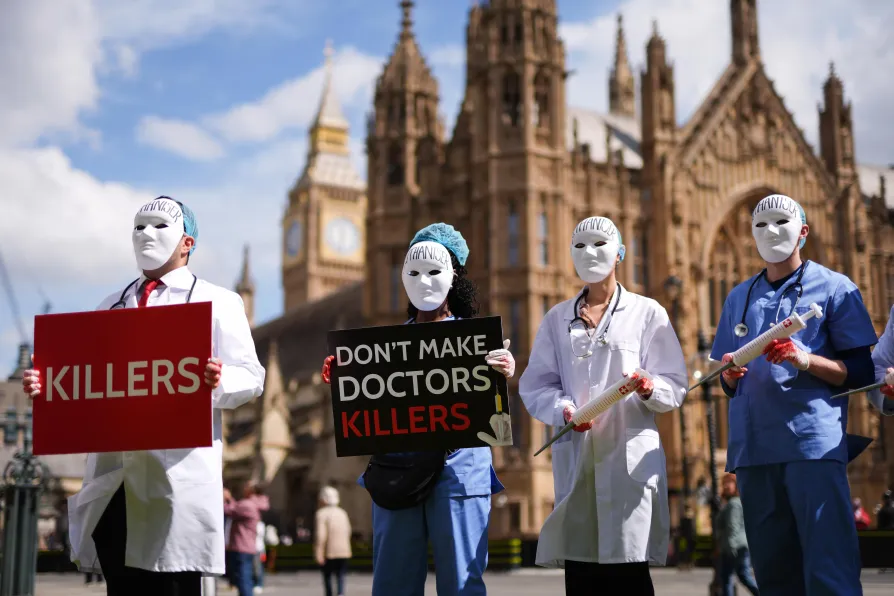 Campaigners protest outside Parliament in Westminster, London, ahead of a debate in the House of Commons on assisted dying, April 29, 2024
Without evidence or Nato consultations Berlin’s answer to the Leipzig incident is a rupture of relations. SEVIM DAGDELEN examines why
FRANCISCO DOMINGUEZ introduces the background to a conference on defending Latin America’s sovereignty
The glacier collapse in Nepal is yet another warning that a warming planet is making Himalayan disasters more frequent and destructive – but the countries facing the greatest risks are often those least responsible, says LI YANG
Nick Blair is set to benefit from a hugely lucrative contract to ‘virtually’ train the British army for its next war. Like father, like son, writes SOLOMON HUGHES
Even when tragedy strikes, Western media cannot resist the opportunity to turn it into a sordid propaganda opportunity, as the Nepal-China border tragedy shows, writes CARLOS MARTINEZ
Trade unions should be at the heart of the anti-racist push for reparations for the historic legacy and continuing impact of slavery, writes ROGER McKENZIE





IT IS A dark time in Britain — both literally and figuratively. We are ending the second month of the new year, and the atrocious assisted suicide Bill once again faces a torrid time under the microscope of the House of Lords’ committee stage scrutiny, which resumes today.
The Bill is said by supporters to allow terminally ill adults in England and Wales with a prognosis of six months or less to be provided with assistance to end their lives.
In reality, experts have argued that many sections of society would be eligible, even including those who suffer from anorexia and mental health problems.
The euphemism of “assistance to end their lives” is contested ground — it is surely more properly understood as providing the state with the power to assist suicide — and over 1,000 amendments to the Bill have been tabled by peers, to attempt to plug the many holes in this flawed legislation to make it safe, or as safe as can be.
Many of these amendments have been drawn directly from suggestions made by experts in written and oral evidence provided to the Lords select committee, which was convened for a limited time before Christmas. Over five sessions, recurrent issues of the Bill’s supposed safeguards were highlighted, emphasising the risks of it becoming law.
On day one, the president of the Royal College of Physicians (RCP), Professor Mumtaz Patel, said that many of their clinicians and doctors would want to absent themselves from any part of the assisted suicide process, noting that the RCP had “a lot of concerns.”
What happens if medical professionals opt out of this ghastly scheme en masse? Will there be additional financial incentives for those who are willing to participate? Will this go on to create pressure from doctors seeking to “make bank” from assisting in the suicide of their patients? Perhaps that is a little too coarse for some readers, but it is an uncomfortable and foreseeable reality which must be confronted.
Prof Patel emphasised that “prognostic uncertainty … is something that we grapple with day to day, whether it is six months or different.” As peers have noted during their committee stage debates, such as Baroness Finlay, who drew attention to an “extensive body of evidence” that criticised these prognoses during the most recent debate, telling someone they have six months to live is mostly an educated guess, one that medical professionals often misjudge. Life-or-death decisions should not be made based on guesses.
Introducing assisted suicide also means diverting focus and resources from elsewhere. “Assisted dying as a service should not preclude and divert resources from the wider equity of access to all forms and services around end-of-life care,” the president of the RCP said.
Yet the Health Secretary, Wes Streeting, previously revealed that this is exactly how assisted suicide would be funded. Despite clear knowledge of this, supporters of the Bill have still been attempting to push it through the legislative process, with little to no care given to these warnings of disastrous consequences.
The Royal College of General Practitioners also distanced itself from the Bill, with honorary secretary Dr Michael Mulholland saying: “We do not want this to be part of core general practice.”
“The whole question of making decisions for assisted dying is against everything that I have been trained in and I have practised for 30-plus years,” he added. Dr Mulholland spoke to a truth that the Bill and its supporters have been wilfully blind to: that assisted suicide is not a form of medical treatment. It doesn’t heal. It doesn’t restore. It doesn’t palliate symptoms; it ends the life of the person with the symptoms.
Despite coming under slanderous critique from some pro-assisted suicide members of the select committee, the Royal College of Psychiatrists’ (RCPsych) Dr Annabel Price would not be swayed from articulating the dissatisfaction of the college with the Bill. Due to serious practical concerns, including with the reliability of consent procedures and the inadequacy of capability assessment procedures, the RCPsych simply “could not support the Bill,” said Dr Price.
The hits kept coming. Dr Suzy Lishman, of the Royal College of Pathologists, insisted that — contrary to the Bill as written — “the view of the Royal College of Pathologists, the lead college for medical examiners and responsible for their training, is that assisted deaths should be notified to the coroner, just as other deaths following the administration of drugs, prescribed or not, must be.”
His Honour, Judge Thomas Teague KC, the former chief coroner of England and Wales, was scathing in his critique: “Since assisted deaths are by definition intentionally self-inflicted, they are, in my view, both in law and in reality, deaths by suicide and therefore unnatural. Our law has mandated for centuries that all such deaths should automatically go to the coroner for investigation,” he said. To not do this, he continued, “may have the unfortunate and unintended consequence of tending to obscure and conceal those risks, making it easier for persons who want, for example, to exercise coercion, pressure or deception to do so.”
It could not be clearer: the Bill, as drafted, is not safe.
Beyond the royal colleges, other expert witnesses picked apart the Bill’s many flaws one after another. The Bill’s reliance on medical examiners in detecting coercion is misplaced, according to Professor Aidan Fowler, the national director of patient safety at NHS England.
“I have not had training in [spotting coercion], and I think it would be the view of medical examiners that they have not had training and would need it to spot it,” he said.
Dr Sarah Hughes, the chief executive of the mental health charity Mind, warned of the need to distinguish clearly between assisted suicide legislation and suicide prevention efforts. “I can certainly tell you that we are geared up to prevent suicide,” she said, “not the other way around.” How will the Bill’s supporters distinguish between the two while ensuring that assisted suicide does not undermine suicide prevention?
Like many things in this Bill, it is, in the words of Bob Dylan, a complete unknown.
According to John Donne, “No man is an island,” and, as Dame Rachel de Souza, the children’s commissioner for England, made clear, no child is either.
“I have one child who says, ‘I’m in care. I’ve got disabilities. The government will pay for me to die under this Bill, but it won’t pay for me to live,” she told peers. “There are some deep concerns from children, and we need to hear them, listen to them and answer them.”
Not only are children aware of the proposed legislation and express concern about how it might affect them indirectly, but Dame Rachel also highlighted that, in some jurisdictions, assisted dying could directly affect them, too.
In Canada, less than 10 years after their law was enacted, there are talks about expanding their assisted suicide legislation to encompass children. Would this happen here? Dame Rachel thinks it is certainly possible, given the way things have been going: “I know nobody here is proposing that, but the unintended consequence of a quickly pushed-through [Private Member’s Bill] is that we just do not have the time to consider those things, and I worry about it.”
The Bill must complete all its stages in both houses before the end of this parliamentary session in the spring; a prospect that seems increasingly unlikely as peers apply the robust scrutiny this Bill so sorely needs.
A Bill of this complexity and controversy necessitates abundant scrutiny, which cannot and should not be rushed.
Both the legislative process and the lives of vulnerable people who this Bill would imperil demand it. If that cannot be accomplished, the Bill can and should fall. It has already consumed an extraordinary amount of time in the limited parliamentary timetable. One cannot help but wonder how much more progress could have been made to address improving palliative care in the same amount of time and with the same amount of zealous fervour that pro-assisted suicide parliamentarians and campaigners have exerted.
That 100,000 people die each year without the care and support they need at the end of their lives is surely the real scandal. With each passing day, this Bill advances closer to its demise; a demise that is both warranted and long overdue.

Similar stories