
The UK Prime Minister may have the regal touch in northern England, but he’s been wrong-footed on the constitutional challenges posed by the Celtic Alliance of first ministers from Scotland, Wales and Northern Ireland, argues KENNY MacASKILL

India’s workers made industrial history. So where was the noise?
The biggest strike in global history is a template for our future. The silence tells you all you need to know, writes CLAUDIA WEBBE
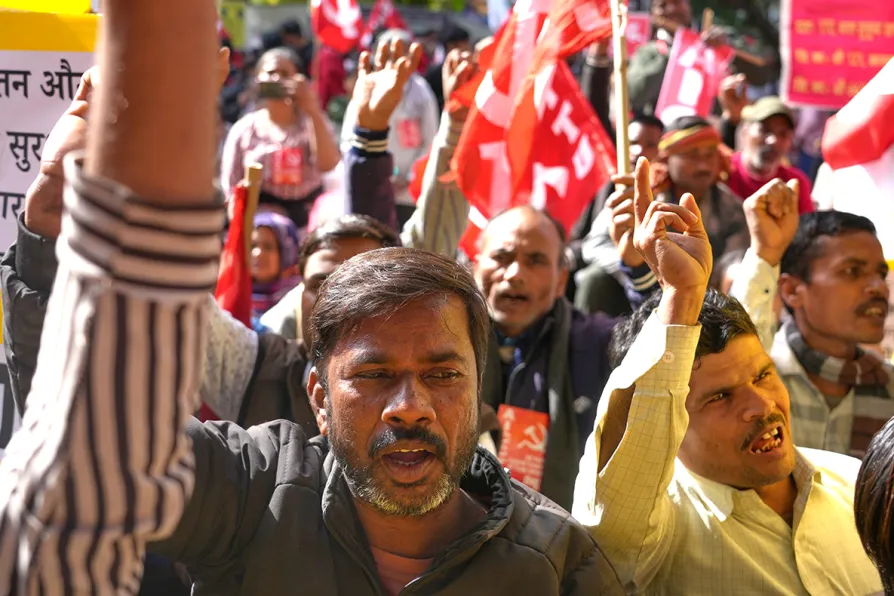
 Members of trade unions shout slogans during a nationwide strike to protest an interim trade deal with the United States, saying the agreement undermines the interests of farmers, small businesses and workers in New Delhi, India, February 12, 2026
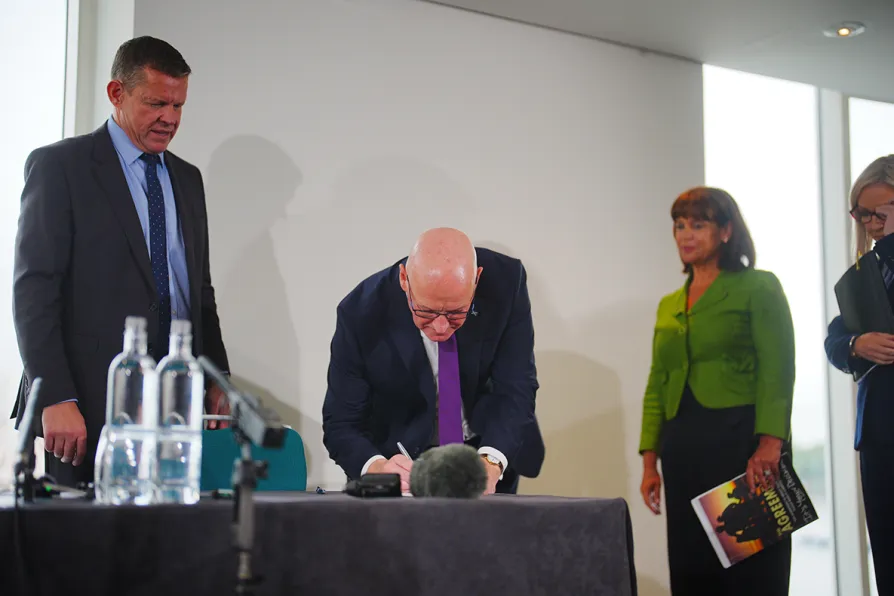
NEIRLAY ANDRADE, a member of the Communist Party of Venezuela’s political committee, outlines her party’s position on the crisis facing the country
A look at Taylor Wimpey’s accounts shows why Labour’s market-led housing strategy won’t deliver more, cheaper homes, as promised, says SOLOMON HUGHES
DAVID HORSLEY remembers the remarkable life and death of US black revolutionary George Jackson, whose politically passionate prison letters were published as Soledad Brother
Cuban trade union federation CTC leader OSNAY MIGUEL COLINA speaks to Ben Chacko about life and work under a crippling US siege
A part of the British empire’s network of slavery, today the Caribbean island of Nevis faces a new form of exploitation in the form of crypto-colonialism, CLAUDIA WEBBE writes
Challenges from the unscrupulous misuse of AI to steal actors’ voice and physical likenesses is being met with a firm union response, writes LYNDA ROOKE





THERE is an old trade union proverb, forged in the coalfields of Bengal and borrowed by every liberation movement since: the boss needs the worker, but the worker does not need the boss. On February 12 2026, 300 million workers in India made that proverb flesh.
They shut down their whole country in protest against four anti-worker “codes” pushed through the Indian parliament by the Modi government. The strike involved the working class — from gig workers, textile makers, miners and farm labourers to bank staff and postal workers, across more than 600 districts of the world’s most populous nation — and they brought India to a standstill. Markets shuttered. Red flags filled every arterial road from Mumbai to Kolkata. It wasn’t just the largest strike in India’s history, it was the biggest in global history.
Ten central trade unions, the Samyukta Kisan Morcha farmer coalition, agricultural workers’ organisations, student groups, and women’s collectives all converged on a single demand: the withdrawal of the Modi government’s four anti-worker labour codes, and an end to a decade of policy engineered to transfer wealth upward while stripping protections from those who generate it.
Eleven days later, most of the Western media has still not told the story. That silence is not negligence. It is editorial complicity with a class project that depends on Indian workers and their labour remaining invisible, exploitable, and, above all, quiet.
Surely such a seismic and unprecedented event is compulsory viewing or reading and merits extensive coverage and analysis. Yet it was entirely ignored by British media besides the Morning Star. A search of the BBC News website for the words “India” and “strike” reveals, at the time of writing, zero results about the industrial action: the only 2026 result is about Modi “striking” trade deals. A search for coverage anywhere in British media yields only mentions on socialist websites. That silence is complicity in Modi’s war on workers’ rights. But it’s also more – an act of self-preservation by Britain’s political and financial elites and the media they own or run.
Why are UK and other Western elites determined to ignore the uprising of India’s working classes — and even more determined to do what they can to keep ordinary people ignorant about it?
Despite widespread poverty — one in 40 live in extreme poverty — India is often cited as one of the world’s most economically equal societies. World Bank consumption data ranks it near the top globally, with a Gini coefficient of 25.5 — lower than the UK’s 32.7 and below any G7 or G20 country. On that measure, most Indians appear to live at broadly similar spending levels.
But income and wealth tell a different story. The World Inequality Report 2026 describes India as one of the most unequal countries in the world: the top 10 per cent capture 58 per cent of national income, while the bottom 50 per cent receive just 15 per cent. The richest 10 per cent hold 65 per cent of total wealth, and the top 1 per cent alone controls 40 per cent. Female labour force participation remains at 15.7 per cent, and 90 per cent of workers — more than 400 million people — toil in the informal sector without contracts, enforceable minimum wages or social security. Women in that sector earn roughly half as much as men. India may be statistically equal in consumption, but it is sharply unequal in income, assets and economic power.
Modi’s moves to weaken the working class follow a pattern seen for decades in most Western nations: attacks on unions and collective action to weaken our class and siphon wealth upward.
The four labour codes — on wages, industrial relations, social security, and occupational safety — were rammed through Parliament in 2020, two of them during the pandemic when most opposition MPs had walked out and pushed into force in November 2025 despite unanimous trade union opposition. Strip away the bureaucratic language and their purpose is naked. The Industrial Relations Code criminalises the right to strike by mandating 60 days’ notice and banning action during conciliation or tribunal proceedings — proceedings the state or employers can trigger at will, creating an indefinite legal blockade against any walkout. The threshold for layoff protections has been tripled from 100 to 300 workers, meaning the vast majority of India’s manufacturing workforce can now be hired and fired at managerial whim. Overtime limits have been extended to one 125 hours per quarter. Contract labour safeguards have been gutted by raising licensing thresholds from 20 to 50 workers.
These are not reforms. They are the legislative architecture of a corporate wish-list, assembled by Modi’s government and presented as modernisation.
Meanwhile, the Mahatma Gandhi National Rural Employment Guarantee Act — the lifeline of tens of millions of India’s poorest rural families — has been repealed and replaced with the euphemistically named Viksit Bharat Guarantee for Rozgar and Ajeevika Mission (Gramin) Act, which shifts the fiscal burden onto states, bans work during harvest season to ensure landlords a supply of cheap labour, and strips the guarantee of its rights-based legal foundation. The insurance sector has been opened to 100 per cent foreign direct investment. Military expenditure has been hiked by 15 per cent. The Shanti Act has opened nuclear energy to private and foreign operators while absolving suppliers of liability in the event of disaster.
Modi’s measures against the working class of India follow the same template against a population already in far greater poverty. They are also being imposed against a backdrop of unequal trade deals that will further suck wealth from the Indian people to US and other Western corporations.
Five days before the strike, the White House announced a $500 billion US-India trade framework under which India committed to purchasing US energy, aircraft, technology, and coal — while in January, India and the EU signed what Al Jazeera called “the mother of all deals,” a free trade agreement covering two billion people and a combined market of $27 trillion. Not one clause in either deal contains a binding, enforceable protection for workers’ rights. These are not trade agreements between nations. They are contracts between ruling classes, underwritten by the sweat of people who were never consulted and will never benefit
US companies profit to the tune of more than $40bn a year from India, yet Trump’s narrative of a $100bn deficit underpinned a new US-India trade deal so unfair that it has been rightly compared to those imposed by imperial powers on colonies and vassals in the 1800s. The “deal” forces India to accept 18 per cent tariffs on its exports to the US while charging no tariffs on US goods to India. It is also allowing the US to pressure India into buying more from the US.
The new UK-India Free Trade Agreement is hardly better, cutting Indian tariffs on British products from 15 per cent to 3 per cent without any requirement for improvements in human rights and working conditions for Indian people. It also “entrenches asymmetries between the two economies,” according to the Trade Justice Movement and does nothing to help India produce more sustainably.
This is Modi’s class war in favour of corporate power and advantage. But the Indian working class is saying no; not just saying it but acting to enforce its refusal on a scale that the world has never seen before.
The international working class should take note. Those who think they have a right to rule cannot afford us all to see what is happening in India and its significance for the class struggle in countries worldwide. India’s general strike is the future that the billionaires and ruling class fear most.
What solidarity demands
For the international left, this strike is not a distant event to admire. It is a front line in a global class war whose logic operates identically in London, Lagos, and Lima. The same deregulatory playbook that produced Modi’s labour codes produced the UK’s anti-union legislation, the gutting of collective bargaining across the European Union, and the race to the bottom that defines every bilateral trade agreement of the neoliberal era.
Genuine solidarity means demanding that the EU-India and US-India trade deals be reopened with binding, enforceable labour rights clauses — or opposed outright. It means pressing for universal ratification of ILO Conventions 87 and 98 on freedom of association and collective bargaining. It means recognising that when 300 million workers rise against a far-right government backed by global capital, they are fighting the same fight as every worker in Britain facing fire-and-rehire, every nurse confronting real-terms pay cuts, every gig economy courier denied the status of employee. An injury to one is an injury to all — but only if we mean it, and only if we act like it.
The unions have already warned that if the Modi government does not withdraw the four labour codes, longer and more sustained general strikes will follow. Three hundred million workers have delivered their verdict on the BJP, on the trade deals of Washington, UK and Brussels, and on every institution — from Parliament to the Supreme Court — that has chosen capital over labour. That verdict is unambiguous, it is historically unprecedented, and it is damning. The only question left is whether the rest of the world’s working class will hear it — or whether we, too, will choose the silence of the comfortable over the solidarity of the just.
Claudia Webbe was previously the Member of Parliament for Leicester East (2019–2024). You can follow her at https://www.facebook.com/claudiaforLE/ and https://x.com/claudiawebbe

Similar stories
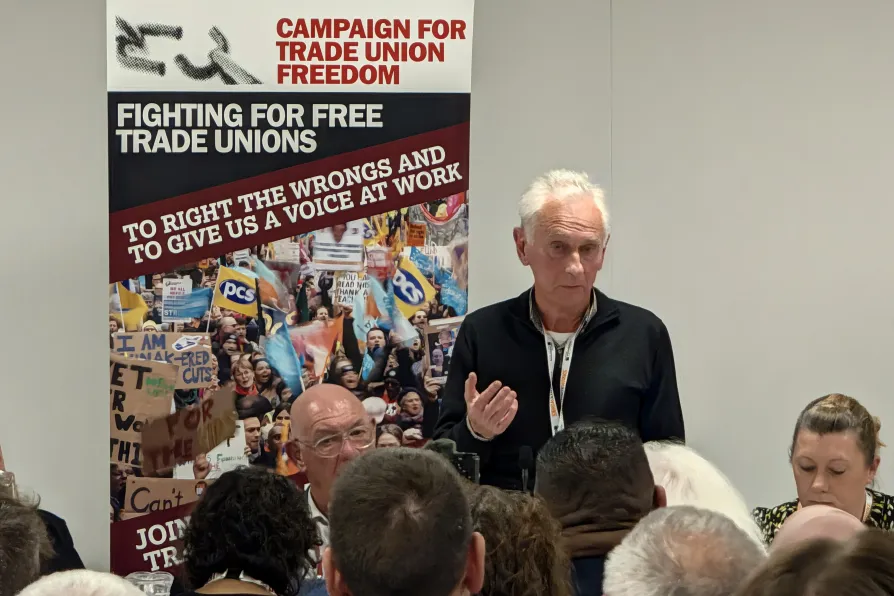
Collective bargaining, a single status of worker and the right to take solidarity action key themes of packed Institute of Employment Rights-Campaign for Trade Union Freedom fringe meeting at TUC 2026
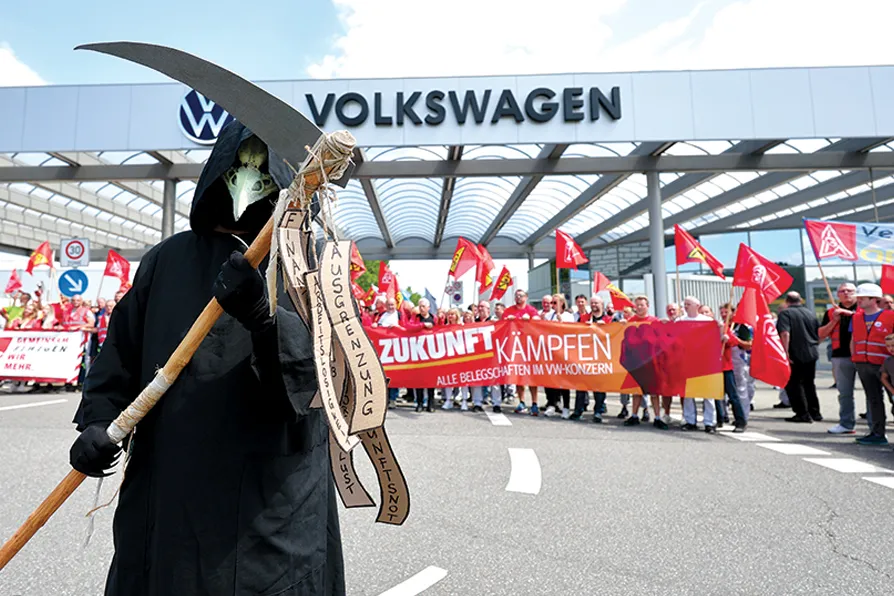
The future does not have to be climate chaos and social breakdown. MARC VANDEPITTE looks at the alternatives offered by the Global Justice Report, co-authored by Thomas Piketty
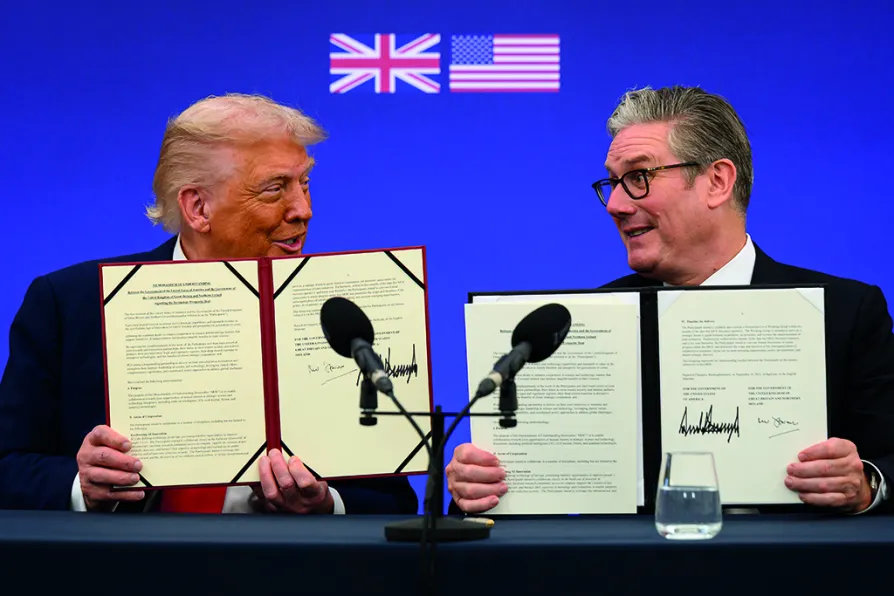
CLAUDIA WEBBE says the horrific price British patients will pay for this NHS deal is now clear — and there’s time to get out of it, if MPs will only force the issue
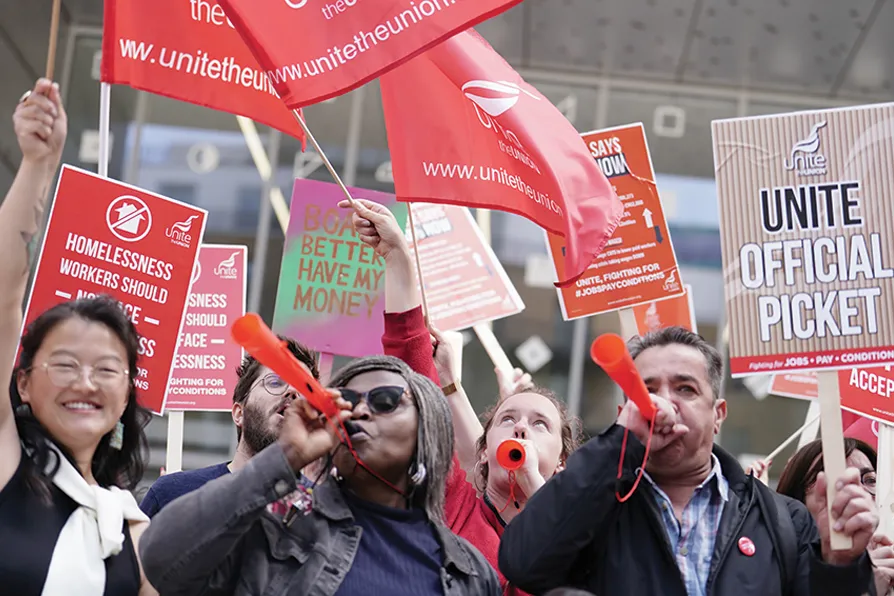
The unions are unhappy with the Employment Rights Act 2025 and with good reason. KEITH EWING and Lord JOHN HENDY KC take a close look at why the Bill promised more than it delivered