With more people dying each year and many spending their final days in institutions, researchers argue that wider access to palliative care could offer a more humane and cost-effective alternative, write ROX MIDDLETON, LIAM SHAW and MIRIAM GAUNTLETT


 Latest editorial

The red MP: Shapurji Saklatvala’s fight for workers and freedom
Twice elected in Battersea, ‘Comrade Sak’ devoted his life to the twin causes of working-class struggle and Indian independence – a legacy now honoured 90 years after his death, write DAVID HORSLEY and JEANNE RATHBONE
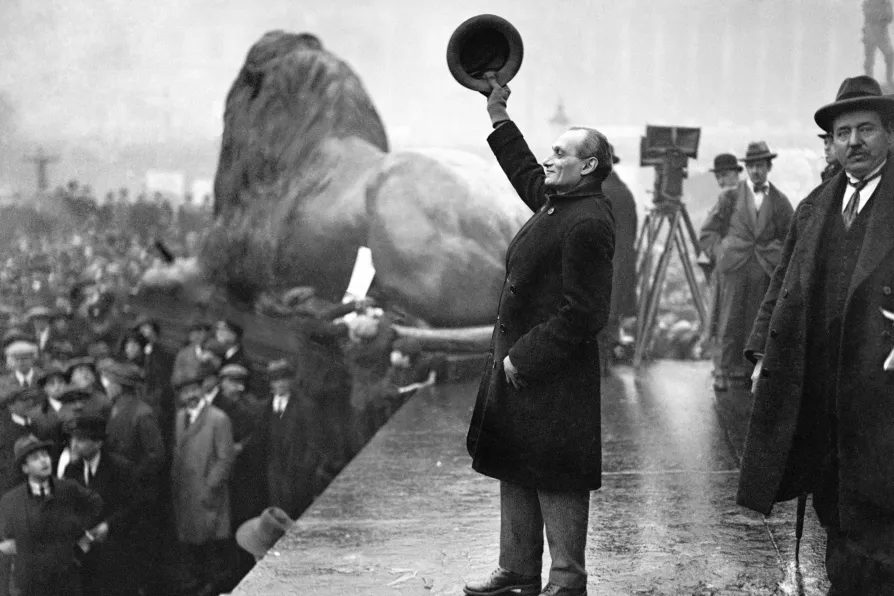 PRINCIPLED: Saklatvala addressing the Six Processions meeting on ‘Unemployment Sunday’ in Trafalgar Square, London, 1923

In the second part of her critique of Wes Streeting’s TenYear Plan for Health, HELEN MERCER looks at the central planks of this privatisation blueprint
A call from the World Peace Council to the peace movements of the world
DR HANA SAADA asks why a war crime against innocent children on this scale does not dominate the world’s coverage of the US-Israeli war on Iran
From the colonial oil plunder of 1909 to the current threat of a regional inferno: Western interference in Iran forms a chain of coups, puppets, and cynical geopolitics centered on oil, says MARC VANDEPITTE
NORMA AUSTIN HART reports from a conference on on the rights of women prisoners in the Scottish criminal justice system





“BY THE death of Saklatvala, the Indian people have lost their greatest and most sincere champion, the Communist Party, one of its most devoted and self sacrificing leaders, and his family a kindly, gentle, loving husband and father.”
These were the words of Harry Pollitt, general secretary of the Communist Party of Great Britain, in 1936 in a tribute to a close comrade. But who was the person concerned?
Shapurji Saklatvala, known to his comrades as Sak, was born in Bombay, now Mumbai, on March 28 1874. He was related to the extremely wealthy Tata family who owned India’s largest industrial and commercial company.
Suffering with malaria, Sak moved to Britain in 1905 to work in the Tata Manchester offices. While convalescing in Matlock, he met Sally Marsh, a local waitress, and two years later they married.
This partnership made him aware of the working-class movement and in addition to his growing awareness of the immense wealth of the Tata family, while the vast majority of Indians dwelt in poverty under imperial rule, led to him joining the Independent Labour Party (ILP) in 1909.
As a convinced socialist, he regarded the first world war as an imperialist war and campaigned against it. For Sak, the Bolshevik revolution was a turning point , and after the establishment of the Communist International, he campaigned within the ILP to affiliate to the young Communist Party.
When these efforts failed, he, along with others, left the ILP and joined the Communist Party. The decision was based on recognition of their policies which embraced both the working-class struggle and the fight against imperialism and colonialism.
In 1922, individual Communists could also be members of the Labour Party and Sak was chosen to run as Labour candidate in the Battersea North constituency. With supporters campaigning for him, singing “Vote ,vote, vote for Saklatvala, kick old Hogbin out the door. For Sakky is the man who will give us bread and jam, and we won’t be hungry any more,” he won the seat with over 50 per cent of the votes.
This great win says much not just about Sak personally, but also about the maturity of local people in a working-class area voting for an Asian person at a time of strong colonialist expressions in the country.
At the general election of 1923, again standing as a Labour candidate, he lost by just 146 votes and nothing daunted, stood in the following year’s general election, Sak won again and served until the end of the decade, this time as a Communist because the Labour Party had purged local branches, including Battersea North, of Communists.
In Parliament, he regularly raised the issue of Indian independence, which resulted in him being banned from travelling to his home country. He supported the Soviet Union and national liberation struggles and in particular called for Irish independence and supported Sinn Fein. He was a consistent fighter for the working class and on the eve of the General Strike, was imprisoned for two months for calling on soldiers not to shoot workers.
Sak’s outstanding work was described by Harry Pollitt some years later: “I remember in 1927, when he spoke at a meeting on a Sunday night in Edinburgh, took the night train to Crewe, motored to Ogmore in south Wales for a miners’ meeting in the morning, did a further meeting in Swansea at night and travelled all night, back to Battersea for a committee meeting on the Tuesday morning. That was how he worked.”
Sak lost his parliamentary seat in 1929, despite a respectable personal vote of 6,544. He continued to campaign throughout the country for the Communist Party, speaking constantly especially after Hitler’s rise to power, stressing the evil of fascism. In 1934 he visited the Soviet Union, travelling widely for nearly four months, reporting: “One can never fully realise the tremendous extent of human development made possible by the revolution.”
Despite having suffered ill health for years, he never let up speaking at meetings and events to the end. He died on January 16 1936 at the family home in London. At his funeral it was reported there were queues more than a mile long of people wishing to pay their respects to this outstanding Communist, internationalist and anti imperialist.
His son Beram composed his epitaph: “Nothing but death could end his courage and determination in the cause of humanity. Nothing but such determination could conquer death. His work lives on.”
Several biographies have been written, starting with Mike Squires’ pioneering 1990 Saklatvala: A Political Biography; his daughter Sehri Saklatvala’s beautifully written The Fifth Commandment, also from 1990; and Marc Wadsworth’s Comrade Sak which was published in 1998 and again in 2020.
Sak’s life will be commemorated on Friday February 20 at 12 noon at 177 Lavender Hill Battersea SW11, with the unveiling of a plaque by Wandsworth Council and Nubian Jak. Speakers will include his biographers Mike Squires and Marc Wadsworth, Russell Proffitt, who was the last Labour candidate for the old Battersea North seat, the current MP for Battersea Marsha de Cordova, mayor of Wandsworth Jeremy Ambache, Cllr Simon Hogg, leader of Wandsworth Council and longstanding Labour councillor Tony Belton. The event will be MCed by Jeanne Rathbone of the Battersea Society and Dr Jak Beulah of Nubian Jak Community Trust.
