ROB WARZYNIAK wades knee deep through a pile of ‘dead canaries’ of Trumpist policies which exacerbated the horrors of US capitalism domestically


 Latest editorial

Sarwar’s balancing act leaves Scottish Labour adrift
Current polling shows Scottish Labour faces a stark choice: break decisively with Westminster or continue its slide into irrelevance, warns VINCE MILLS
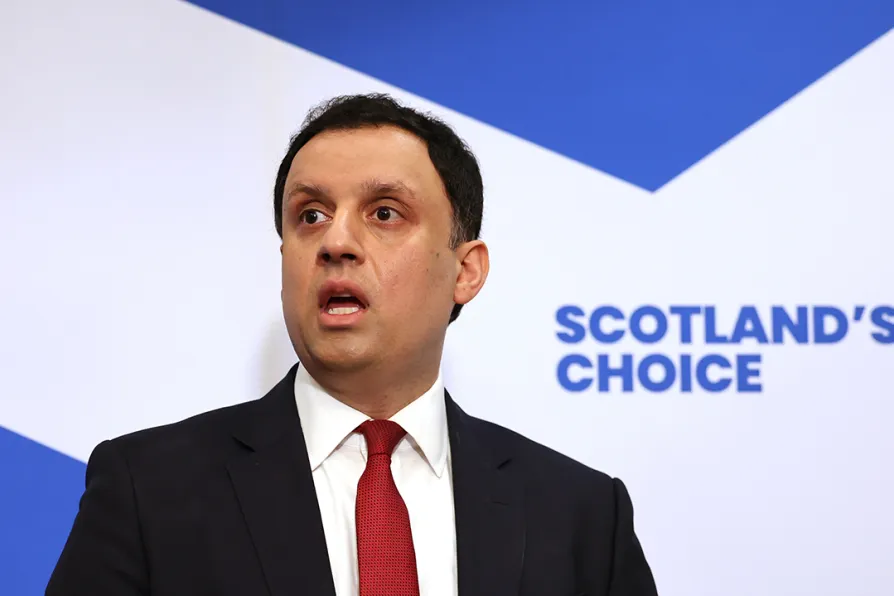 Scottish Labour leader Anas Sarwar speaking to the media during a press conference at Trades Hall, Glasgow, where he is calling on Sir Keir Starmer to resign as Prime Minister, February 9, 2026

Without evidence or Nato consultations Berlin’s answer to the Leipzig incident is a rupture of relations. SEVIM DAGDELEN examines why
FRANCISCO DOMINGUEZ introduces the background to a conference on defending Latin America’s sovereignty
The glacier collapse in Nepal is yet another warning that a warming planet is making Himalayan disasters more frequent and destructive – but the countries facing the greatest risks are often those least responsible, says LI YANG
Nick Blair is set to benefit from a hugely lucrative contract to ‘virtually’ train the British army for its next war. Like father, like son, writes SOLOMON HUGHES
Even when tragedy strikes, Western media cannot resist the opportunity to turn it into a sordid propaganda opportunity, as the Nepal-China border tragedy shows, writes CARLOS MARTINEZ
Trade unions should be at the heart of the anti-racist push for reparations for the historic legacy and continuing impact of slavery, writes ROGER McKENZIE





READERS of the Morning Star might well remember two years ago, the confusion around Anas Sarwar’s — and therefore the Scottish Labour Party’s — position on Gaza.
In October 2023 when the Labour Party general secretary sought to ban the very discussion of Israel’s assault in Gaza, Sarwar let it be known (quietly) that he did not support that view.
He went further and publicly argued, in contradiction to Keir Starmer, that there must be free flow of medicine, food, water and electricity into Gaza.
He went on to demand a ceasefire before Starmer would support it.
But none of this translated into his leading Scottish Labour Party supporters in the fight for Palestinian rights in the wider movement and in Scotland’s communities, even where support for Palestine was high.
Consequently, by default, people assumed that Scottish Labour’s support for the Palestinian cause was the same as that of the Westminster leadership’s — tepid.
There was similar muted criticism of Starmer’s other “errors” by Sarwar: when the great leader announced the means testing of winter fuel payments, Sarwar having initially supported Starmer’s position said in November 2024 that he would “find a Scottish solution and the solution we have suggested is to reinstate the winter fuel payment.”
In December 2024 when Labour said they would not compensate the Waspi women, Sarwar said of the Labour government’s decision: “I think they’re right in the apology, I think they’re right in recognising injustice, I think they’re wrong on the compensation.”
On other issues, though, the Scottish public would be right to assume there is little or no difference between Scottish and British Labour. Take Sarwar’s response to Starmer’s third great error — welfare cuts. Last March when Starmer was building up to announce restrictions to the personal independent payment (PIP) and cuts to incapacity benefits for people unable to work and receiving universal credit, Sarwar said that Starmer was taking the “right approach” and that “it’s clear that we have to get more people into work and we have to make sure that we have our public finances on a sustainable footing.”
In a vain attempt to win back Labour voters drifting to Reform, and undermine the SNP, he amplified this populist tone in his comments about the building of a new prison in Glasgow in November last year: “The SNP are ploughing ahead with their plans to spend over £1 billion on HMP Glasgow — the same as what it cost to construct the five-star Atlantis Hotel in Dubai, one of the most luxurious hotels in the world.”
Sarwar and his team seem to have believed that it was enough to criticise the abysmal record of the SNP from whatever perspective, right or left, and play both to progressive and conservative elements in Scottish Labour’s working-class support.
Polling, however, has punctured the credibility of that strategy badly. Scottish Labour’s ballooning support back in the Westminster election of July 2024, where Labour won 35.3 per cent of the vote, has been reduced by half. Although the election in May is a Scottish and not a British election, Ballot Box Scotland’s multi-poll average puts Reform UK narrowly ahead of Scottish Labour in both the Constituency section of the ballot, by 18.6 per cent to 16.8 per cent, and the Regional List section by 18.2 per cent to 17.4 per cent.
For the Scottish electorate, it would appear, criticism of the SNP is not enough, no matter how legitimate it is, and the SNP’s neoliberal politics has produced a litany of failure. They want an alternative that addresses their concerns and the alternative being offered British Labour is seen in Scotland, as it is in many places in Britain, as grossly inadequate.
Sarwar has recognised the “alternative” is personified by Keir Starmer and his government. He is absolutely correct, therefore, in demanding that Starmer go, because Starmer has been “found out” by the British people and they show it at every possible opportunity, especially at the ballot box.
The Mandelson affair, Starmer’s fourth great error, is the last straw and a useful excuse for Sarwar to attempt to differentiate Scottish Labour from British Labour, given the polls. What he has not recognised is that, in and of itself, it is not an answer to Scottish Labour’s unpopularity.
He does, however, have the opportunity now to produce a manifesto that would electrify the contest in May 2026 by seeking to address real working-class concerns: the cost-of-living crisis, health, housing and jobs. But that would have to be a radical manifesto, so he is very unlikely to take it, given his own addiction to market solutions.
Still, if he wants some ideas as to what that might include, he should look at the website of Scottish Labour’s Campaign for Socialism which has helpfully set out a series of excellent ideas. This is from its introduction to a Radical Manifesto:
“We will therefore campaign for an economy that addresses the people’s needs for an inclusive, high-quality system of lifelong education and training, a safe, warm home for all, fully funded, democratically accountable public services, and well-paid, secure jobs. Socialists and progressives in the Scottish labour movement, working together, can forge this new, radical Scotland.”
For more information visit www.campaignforsocialism.org.uk/radical-manifesto.
