With more people dying each year and many spending their final days in institutions, researchers argue that wider access to palliative care could offer a more humane and cost-effective alternative, write ROX MIDDLETON, LIAM SHAW and MIRIAM GAUNTLETT


 Latest editorial

From red bases to the red benches – remembering David Triesman and a vanished political generation
NICK WRIGHT recalls one man’s journey from student revolutionary to Labour grandee – part of a wider world of working-class militants and communist activists whose lives shaped a generation and who should not be forgotten
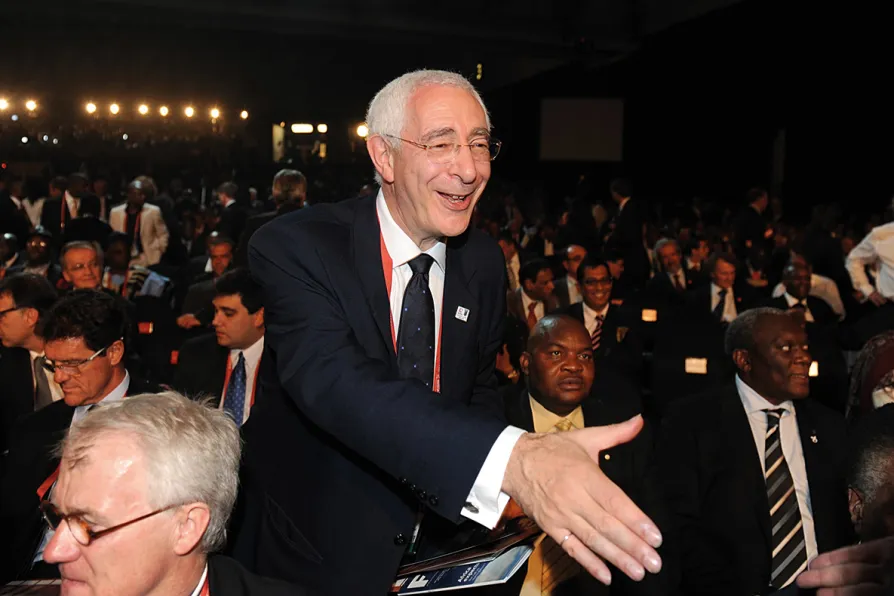 Chairman of the FA Lord Triesman during the 2010 Fifa World Cup Draw at the Cape Town International Convention Centre, Cape Town, South Africa

In the second part of her critique of Wes Streeting’s TenYear Plan for Health, HELEN MERCER looks at the central planks of this privatisation blueprint
A call from the World Peace Council to the peace movements of the world
DR HANA SAADA asks why a war crime against innocent children on this scale does not dominate the world’s coverage of the US-Israeli war on Iran
From the colonial oil plunder of 1909 to the current threat of a regional inferno: Western interference in Iran forms a chain of coups, puppets, and cynical geopolitics centered on oil, says MARC VANDEPITTE
NORMA AUSTIN HART reports from a conference on on the rights of women prisoners in the Scottish criminal justice system





THE OBITUARY columns of newspapers are a stimulus to memory and so, when I read that David Triesman had died, I thought back to the experiences we shared.
Lord Triesman, as he became, lived a life of fantasy, appearing in reality as well as his imagination, as variously student revolutionary, fledgling footballer, rising academic, trade union activist, Communist Party member, trade union leader, New Labour minister and chairman of the Football Association.
As student activists we met in the confused late 1960s. He had been reinstated after suspension following the 1968 Essex University sit-in protesting at a lecture by a Porton Down scientist and I was was less lucky having been excluded from Hornsey College of Art by court order as my presence was deemed “prejudicial to the academic good order of the institution.”
The setting was the formation, at the LSE, of a short-lived Revolutionary Socialist Student Federation. I pitched up there after an invitation was received by the Hornsey occupation.
Having been elected by acclamation to the central committee of this body — itself largely a creation of the BBC who had invited to London various Continental super-revolutionaries — I found myself in Never-Never Land.
Triesman was a protagonist in the various discussions about the most appropriate strategy for the student movement — lodging for a while with the broad-front Radical Students Alliance of communist, socialist and liberal students.
This body flowed from a 1965 Communist Party student committee strategy paper prepared by the party’s student organiser Fergus Nicholson. Its theme was that most students, in an age of growing mass higher education, could be won to an alliance with the working class, both as students and as future functionaries in the capitalist economy.
Its first aim was replacing the Foreign Office-guided NUS leadership that, it turned out, was tied to US intelligence operations, with one that would more militantly campaign on students’ interests and forge links with anti-imperialist student organisations globally.
Triesman swiftly moved on from this rather successful strategy to embrace the more phantasmagorical idea of “red bases.” In the Hornsey iteration of this creation we were supposed to remain in permanent occupation until a fusion of workers and student struggles (subtext “with revolutionary students as a detonator”) would herald a new society.
The chief protagonist of this idea at Hornsey later became a New Labour Foreign Office minister responsible for supplying British arms to the reactionary Colombian regime!
To most of us it was clear that this idea had a very limited shelf life but Triesman, as its tribune, confidently argued that “the RSSF is bedded on the ground rock of the realisation of the social complicity of the university, its wide manipulative functions and its hierarchical purposes.”
And: “At each stage in the development sketched, from institutional participation to anti-institutional action, from a relatively constitutional movement to highly radical movement, from internal, bourgeois action to widely committing radical social action, new and more vigorous demands have been made. Those formulated in the RSSF manifesto will not be the last, for there are no ultimate demands, but they do represent an acknowledgement of the previous history of the movement and they do move in the direction shown by its dynamic. The major innovation in those demands is the imperative to form red bases.”
Triesman swiftly found that the counter-movement — from radical social action to institutional participation — put him more securely on a path to full integration into the political class, with leading positions in the trade union movement and Labour in government.
I think of him as draped in, variously, ermine robes as Baron Triesman of Tottenham and the colours of Spurs, to which he owed his one unchanging fidelity.
Set aside my criticisms of David Triesman’s political choices and his later actions as a government minister, it was easy to maintain a friendly, if occasional, relationship as one does with those we share our formative years. There is a theme about these encounters which took place most usually at Marine Ices in Camden.
It was his entry into the Communist Party which put the most strain on our connection.
At the point that the Inner London Education Authority was proving resistant to employing me as a primary art teacher, I was working with children painting murals on an adventure playground opposite Paddington Green. I took my lunch break in an excellent Italian cafe/gelataria, now vanished, when he came bounding over the Edgware Road to tell me he had joined the Communist Party.
Containing my surprise (and misgivings) we celebrated with an iced milkshake.
He found himself in my Maida Vale party branch with unfortunate effects on the cohesion of the local party organisation which was already beginning to experience the sharp differences emerging in the communist movement in which comrade Triesman was a characteristically active participant.
The traumas of these years are well documented. Triesman passed briefly through the our local Communist Party and never again encountered this heroic combination of class fighters which I found concentrated in this working-class inner-city community.
These lives of these comrades, all now deceased, never made to the newspapers but they are worth remembering.
The first one I met was John Recordon was the convener at the Palmer Aero factory in Paddington which lay alongside my adventure playground in Church Street. A engineering union veteran gentle and quiet man he was also a veteran of the Spanish war.
He introduced me to Stan Bonham — the central figure in the Church Street tenants’ associations — known as “No-Hat Stan” because, in an earlier time when working men rarely went out without a cap, he did. Former secretary of the London plumbers’ union he was a key figure in every local initiative and social enterprise.
Joe Parker was the well-regarded secretary of the sheet-metal workers union in London. Tough, combative and unfailingly militant, he was an enthusiastic partisan for Soviet socialism, in the fallout from the CPGB’s convulsions he went on to chair the New Communist Party.
A key figure in local networks was a modest and self-effacing New Zealander. Nina Wolfendon had been a British Council librarian in Shanghai during the Chinese revolution and sometime Comintern courier. She later worked at the West African Students Hostel and her advice was held in high regard by all manner of west African leaders.
One day, as I was taking tea with her and husband Tom Wolfendon, a huge limousine drew up outside their basement flat, a man got out with an enormous bunch of flowers and box of chocolates. He was a visiting west African minister come to pay his respects and reminisce about politics.
Tom Wolfendon had been an electrician on interwar royal naval submarines and a shop steward at Battersea power station.
These people are but a small part of a worldwide movement. The bigger collective experiences and talents of this remarkable group of people have, of course, escaped the notice of the media. Each one spent decades in the service of the working class and each made great sacrifices for the goal of working-class power.
They too deserve to be remembered.
