ROB WARZYNIAK wades knee deep through a pile of ‘dead canaries’ of Trumpist policies which exacerbated the horrors of US capitalism domestically


 Latest editorial

Why we in the Workers Party are not running in Gorton and Denton
This by-election could plausibly see both Reform and Labour defeated — but splitting the left insurgent vote would put that at risk, argues CHRIS WILLIAMSON

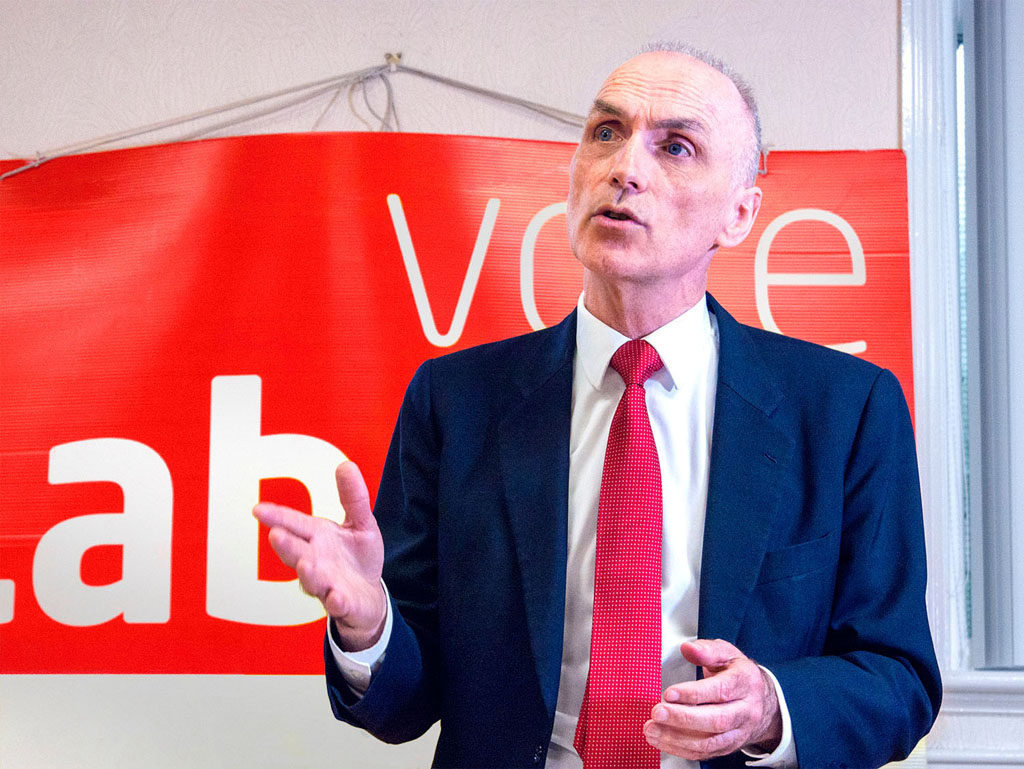
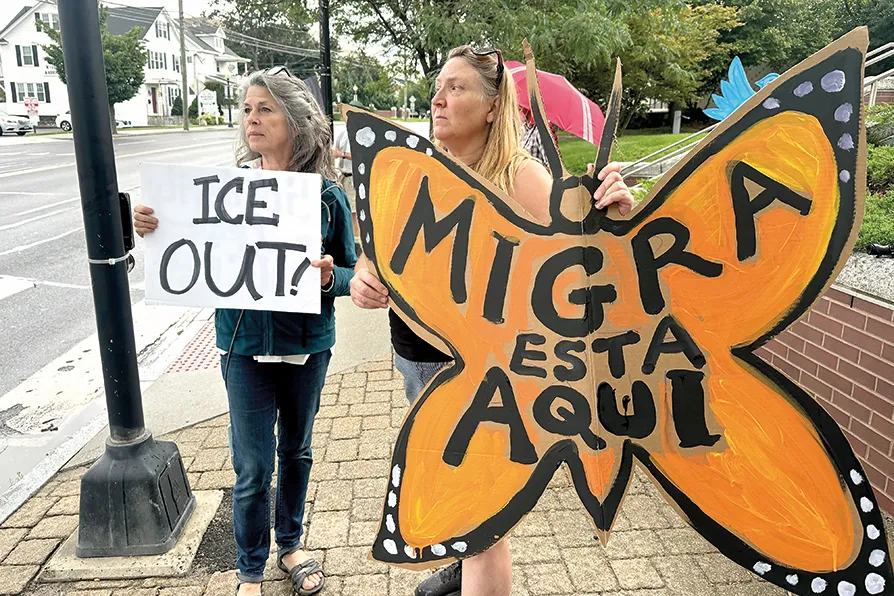
Without evidence or Nato consultations Berlin’s answer to the Leipzig incident is a rupture of relations. SEVIM DAGDELEN examines why
FRANCISCO DOMINGUEZ introduces the background to a conference on defending Latin America’s sovereignty
The glacier collapse in Nepal is yet another warning that a warming planet is making Himalayan disasters more frequent and destructive – but the countries facing the greatest risks are often those least responsible, says LI YANG
Nick Blair is set to benefit from a hugely lucrative contract to ‘virtually’ train the British army for its next war. Like father, like son, writes SOLOMON HUGHES
Even when tragedy strikes, Western media cannot resist the opportunity to turn it into a sordid propaganda opportunity, as the Nepal-China border tragedy shows, writes CARLOS MARTINEZ
Trade unions should be at the heart of the anti-racist push for reparations for the historic legacy and continuing impact of slavery, writes ROGER McKENZIE





AFTER several days of intensive deliberations, the Workers Party of Britain (WPB) announced on the evening of Sunday February 1 that it would withdraw from the Denton and Gorton by-election. Forty-eight hours later, Your Party followed suit.
The WPB’s political committee felt that this was in the best interests of the working class because there is a real chance that Labour and Reform can be beaten in this seat. But that prospect would be diminished without an electoral agreement to avoid splitting the vote.
This wasn’t an easy option, because the WPB has a solid level of support in that constituency. We secured over 10 per cent of the vote in the general election, while the Green Party achieved 13 per cent. We also defeated Labour’s deputy leader on Manchester City Council in May 2024, when Shahbaz Sarwar took the Longsight ward in the constituency for the Workers Party.
But a lot of political water has flowed under the bridge since then. Labour’s approval rating has collapsed, Sir Keir Starmer’s popularity is in the toilet, and the Green Party has a new leader. This has seen its policy pronouncements moving leftwards to embrace a more socialist orientation.
So, this by-election could mark the beginning of the end for the Labour Party.
Sir Keir Starmer’s leadership has shattered any illusions that the party is anything other than a puppet for corporate capitalism, a tool of the war machine, and an apologist for genocide.
That means there are even more disgruntled Labour voters in Gorton and Denton today than there were in the 2024 general election, when the turnout dropped by more than 10 per cent compared to 2019. Consequently, there are literally thousands of erstwhile Labour supporters who could be persuaded to vote for a different party this time.
I think the WPB could have significantly improved on the vote we achieved in the general election, but the Green Party is also likely to substantially increase its vote share as well.
If both parties had entered the fray, there was a very real danger that we would have cancelled each other out and made it easier for Labour to hold on, or Reform to win.
That is why the WPB made this principled decision. We had four excellent prospective candidates to choose from, who were ready to throw themselves headlong into a potentially bruising contest, which would have raised the WPB’s profile well beyond Denton and Gorton.
But we put the interests of the working class and the wider national interest ahead of the party’s interest.
On the national stage too, it’s essential for the left to get its act together before the next general election.
We have to collaborate to prevent the prospect of a proto-fascist party coming to power, or an increasingly authoritarian Labour government remaining in office.
We do of course have a number of programmatic and ideological differences with the Green Party on some aspects of foreign policy and identity politics.
For example, the WPB backs a de-zionised unitary state with equal rights for all its citizens, and rejects the so-called two-state solution, because that wouldn’t resolve the injustice to which the Palestinians have been subjected since 1948.
By contrast, although the Green Party condemns the Israeli government as an apartheid state, they simultaneously strongly support the two-state solution.
Furthermore, the WPB explicitly repudiates Britain’s membership of Nato, wants the UK to leave Nato, and opposes Nato’s proxy war against Russia that is being fought in Ukraine. Whereas the Green Party has a more ambiguous policy on Nato membership, and backs the proxy war in Ukraine.
On identity politics, let me be clear, the WPB is absolutely committed to upholding human rights for all citizens, including the trans community. The only difference of opinion is that we say the rights of one group should not diminish the rights of another.
But these arguments are like debating how many angels can dance on the head of a pin, and pose no threat to the neoliberal status quo nor to the war machine.
Ever since the Corbyn project collapsed nearly seven years ago, I have been arguing that for the left to succeed, we need to agree where we agree and have fraternal disagreements where we don’t.
And we broadly agree on the most fundamental issues affecting the country like the need to reverse the damage done by the obsession of successive governments with neoliberalism and imperialism.
I very much doubt there would be any opposition from the Green Party or Your Party to bringing about an irreversible shift in the balance of wealth and power for working people and their families. So, we must not allow ourselves to be divided over identity politics.
The left started substituting identity politics for class politics in the 1970s. This phenomenon accelerated during the Thatcher era. It enabled us to make important gains on women’s rights, gay rights and in tackling racism.
But while progress was being made on these issues, economic inequality was going in the opposite direction. Around 15 million Britons are now living in poverty, more than six million people are in precarious employment, social security has been decimated, and homelessness has gone through the roof.
The collective left took its eye off the ball and therefore failed in its historic mission to defend the working class. But we now have a chance to put that right by working together to build a good society where poverty is eliminated and no-one is left behind.
But that means discarding petty sectarianism in favour of thrashing out sensible electoral agreements across the country.
There are some constituencies where the WPB is best placed to prevail, others where Your Party would do well and others, like Gorton and Denton, where the Green Party should take precedence.
The fate of the working class is dependent on the left rising to the challenge. The big question is whether the left is capable of doing so. I sincerely hope it is.
Chris Williamson is a deputy leader of the Workers Party. He was formerly MP for Derby North from 2010-15 and 2017-19.

Similar stories
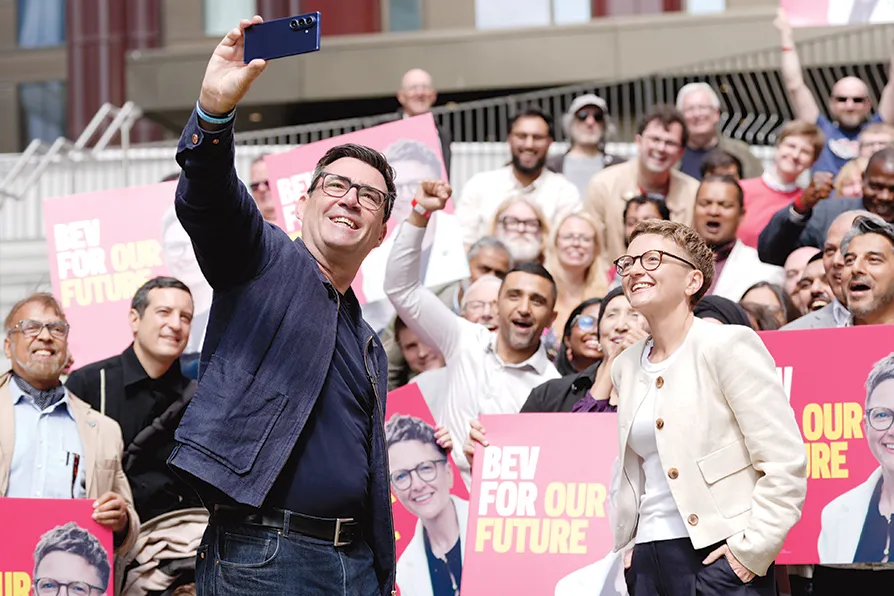
Preferable to Starmer he may be, but there is scant sign of a sharp political break in Burnham’s policies so far — while left challenges aren’t making much of a running either, finds ANDREW MURRAY. How can socialism be put back on the map?
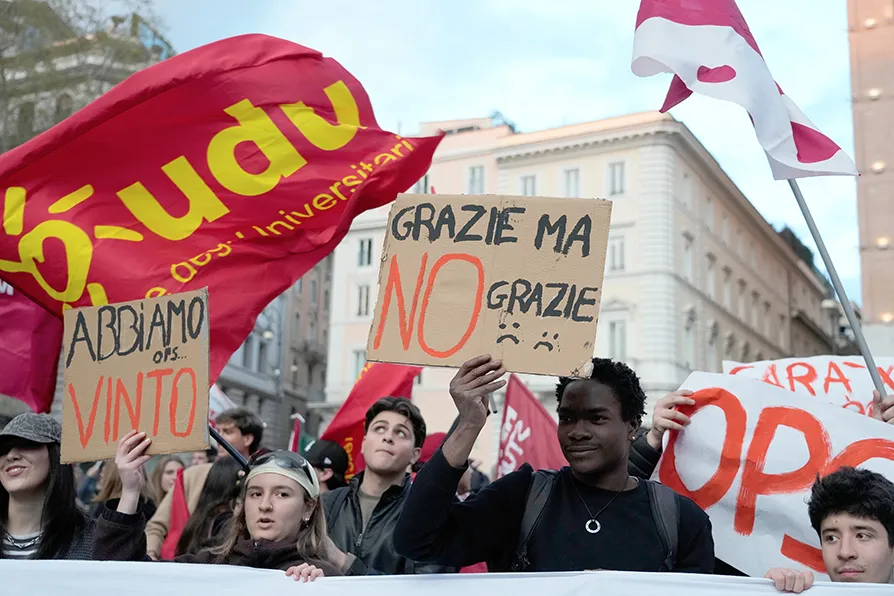
Italians reject controversial judiciary reforms in a referendum that boosts the left, reports NICK WRIGHT
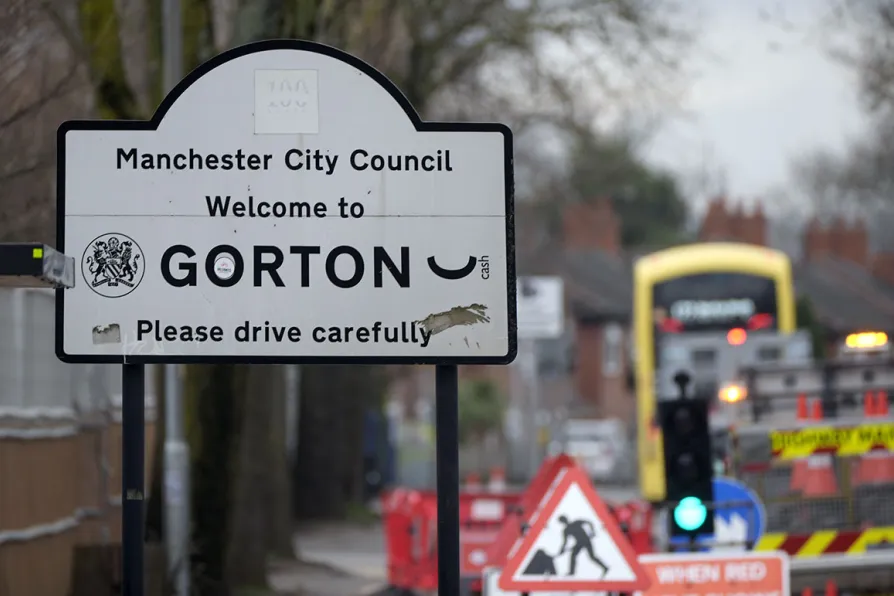
By-election poll puts Starmer's future on a knife-edge