Committee for the Defence of the Iranian People’s Rights general secretary GAWAIN LITTLE discusses the impact of the US-Israeli war on the Iranian people and economy


 Latest editorial

Listening for the echoes
MATT KERR takes a winter journey through poetry, labour and memory, from Glasgow to Newcastle, arguing that our radical past isn’t something to revere from a distance, but a tool still meant to be used
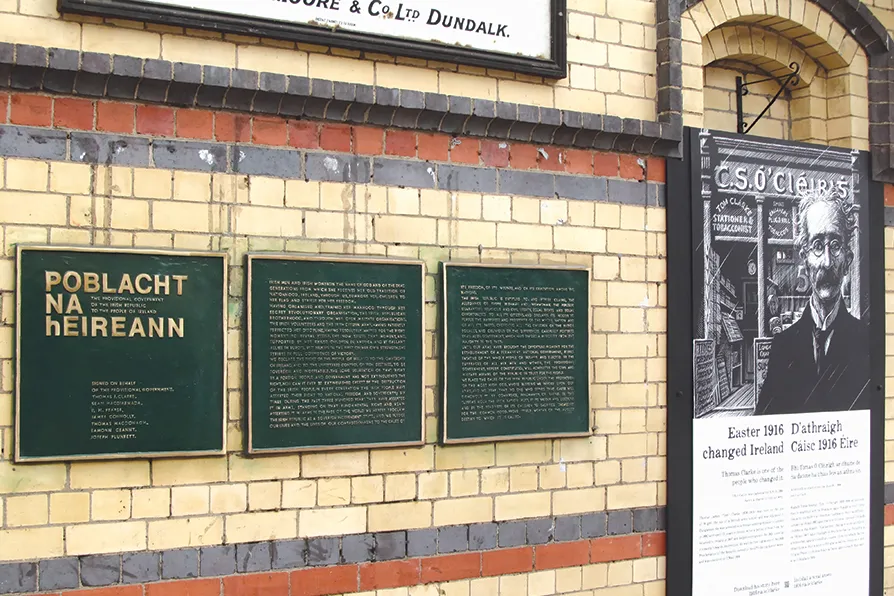 PERTINENT ECHOES: Memorials to the Easter Rising patriot Tom Clarke at Clarke station in Dundalk / Pic: Eric Jones/CC
Capitalism has extracted itself from crisis before, argues PRABHAT PATNAIK – but through methods no longer available. So it is turning to authoritarianism, militarism and neocolonialism
The five young men killed in the A66 crash were responsible for a devastating tragedy — but the crash should force us to ask difficult questions about wider society, argues RENATA MEDEIROS MIRRA
Britain funds the policing of black culture 16 times better than the culture itself. The Diamond Jubilee is the moment to end that, argues CLAUDIA WEBBE
Despite Andy Burnham’s declaration defending the continued partition of the island, all major international and internal trends are converging to make Irish reunification inevitable
Humans are part of the ‘animal kingdom’ – and of nature in general – but also distinct from it and labour (work) is part of what makes us unique, declared Engels. His insights 150 years ago into how our species came to be and how we differ from the rest of nature, are as important today as they were then, says the MARX MEMORIAL LIBRARY





THERE was every intention of sticking my nose in a book for the trip, but the standard seat was port out and starboard home, and the sea soon got my attention. Winter is usually welcomed in Scotland with the annual footage of the train being hit by a wave outside Saltcoats, but on the east coast, they have the advantage of height.
Watching the white horses of the North Sea, I’m not sure when the line was crossed, but in no time I was in the great city of Newcastle. It was the morning after the night before. I had given up my rights to alcohol for the night to deliver boxes of books to the Mono, a venue hiding in a corner under some disused railway arches in Glasgow.
Not just any books, mind, but what I’m reliably informed is the first poetry anthology published by the Morning Star/Daily Worker in our 95-year history. Sat up the back with some rhubarb cream soda — no, I didn’t know that was a thing either — I wondered what was about to go on.
Words on work, words on Gaza, words on life, and words on loss. A hand on my shoulder, and I knew that that something in my eye had been seen.
In the spaces in between, music from the Anoraq trio, and memories. I pointed out to a friend where I had sat the first time I came to this place, at the end of the last century. They did their best to look interested.
Then the echoes. The walls of this place once shook with locomotives coming from St Enoch station. Back in 1922, it’s reckoned 100,000 people packed the square in front of that station to see off the newly elected “Red Clydeside” MPs. The station was demolished in 1977, to be replaced by a car park and, in the most ’80s move imaginable, by a huge glass pyramid of shops framed in pink and turquoise.
The little subway building must have been inundated by humanity that day as the Red Flag rang out around the square. Today it sells coffee, if you can get to it through the fun fairs and Christmas markets.
Around the corner on Osborne Street, the faintest echoes of that day can be heard bouncing off the soulless greenhouse-cum-mausoleum to private debt on the picket lines of young Unite Hospitality workers with more guts than most. When we gather together — rightly — to remember past struggles, and lionise those who gave everything to the cause of a decent life for all, there can be a tendency to believe today’s struggles to be separate, even by those in the midst of it.
It’s a pernicious alienation that we never seem to address. Robbed of our history as working people, when we do find it, we too often place it on a plinth. I’ve done it myself, but that’s not where it belongs. All the brilliance, flaws, cowardice and courage were then as they are today, and the opponents have changed little either.
Wandering around Newcastle, a poem I heard in Mono still rings in my ears. Finola Scott’s poem on Cardowan Colliery, no less. The pit closed over 40 years ago, but she can still “hear canaries cheep for breath, bogies rattle rails, bent men cough for sunlight at end of days.”
My shed is full of tools that had known that gassy pit, that had heard the coughs, the rattle and screech of the rails.
After freezing myself on the river, I meander back up the hill to find the Tyneside Irish Centre, where I’m down to give the Immortal Memory at the Tyneside Morning Star Burns Supper.
Some women were on their way out for a smoke and I asked if I was in the right place.
“That’s next month, son.”
Panic set in.
“No, it’s definitely this month. Burns Night is January.”
I pointed over her shoulder to a poster on the wall, before realising it was for a different Burns supper.
“Are you Irish?”
“A bit.”
“Which bit?” they giggled.
“Good question.”
As I gave that politician’s answer, I spotted the proclamation of the republic on the wall.
“That bit,” I pointed.
It’s been alleged that I’m descended from Tom Clarke, the first to sign it. They named a railway station after him, apparently. There’s a roar from next door. Someone’s scored. I walk in and ask about the Burns Night. “Upstairs” the barman shouts over the din.
What followed wasn’t the traditional Burns Supper, and all the better for it. The piper, the haggis (with vegan option), might have been expected, but Tim Dalling’s brilliantly original take on the bard with a bit of Ivor Cutler thrown in was a joy.
Fresh-ish from the evening of poetry the night before, I decided to talk less about Burns’s life story and a little more about what poetry does for the memory itself. Whether his work is up your street or not, there is something truly remarkable about an 18th century Ayrshire tenant farmer ending up on a stamp of the Soviet Union, exalted by poets the world over, not least Maya Angelou; his voice echoing across the earth even now.
In his short life, unlike many of his male contemporaries, he managed to find time to speak up for the rights of women, but managed all the same hypocrisies, major and minor, which can riddle us all — a rebel and an exciseman, a lover of freedom who nearly became a bookkeeper on a sugar plantation.
Patted on the head by the Edinburgh establishment as “Rabbie,” he managed that rare trick of playing along to pay the bills without ever losing himself. His life was lived in the early days of the industrial revolution, where the middle classes who were to see the greatest benefit had already developed enough nostalgia and guilt to want to hear about the rural way of life which was vanishing before their bank accounts.
These days he’s claimed by nationalists, unionists, and even Tories, but that he manages yet to make it into their consciousness without selling the jerseys is not just down to his undoubted abilities with a pen. He knew who he was, in all its messy glory, and he clearly had confidence in spades.
There are statues to him around the world, usually atop a lump of granite gazing wistfully off into the distance as those romantic types are supposed to. A false idol.
He is remembered not just because he could turn a decent rhyme, but because he looked the world in the eye even when there was something in his. He might never have seen a movie, or been on a train, but the struggles of working people for bread, roses and above all, dignity, would not be unfamiliar.
Heads once bowed to “riband, star, an’ a’ that” — inferiority baked in with wealth, dress and custom.
Those heads once bowed from weariness and deference, now sink in exhaustion and the distraction — glowing screens lighting faces up a steady drip, drip of inferiority.
A blaze of pixels telling folk “it could be you” is leavened only with “why isn’t it?” whispered out of earphones.
Put the phone away for a minute and get lost.
Even in the most silent of spots in city, town or countryside there are echoes; the brick that once shoogled with a train carrying Wheatley and Maxton, or carrying thousands off on their holidays; the tree planted by someone in honour of who knows who — or even in my grandpa’s hammer.
I can hear the ring of hammer on anvil every time I see it, but it’s not to be worshipped or placed on a pedestal, it’s to be put to work.
That’s the point, isn’t it?
