
PETER MASON applauds the revival, 39 years later with the same team and cast, of Manfred Karge’s version of Brecht’s 100-year-old play, Mann Ist Mann

Why Mao’s peasant revolution differed from its predecessors
BEN CHACKO welcomes a masterful analysis that puts class struggle back at the heart of our understanding of China’s revolution

 DELIVERING FOR AGRICULTURAL WORKERS: A man reads the Land Reform Law of PRC in 1950 [Pic: Public Domain]

MAYER WAKEFIELD applauds a fearless attempt to bring to the stage the 1984 toxic gas disaster in Bhopal, India
ALEX HALL applauds the account of a dogged, traumatic and punishing campaign for justice that has lasted from 1998 to the present day
NICK WRIGHT laments the political bias of an epic attempt to tell the history of the liberation of France from the Nazis, that excludes both the decisive contribution of the Soviet Red Army, and of the French communist party itself
JOE GILL traces the ideology and method of contemporary imperialism back to the greed, hubris and violence of the late 15th century Portuguese





Storming the Heavens: Peasants and Revolution in China 1925-1949 Viewed Through a Marxist Lens
Jenny Clegg
Manifesto Press, £35
China’s revolution is arguably the most enduringly significant of the great 20th-century revolutions.
Not simply because the Russian Revolution, whose impact on socialist thinking across the West is greater, ended in counterrevolution from 1989-91 — but because the Chinese people “standing up,” to use Mao Zedong’s phrase, set the country on a path which is today shifting the global balance of power, and bringing an end to almost five centuries in which Europe and its settler-colonial offshoots have come to dominate the world.
China’s revolution was led by a Communist Party. Yet it was not a proletarian revolution as envisaged by Marx but one in which peasants not only participated (as they had done in Russia) but were the main revolutionary force.
This upended most traditional Marxist assessments of the peasantry: that peasants “cannot represent themselves [but] must be represented” (Marx), that they tended to be vacillating allies of the urban workers at best, and indeed were often a bastion of economic and social conservatism. And this is significant in ways an internationalist left needs to understand because the current transformation of the world seems, again, to have more to do with a Third World that’s “standing up” than with workers’ revolution in the capitalist core.
Jenny Clegg’s masterful analysis helps us to do so. Storming the Heavens is a work of meticulous scholarship that puts class struggle back at the heart of our understanding of China’s revolution. A necessary move, since not all historians agree on this — some seeing it as a primarily nationalist phenomenon directed against Western imperialist encroachment and above all Japanese invasion.
Clegg demonstrates Mao’s careful assessment of class contradictions in the countryside from the 1920s on, and the way, over time, that the Communist Party of China (CPC’s) handling of them changed.
This helps explain why the CPC was able to succeed where previous peasant-dominated uprisings, such as the 19th-century Taiping Revolt, did not: it identified feudal landlords as the key obstacle to peasant liberation and worked to build a sustainable alliance of other social forces against them.
This was a lengthy trial-and-error process. Sometimes the party adopted “leftist” positions pushing absolute egalitarianism and the confiscation of better-off peasants’ land: but this “poor peasant line” could alienate the sizeable social layer of “middle peasants” who could then be drawn into reactionary alliances with rich peasants and landlords.
Clegg considers debates within the party, such as between Mao and Liu Shaoqi, in detail, and also studies of land reform in specific places, such as David and Isabel Crook’s Ten Mile Inn and William Hinton’s Fanshen, revealing Communist Party policy as both pragmatic (continuously learning from experiences) and strategic, proceeding in phases toward egalitarian land reform but not at a pace that fragmented peasant unity against the landlords.
The book tells the history of particular developments in China, and makes no claim to impart lessons for British socialists today: given the utterly different social and economic conditions, that might seem ambitious (the slogan “to everyone land, a house and a horse” might not address a modern British worker’s most pressing needs).
The left here, though, has repeatedly failed to build a winning alliance that unites a majority who are all working class, but within which there are significant gradations of income and assets, against an elite enriched by its control of capital. The Chinese Communist approach of testing policies that cement unity within a class despite differences is certainly worth emulating, though the policies concerned could hardly be the same.
Clegg’s study investigates subjects that have vexed Marxists for decades — the differences between Chinese and European feudalism; whether Western imperialism put China on a path of capitalist development; whether Mao’s “mass line” politics genuinely empowered the peasantry.
At each stage she weighs the contributions of previous scholars, introducing the reader to a many-sided, long-running debate on the nature of China’s revolution and the character of its “new democracy”, built on an alliance of different social classes. China’s story emerges on its own terms, where many Western socialists have tried to interpret it in light of their attitudes to Russia’s. People will still debate, for example, whether Stalin or Trotsky was right about Chinese communist policy in the 1920s: Clegg establishes that — understandably — neither had as strong a grasp on Chinese realities as Mao.
Mao himself emerges from the book as a brilliant strategist and Marxist, not because Clegg particularly praises him but because his rigorous class analysis and tactical flexibility is shown in his responses to dilemmas thrown up over a 25-year revolutionary process.
A superb contribution to China studies that deepens our understanding of a revolution that is still reshaping the world.

Similar stories

Nature as well as society works dialectically, asserts the Marx Memorial Library and Workers’ School
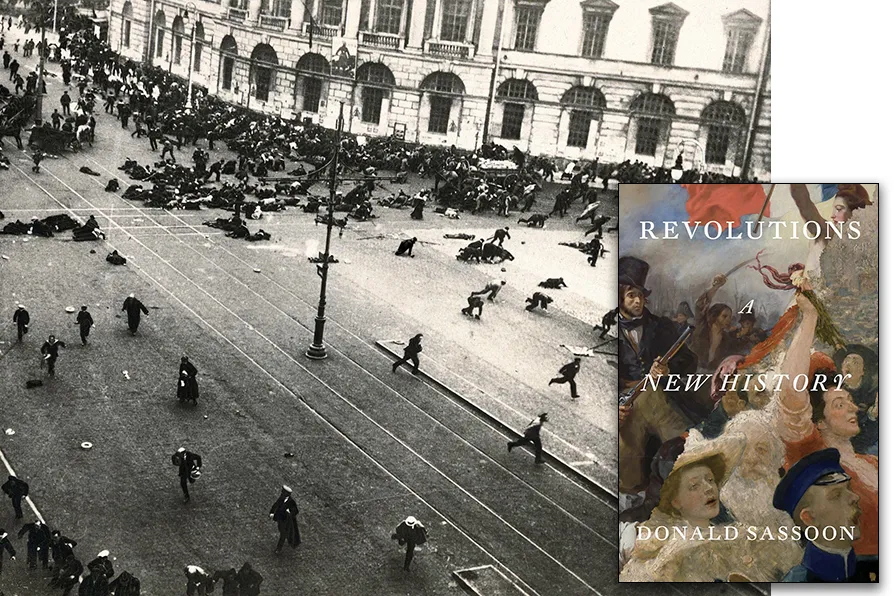
HENRY BELL follows the lineage of revolutions, from the English to the Chinese, and asks where revolutionary politics exists today
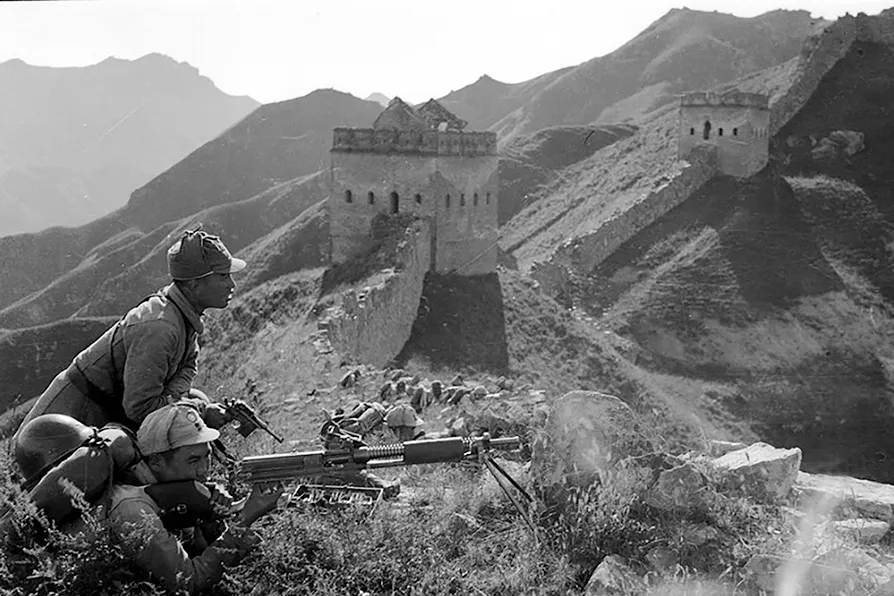
In Part 4 of her look at the Chinese revolution JENNY CLEGG addresses the relationship between the Peasant Movement and the National Movement

STEPHEN BELL reports from a delegation that traced the steps of China’s socialist revolution from its first modest meetings to the Red Army’s epic 9,000km battle to create the modern nation that today defies every capitalist assumption