Growing instability in the US economy and financial markets could have serious consequences worldwide because of the central role of the US dollar and financial system, argues MICHAEL BURKE


 Latest editorial

Marketisation of universities has led to an education crisis
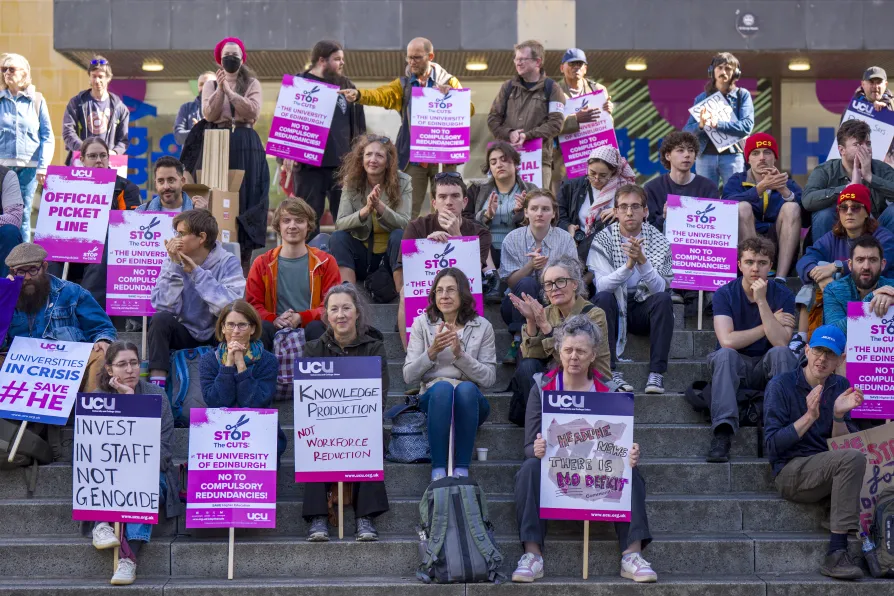
Higher education staff are now regarded as ‘throwaway’ and are increasingly overworked and demoralised. RUTH HUNT reports
 UCU and NUS activists take part in a demonstration over access and quality of higher education

Despite Andy Burnham’s declaration defending the continued partition of the island, all major international and internal trends are converging to make Irish reunification inevitable
The left needs a bold energy vision – because if it fails to provide one, others will shape the future in their own interests, argues ALAN SIMPSON
From Margate to Deal, mining memories are being kept alive. National co-ordinator for General Strike 100, HENRY FOWLER continued his nationwide tour of partner organisations in the Garden of England
Humans are part of the ‘animal kingdom’ – and of nature in general – but also distinct from it and labour (work) is part of what makes us unique, declared Engels. His insights 150 years ago into how our species came to be and how we differ from the rest of nature, are as important today as they were then, says the MARX MEMORIAL LIBRARY
Boxes of books, family photos and heirlooms, labour movement anniversaries, along with nostalgic memories of glorious childhood days on the Ayrshire coast still leave room for a wistful MATT KERR to hope for a better future





SINCE 2010, higher education has been subjected to increased marketisation.
The University and College Union (UCU) has highlighted how some highly qualified academics who would normally have a job “for life” might find their remuneration has been changed to fixed-term, or to payment on an hourly basis with no protection to make plans for the future.
So how do these changes to contract affect staff and in turn impact on students?

Similar stories

Years of underfunding are eroding Scotland’s local services and deepening inequality in communities, says VINCE MILLS

Cuts are sweeping campuses as cash-strapped universities slash staff and politicians fail to act on a growing funding emergency. VINCE MILLS reports

JACK DAVIDSON explains the motivation behind the UCU strike action at the University of Sheffield