


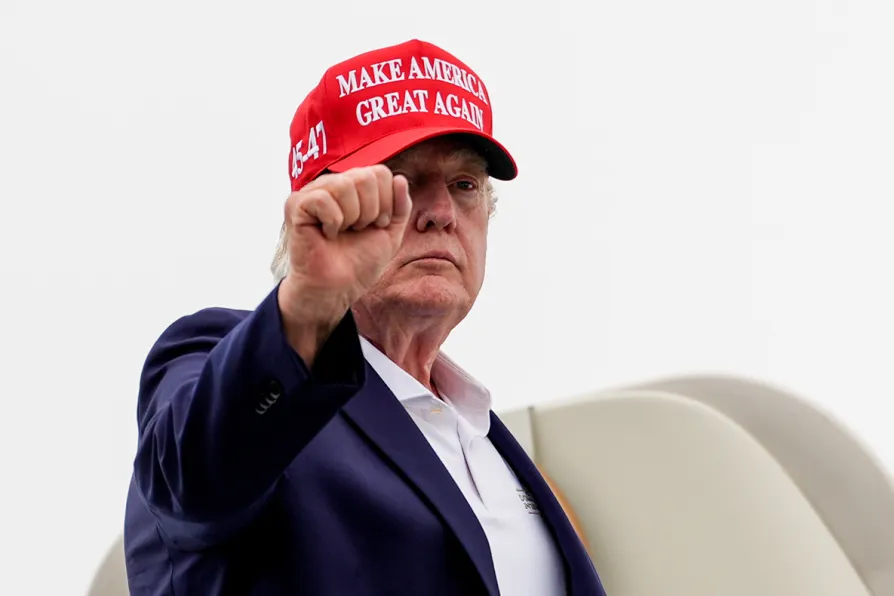
 US President Donald Trump gestures while boarding Air Force One at Morristown Airport, August 16, 2026
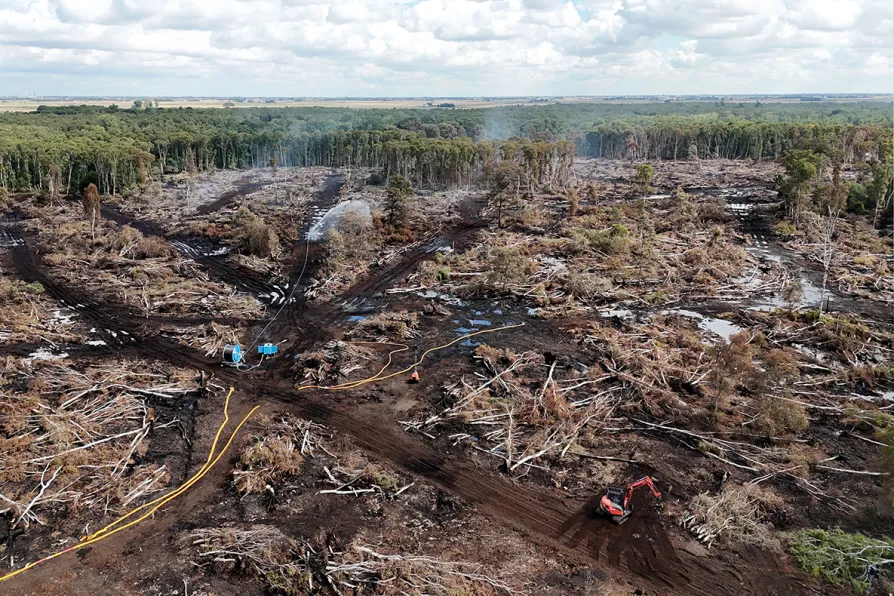





YURI GAGARIN, the first man in space, famously said that looking at the world from the cosmos you realise it is “too small for conflict and just big enough for co-operation.”
He spoke at the height of the cold war of a world under the shadow of nuclear war. That threat is still with us and growing.
But Met Office warnings that we face the strongest El Nino weather phenomenon on record, and that 2027 may well be the hottest year on record in consequence, underline the urgency of international co-operation on the other great menace of our age, the climate emergency.
El Nino — a weakening or reversing of the usual direction of trade winds over the Pacific, which slows the upswell of colder, deeper water to replace warm surface waters in the ocean that covers half the planet, with knock-on effects on worldwide weather — is a periodic event and scientists are not sure climate change has affected it.
Its effects will be more severe, though, against the backdrop of a world that is already warmer. We have seen the impact of heatwaves — including tens of thousands of excess deaths, and wildfires that have devastated large areas and come closer to threatening major population centres than ever before — across Europe through the long hot summer of 2026.
That’s where we are before this summer’s unusually high temperatures in the Pacific feed through into global weather patterns.
It will be most severe in south-east Asia, Australasia and South America, but its effects will be felt everywhere and in any case extreme weather that hits food production in large parts of the world will rock global commodity markets, prompt food shortages and fuel inflation.
At the very juncture we need maximum international co-operation — to reduce emissions, pooling solutions and sharing technologies; to assist the worst affected countries; to safeguard, so far as we can, the food supply and build up strategic reserves — all co-operation is falling apart.
And the driver of this destructive tendency is our closest ally, the United States.
Donald Trump has pulled the US out of the Paris agreement and the UN Framework Convention on Climate Change. Washington wrecked an attempt to regulate emissions in the shipping industry last year. Member states of Nato, which the US dominates, have boycotted all meetings of the Arctic Council since the Russian invasion of Ukraine, collapsing the only mechanism to stop a resource-grab free-for-all in a fragile ecosystem whose disruption could have severe consequences.
And the United States is exporting its pathologies, not just through its wars but by using its economic clout to bully other countries. In Britain Trump demands North Sea drilling and approval of water-intensive data centres to power US-built AI. In the Americas its cancelled funding has felled ecological and conservation projects. The IMF and World Bank are redirecting funds away from clean energy or climate adaptation programmes.
The wreckage of international co-operation does not just apply to the climate — it is seen in the US attitude to all international bodies, from the World Health Organisation to the United Nations itself. By contrast, its main rival China is — besides being the main driver of renewable and green technology — consistently supportive of multilateral institutions and international law.
It should be obvious by now beyond the traditional anti-imperialist left that, as far as Britain’s foreign policy goes, we are on the wrong side: tied to a superpower bent on a globally destructive course.
However ministers might distance themselves from this or that aspect of Trumpism, the overarching narrative of our politics — the need to militarise for great-power conflict — serves the interests of the US-led bloc and its determination to maintain worldwide dominance. That dominance is being used to corral ever more countries toward social and ecological catastrophe.
It is time we jumped ship.

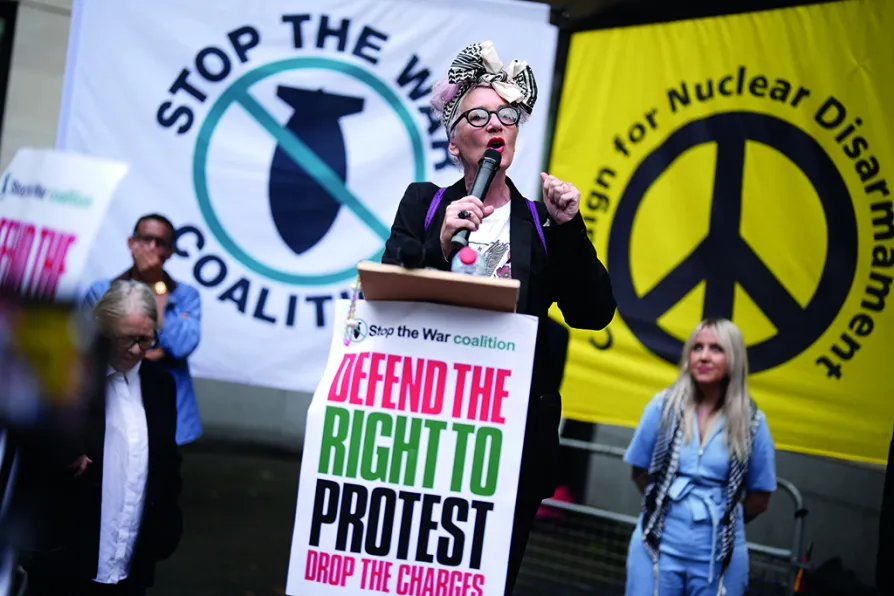
On Hiroshima Day, Campaign for Nuclear Disarmament general secretary SOPHIE BOLT explains why the danger of nuclear conflict is growing daily
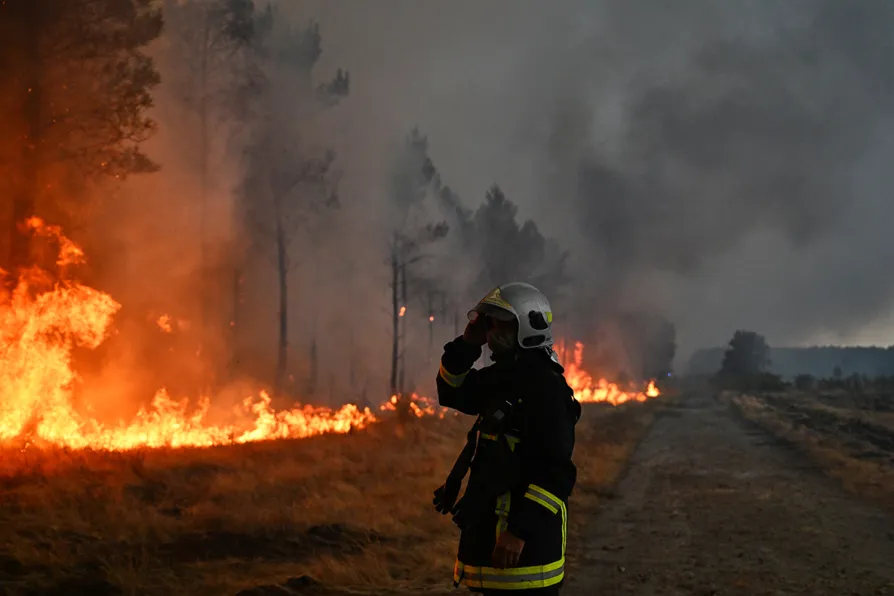

Extreme heat is now one of the defining public health challenges of a warming world, explains Prof IAN WILLIAMS
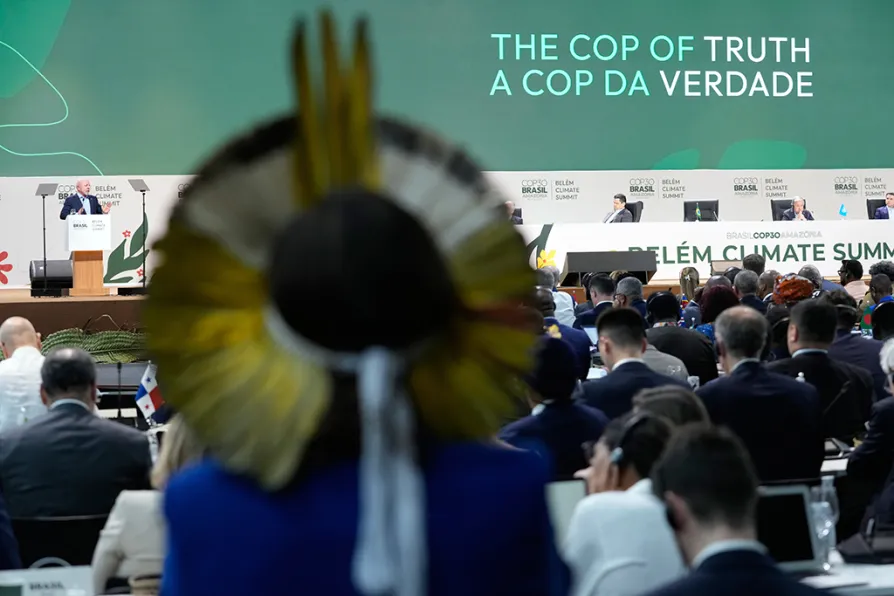
From summit to summit, imperialist companies and governments cut, delay or water down their commitments, warn the Communist Parties of Britain, France, Portugal and Spain and the Workers Party of Belgium in a joint statement on Cop30