

 Latest editorial

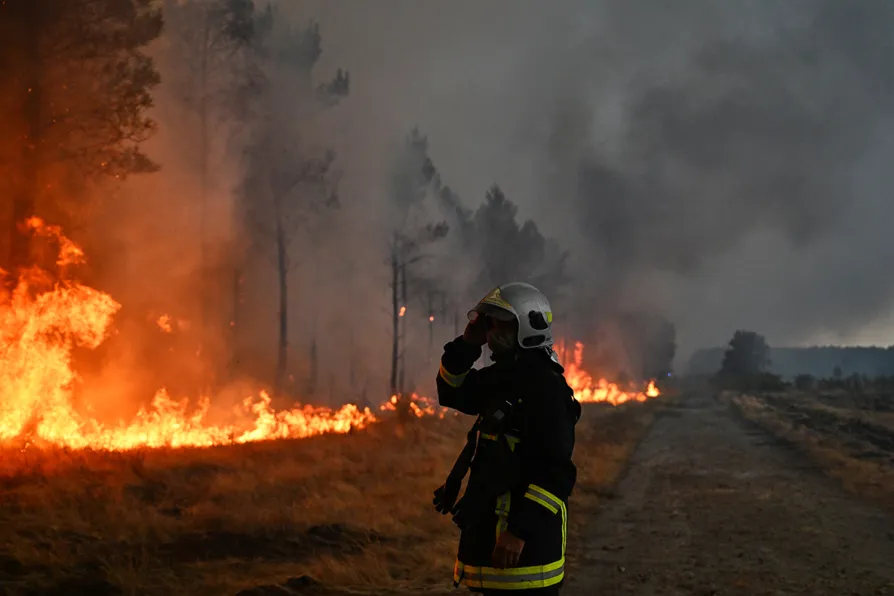 A firefighter gestures next to burning trees as a wildfire rages near Marcheprime, outside, Bordeaux, France, July 26, 2026





FRANCE holds emergency meetings on the evacuation of Bordeaux, a city of a million, as wildfires sweep ever closer. In Spain families are fleeing the capital, Madrid.
The reality of the climate emergency has come to Europe. There were plenty of warning signs — more severe heatwaves by the year, droughts and floods devastating harvests — including in Britain, where three of the five worst harvests on record have been since 2020 — and worsening wildfires.
In Britain this summer fires have burnt swathes of the Cairngorms and Eryri (Snowdonia), as well as Arthur’s Seat in Edinburgh for the second year running. As summer heatwaves grow longer and drier, we should not imagine our towns and cities are safe. As Fire Brigades Union leader Steve Wright told the Morning Star in May, “In London a suburban street burnt to the ground last year” (in Rainham) “and we had wildfires in Dorset and Wiltshire.”
Computer scientist Tim Berners-Lee, inventor of the World Wide Web, argues that addressing the climate crisis requires “World War II-scale mobilisation.”
That runs up against the abstract nature of the problem in many people’s minds — it being hard to imagine what a world 1.5, 2 or 3°C warmer would be like. The events of this summer must be used to change that.
The support exists. A More in Common survey this month echoed earlier polls in showing a majority (57 per cent) say government isn’t doing enough on climate change.
Though outright climate denialism has become more prominent thanks to the Donald Trump presidencies in the US and the associated rise of far-right ideology, the political mainstream in Britain has long accepted the reality of global warming.
The issue is the bolt-on nature of any projected action, emissions reduction targets added to long lists of government priorities rather than adaptation and mitigation being built into the whole with all the implications for real estate (building design, retrofitting of houses, hospitals, schools and offices), transport, national infrastructure including water conservation and supply, sustainable agriculture and more. We have even seen deep cuts to fire brigade strength as the planet burns.
Whenever another priority arises, climate goes to the back of the queue: the obvious example in Britain and Europe today is militarisation, swallowing resources desperately needed elsewhere to cope with a threat — Russian attack — that, unlike the climate emergency, is fictional. The extent to which war fever overrides environmental responsibility was demonstrated by the German Greens, who backed reopening coalmines to reduce dependence on Russian energy.
We cannot make the changes needed while profiteering corporations control our energy, while monopoly capitalists dictate prices and while subordinating everything to the drive to war.
Addressing the climate crisis involves radical restructuring — one reason climate activists were, even before Palestine solidarity campaigners, the victims of repressive new anti-protest laws.
That, in turn, means getting real about the class power of the forces blocking change. Proposed mechanisms for delivering action like citizens’ assemblies are a response to the sluggishness of existing institutions, but do not address its cause — the power of the capitalist class.
Agreeing what we ought to do doesn’t guarantee that it will happen: the climate movement needs to be one with the labour and peace movements, and recognise that this is fundamentally a class struggle and a battle against capitalism itself.
That dividing line becomes ever clearer, domestically and internationally.
The far right are the climate deniers at home; globally the denier-in-chief is the main imperialist power, the United States, whose agenda is to stop the rise of China, the world leader in renewables and green tech. The only existential threat as grave as climate change is world war — and the push towards that is also the biggest obstacle to climate action.
The cry on climate demos — “system change, not climate change” — rings true. We need to follow through on the implications.

Climate extremes are becoming our new normal, says CHLOE BRIMICOMBE
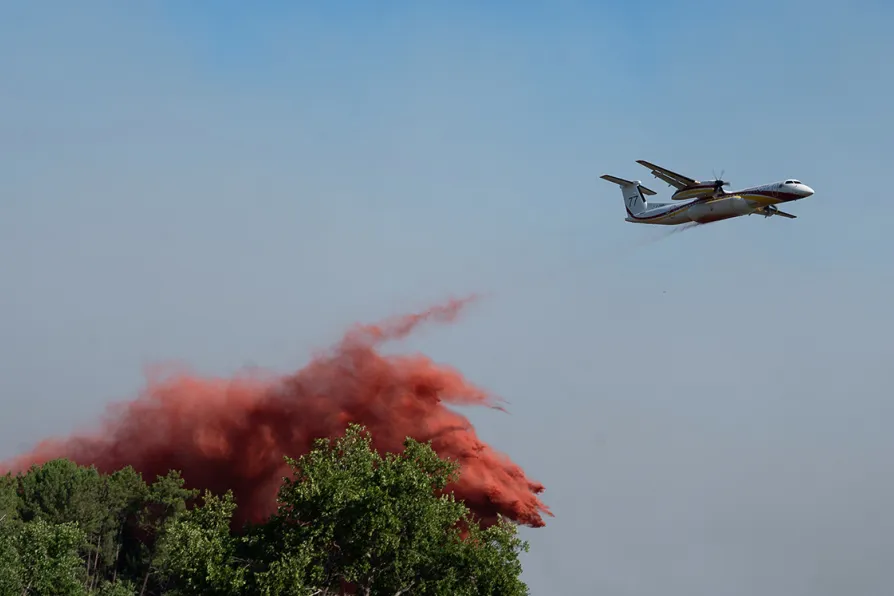
Emergency phone alerts could help Britain respond to rising wildfire risk, but Australia’s experience suggests they work best as part of a broader strategy, write ELLIOT CONVERY-FISHER and KATE PARKINS