TUC president and POA leader STEVE GILLAN speaks to Ben Chacko on the eve of Congress 2026


 Latest editorial
Why Dickens’s Scrooge still walks among us at Christmas, 182 years on
From the workhouses of the 1840s to today’s market capitalism, A Christmas Carol remains a sharp critique of charity rationed by class, says KEITH FLETT
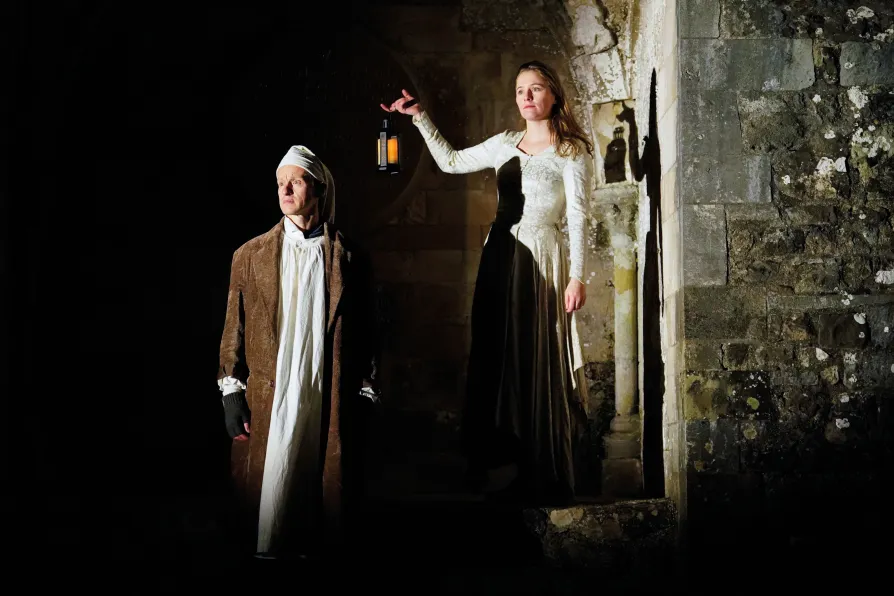 FESTIVE MESSAGE: Actors from the London Touring Players perform the parts of Ebenezer Scrooge and the Ghost of Christmas Past, 2023

DOUG NICHOLLS welcomes a turning point at this year’s Congress, where many motions call for a co-ordinated plan to revive British industry, a perspective outlined in his new book
HOPE VIRGO of campaign Dump the Scales warns MPs voting today they should be alert to the threat legalised assisted death poses to people with eating disorders
The Together Alliance is hosting two summits, North and South, to build power and plan action against the scourge of racism peddled by the right. DANIEL KEBEDE urges mass participation
The drift toward militarisation in Europe is not inevitable, left-wing and peace movements can preserve sovereignty and prevent war, says DÁIRE HUGHES MP
Whatever differences exist among international sympathisers of the Bolivarian revolution about its current trajectory, they should unite against the imperialist power that is the source of an enforced retreat, argues ROGER D HARRIS
Trade unions need to step up and force a turn in the policies of the labour movement to effectively confront the far-right threat, argues NICK WRIGHT





CHARLES DICKENS’s Christmas Carol was published on December 19 1843. Eleven days later the Chartist Northern Star had this response, which was headed “a Christmas Carol”:
“According to annual and praise-worthy custom the unfortunate inmates both of the workhouse and prison throughout the metropolis, will, upon Christmas-day be regaled with the usual good fare of the season. The proportions of the allowances will vary slightly in different institutions, but in all & good dinner will be provided.”
There followed a poem noting that on one day a year workhouse inhabitants ate decently but for the other 364 days it noted: “Come to-morrow how it will; Diet scant and usage rough.”
The message of a Christmas Carol remains perpetually relevant in a market capitalist society and several updated stage versions of the Dickens classic are being performed around the country this year.
Before the 2019 general election at a hustings Jeremy Corbyn was asked what he would give Boris Johnson for a Christmas present.
“I know Mr Johnson likes a good read,” he said, “so what I would probably leave under the tree for him would be A Christmas Carol by Charles Dickens, and he could then understand how nasty Scrooge was.”
Dickens’s story focused on Scrooge in his City of London counting house seeing the error of his ways and ultimately through a familiar device of festive fiction-ghosts-making amends. His employee Bob Cratchit’s family did get a Christmas turkey.
However the attitudes that the liberals of the 1840s displayed on helping the less well-off and indeed on turkeys remain at the centre of right-wing thought.
Bob Cratchit’s family getting a turkey didn’t go down well with the liberals of the day. Commenting on the book in passing in the Westminster Review in 1844, a reviewer noted that since there weren’t enough top-notch turkeys to go round if the lower orders like the Cratchits got one, than others — the deserving rich — would not.
“Who went without turkey and punch in order that Bob Cratchit might get them — for, unless there were turkey and punch in surplus, someone must go without — is a disagreeable reflection kept wholly out of sight,” wrote William Bridges Adams in the Westminster Review, 1844.
The Times reported in 2022 that researchers think Henry VIII was responsible for bringing the turkey to Britain. Its editorial rightly noted that it is the bird of choice for those who eat poultry and that it features in Dickens’s Christmas Carol. It missed the point, perhaps deliberately, about why Dickens had Scrooge buy the Cratchits a turkey.
The poor in the 1840s would eat goose at Christmas if they could afford it. Turkeys were unaffordable except for the rich. Dickens was attacking a market system that rationed food by class.
Dickens also focused on the wider attitude of the wealthy to the less well-off.
Scrooge is visited by “two portly gentlemen” seeking to collect funds for the poor at Christmas. They tell him that “many thousands are in want of common necessaries; hundreds of thousands are in want of common comforts.”
Scrooge asks the charity collectors if by some chance the workhouses and prisons are no longer operating. He goes on to make it clear that he will be contributing nothing to the less well off at Christmas: “I don’t make myself merry at Christmas and I can’t afford to make idle people merry. I help to support the establishments I have mentioned (prisons and workhouses): they cost enough: and those who are badly off must go there.”
While exact policies do vary a little it’s a reminder that Scrooge remains with us at Christmas 2025 with politicians from Labour, Tory and Reform.
Keith Flett is a socialist historian.
