

 Latest editorial
Government figures show growing number of women dying during pregnancy or soon after giving birth
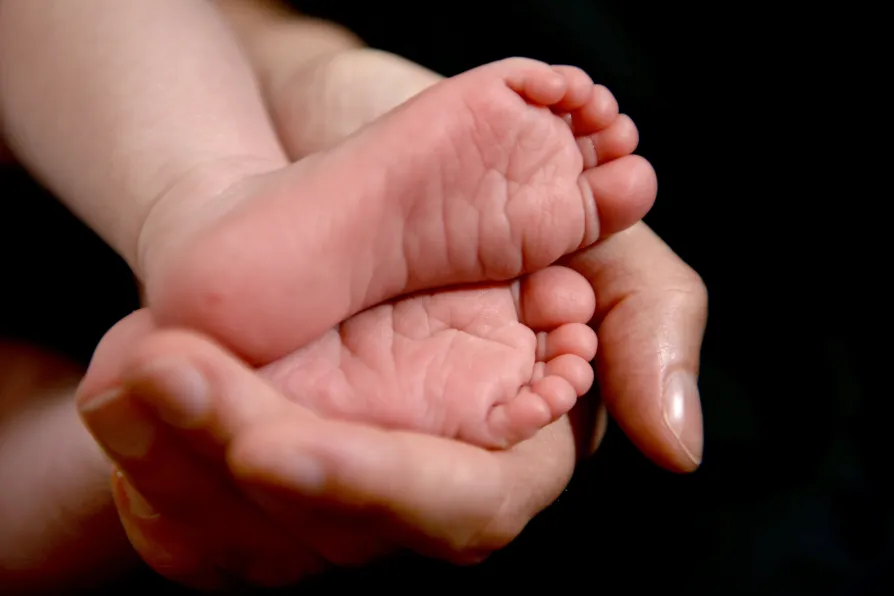 A mother holding the feet of her new born baby in her hand






VICTIMS of traumatic maternity care have demanded a probe with proper accountability and legal consequences after damning reports of women “bleeding out in bathrooms.”
Government figures show that growing numbers are dying during pregnancy or soon after giving birth, even though fewer babies are being born. Maternal deaths rose from 209 to 254 between 2015–17 and 2021–23.
The government announced an investigation into the poor state of maternity care in England in June.
Providing an interim update on the first three months, the review’s chair Baroness Valerie Amos said her findings were “much worse” than anticipated.
Speaking to BBC Radio 4’s Today programme, the former UN diplomat told of women “bleeding out in bathrooms” and feeling “time and time again” that they have not been listened to.
With failures in care on the rise, an NHS report revealed in July that the health service was facing a £27 billion bill for maternity negligence claims.
After meeting with 170 families, Baroness Amos’s review reported concerns of NHS organisations “marking their own homework” when babies died or were harmed, and noted poor standards of basic care and cleanliness.
It cited a “lack of empathy” as part of clinical care, with women feeling “blamed and guilty.”
Women of colour, working-class women and those with mental health problems in particular were reported as receiving discriminatory care.
A recent study by academics at the University of Liverpool found that babies born to black mothers are 81 per cent more likely to die in neonatal care.
Figures from MBRRACE-UK show that black women are 2.3 times more likely to die in pregnancy, childbirth, or the postnatal period.
Black Activists Rising Against Cuts UK co-founder Zita Holbourne said: “The reasons and causes are institutional and systemic, fuelled by racist stereotypes.
“Black and brown women like all women need care and understanding during pregnancy and childbirth but there also needs to be better understanding and knowledge of cultural and religious needs.”
Campaigner Rebecca Matthews called the report “disappointing,” telling Sky News it appeared to be “a bullet point list of failings that actually we’ve seen time and time again in independent reviews.”
Ms Matthews co-founded Families Failed by Oxford University Hospitals after a traumatic birth, in which she was denied a caesarean despite having late-onset preeclampsia.
Speaking separately to ITV, she said: “I would like Baroness Amos to say openly and publicly that we need an inquiry with legal consequences.
“We need genuine, authentic accountability and we need systems to change otherwise we will be at the same point in five years time with another set of recommendations just left on a shelf gathering dust.”
Several investigations over the last decade have already led to 748 recommendations for improvements across maternity care.
The current probe will look at just 12 trusts, but Tom Hender, whose son Aubrey was stillborn in 2022 told the BBC that a full public inquiry is the “only credible option.”
He said: “The review is already finding more than the chair expected.
“That should be the clearest sign that the scope isn’t suitable and that the issues are bigger than the timescale can handle.”
Highlighting ongoing pressures in the profession, Royal College of Midwives Chief Executive Gill Walton, said: “Midwives are committed to safe, compassionate, woman-centred care but chronic understaffing and inadequate resources are undermining their ability to deliver it.”
Unison national nursing officer Louie Horne said: “When people feel they cannot provide the quality of care patients need, and should expect, many make the difficult decision to leave and the workforce crisis worsens.”
The review reported that staff had described having rotten fruit thrown at them, with some even facing death threats over care standards.
“Those who remain can find themselves on the receiving end of threats and violence, which can never be justified, but reflect the intolerable pressures in the service,” Ms Horne said.
Health Secretary Wes Streeting said: “I know that NHS staff are dedicated professionals who want the best for mothers and babies, and that the vast majority of births are safe, but the systemic failures causing preventable tragedies cannot be ignored.”
The review is expected to be published in full in spring.
